Click here to sign up for our free daily newsletter.
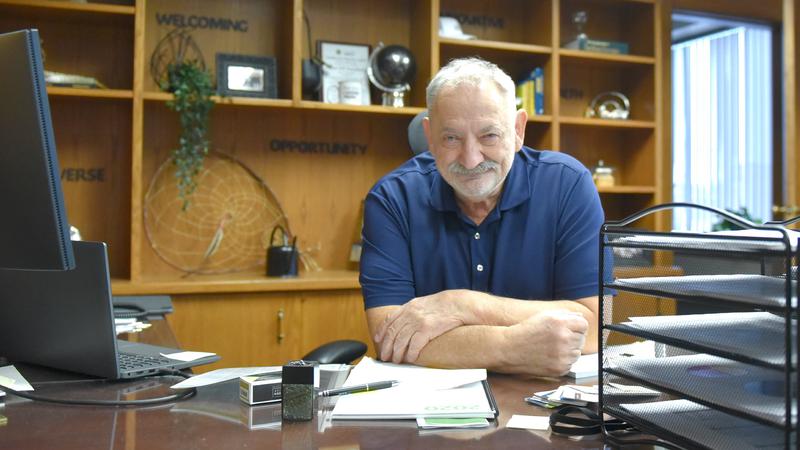
File photo of Prince Albert Mayor Bill Powalinsky in 2025. (Image Credit: Susan McNeil/paNOW)
Northwest Sask

Municipalities see opportunity in nuclear push  

Oct 1, 2026 | 6:03 AM

Prince Albert Mayor Bill Powalinsky used to work for SaskPower and said that, both in his former professional capacity and as the head of a city looking to grow, he welcomed this week’s announcement that Saskatchewan will be moving forward with a major expansion into nuclear energy.

“It’s a necessary thing. We need to do it. It’s going to provide, ultimately, a very clean, predictable, reliable source of energy,” he said.

In 2019, Prince Albert was considered as a potential site for a large-scale nuclear reactor, after the city was identified as one of three top sites by Bruce Power. North Battleford and Lloydminster were the other two communities.

North Battleford Mayor Kelli Hawtin was in Saskatoon for this week’s announcement, which identified northwest Saskatchewan as a potential site for one of the two reactors. She said the announcement presents a potential generational economic opportunity for northwest Saskatchewan, with significant long-term benefits for North Battleford and the broader Battlefords region.

“We look forward to learning more as planning advances through consultation and regulatory processes,” Hawtin said.

The province’s goal is to add at least 2,600 megawatts of power to the provincial grid. It also wants to expand the nuclear option into Alberta and the Northwest Territories and has reached an initial memorandum of understanding with those two jurisdictions.

Along with the locations, the type of reactors has yet to be determined. There are different types of nuclear reactors in use for energy supply. The Canadian-designed CANDU reactor uses natural uranium rather than the enriched uranium required by other reactors.

As a former SaskPower employee, Powalinsky said he has faith in the safety and necessity of adding nuclear power to the energy grid.

“I know that the clean, efficient production of power through hydro and wind farms is very good, but it won’t be enough to keep up to the capacity required for a growing province,” he said.

He described CANDU reactors as particularly “bullet-proof.”

Beyond the power supply, being a host community for service providers to the nuclear industry is already a hot topic. Powalinsky said Prince Albert has been lobbying for months.

“My hope and what we’re lobbying for is to be part of the supply chain or if there’s secondary processing or something of that nature. We know that PA is well positioned geographically. We’ve got air transport, we’ve got rail, we’ve got obviously highway access,” he said.

“So we’re strongly lobbying for our position. And any of these province-wide initiatives that, if it goes northward, we want to be the gateway to the north and not the funnel to the south.”

Adrian Foster, mayor of Clarington, Ont., one of Canada’s most well-known nuclear host communities, told paNOW there are significant benefits, but hopeful mayors should be realistic.

“Every host community wants to host the nuclear supply chain and it’s just not doable,” he said.

“You can’t recreate the business every place that a reactor is coming so figure out what is doable and what is reasonable as you’re moving forward.”

Powalinsky also urged patience. The first reactor is not expected to be operational until 2042.

“It remains to be seen how this will roll out,” he said. “We’re not going to see this happen overnight. It’s obviously going to take years.”

—

susan.mcneil@pattisonmedia.com