Click here to sign up for our free daily newsletter.
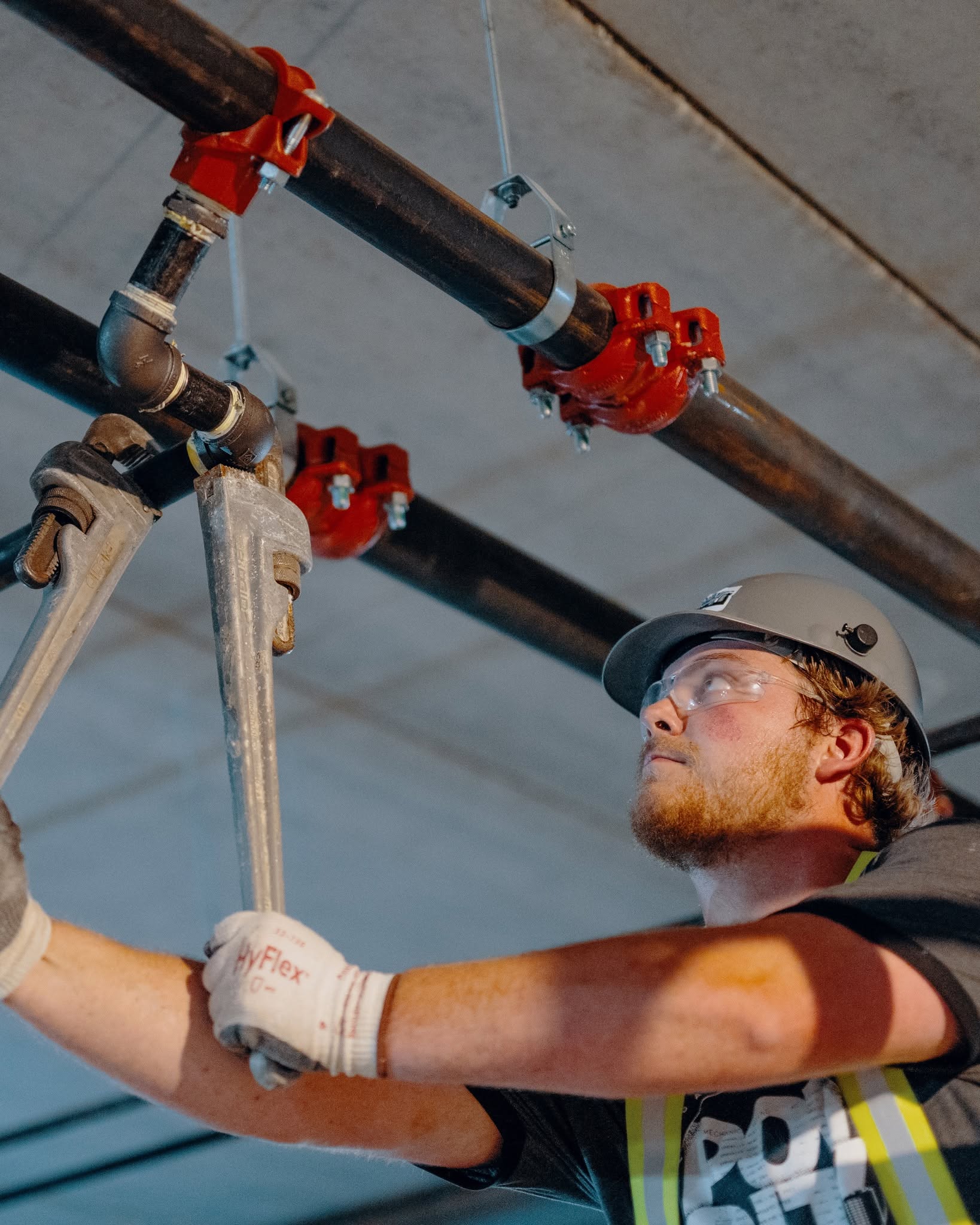
Demand for skilled trades is expected to remain strong in Saskatchewan. (Image Credit: ID 31959861 © Lurin2 | Dreamstime.com)
Trade careers

Skilled trades drawing Saskatchewan workers later in life

Sep 3, 2026 | 6:00 AM

The average Saskatchewan apprentice starts Level 1 training at the age of 27, years after high school and, in some cases, after already pursuing another career.

Now, skilled trades are getting renewed attention as artificial intelligence creates uncertainty around the future of some desk jobs, while major infrastructure spending continues to drive demand for workers.

The Canadian Press recently reported career counsellors are seeing more interest from mid-career workers considering a switch to the trades amid the rapid growth of AI.

Krystal Nieckar, executive director of Skills Canada Saskatchewan, said she has seen people returning to school for trades as mature students.

“What we’re finding is that the workforce is older,” she said. “And so they’re going back into the trades as mature students and as adults, understanding that the work is there and that long-term work is available to them.”

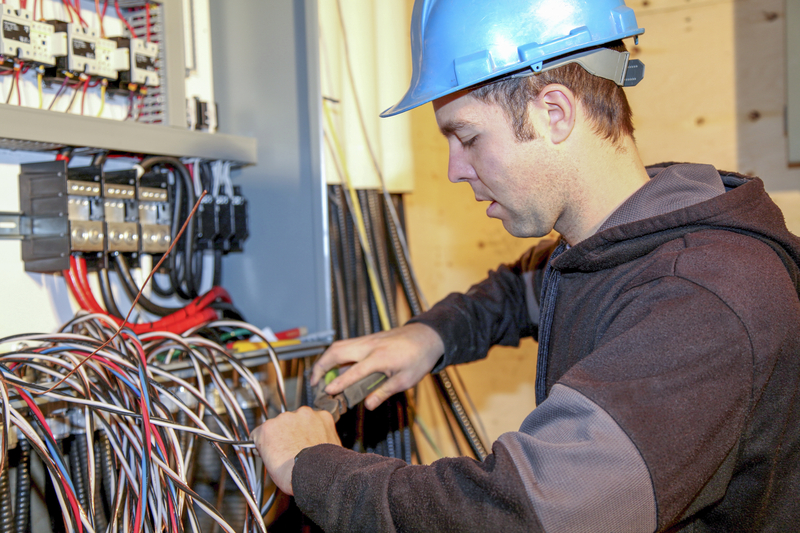
A provincial survey shows graduates of apprenticeship and trade programs are among the most likely to find full-time employment within one month of graduating.
A provincial survey shows graduates of apprenticeship and trade programs are among the most likely to find full-time employment within one month of graduating. (Image Credit: Sask Apprenticeship/Facebook)

Nieckar said university remains a good option for many students, but she believes some people are finding a bachelor’s degree doesn’t necessarily lead to the employment they expected.

Some continue their education, while others begin looking elsewhere.

A 2019 Saskatchewan graduate outcomes survey found graduates of Saskatchewan Apprenticeship and Trade Certification Commission (SATCC) programs, along with doctoral program graduates, were the most likely to have found full-time employment within one month of graduating.

SATCC CEO Jeff Ritter said an apprenticeship also offers a considerably different education model.

“For some it’s, you know, it’s certainly like it is a lucrative educational pathway,” he said. “So apprentices are earning an income while they progress through their education, right? They’re employed.”

Ritter said technical training tuition is about $120 a week, with apprentices typically attending for eight weeks a year. They may also be eligible for employment insurance while attending technical training.

“You can come out of school without a lot of debt, oftentimes no debt because you’re earning while you’re learning,”  Nieckar added.

Most Saskatchewan trades have four apprenticeship levels and take about four years to complete.

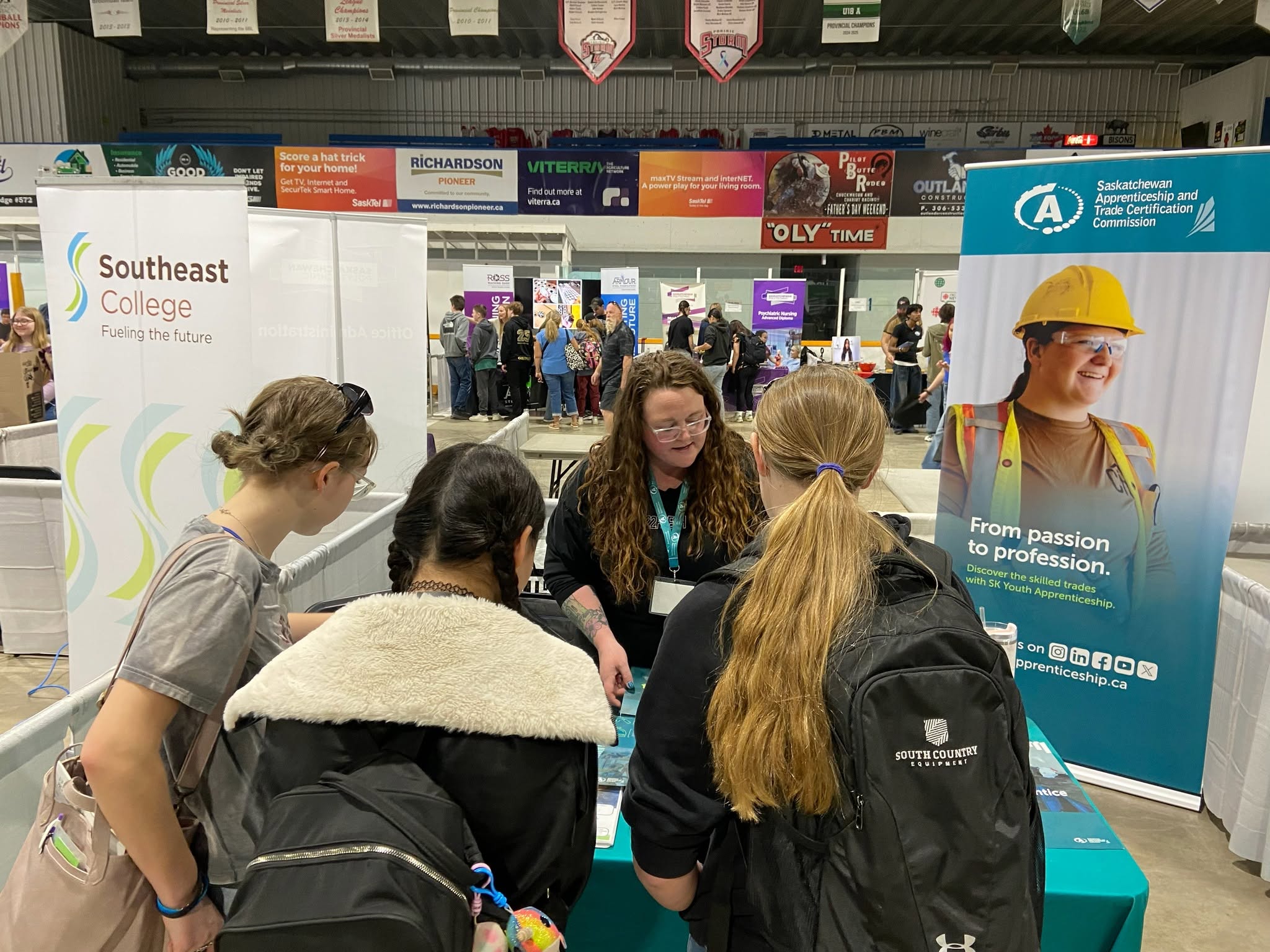
Students inquired about a career in the trades at a career fair last May.
Students inquired about a career in the trades at a career fair last May. (Image Credit: Sask Apprenticeship/Facebook)

The cost can also look different from other forms of post-secondary education.

The Saskatchewan Apprenticeship and Trade Certification Commission (SATCC) said technical training tuition is about $120 a week, with an apprentice typically attending for eight weeks a year. Apprentices may also be eligible for employment insurance while attending technical training.

Growing interest among high school students

Nieckar said both the cost of post-secondary education and employment prospects are coming up when young people ask about the trades.

In an email to paNOW, the Ministry of Education said Practical and Applied Arts (PAA) is an important part of Saskatchewan’s education system for students in Grades 7 to 12. Last year, PAA courses were offered in 401 schools and student participation continues to grow.

“The number of unique students taking at least one PAA course increased from 36,773 in 2021-22 to 43,591 in 2025-26, an increase of nearly 19 per cent over five years. During the same period, students had access to approximately 270 unique PAA courses annually, demonstrating the breadth of programming available across Saskatchewan schools,” the ministry said.

Nieckar pointed to another factor that may be influencing interest: an aging trades workforce.

“The rate at which folks are retiring and leaving the trades is greater than what people are entering them,” Nieckar said.

Not every Saskatchewan employer, however, is seeing people wait until their late 20s to get started.

At Lehner Electrics in Prince Albert, president Brad Lehner said his employees average about 21 years old.

“We seem to have students approaching us right out of high school,” he said.

Over the past two or three years, Lehner said the company has had success attracting apprentices who are 18, 19 and 20 years old.

“I wouldn’t say that there’s an influx right now, but we’ve just had a good run of luck in attracting young apprentices,” Lehner said.

He believes both wages and job prospects are part of the attraction.

“You start right out of high school making $20-plus dollars an hour,” Lehner said.

He also pointed to opportunities for workers to eventually move into supervisory, design and safety positions.

“Just because you’re an electrician doesn’t mean you’re going to be on the tools for 30 years,” he said.

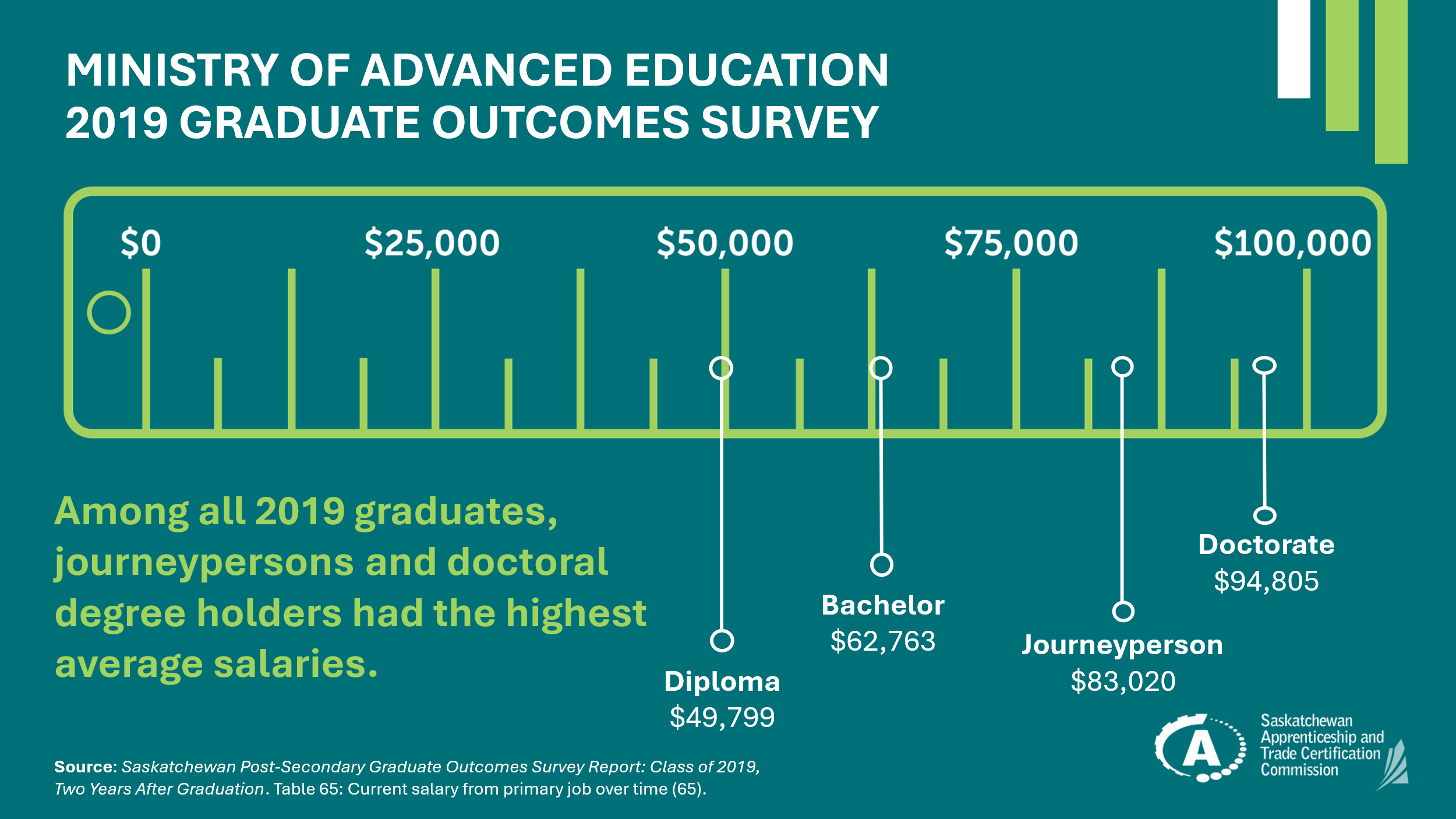
Statistics Canada data shows earnings after certification vary considerably depending on the trade.

Among Saskatchewan journeypersons who certified in 2021, median employment income two years later was $73,880 across all trades.


(Image Credit: Submitted/SATCC)

For construction electricians, it was $73,790. Heavy-duty equipment technicians had median employment income of $96,930, while industrial mechanics earned $113,050 and powerline technicians $111,090. The same data showed the median age for Saskatchewan workers who became certified in 2023 was 27 for construction electricians, powerline technicians and welders. It was 29 for plumbers, 31 for industrial mechanics and 33 for cooks.

Demand for skilled trades expected to remain strong in Saskatchewan

According to the province’s occupational labour market outlook, the largest number of forecast job openings between 2025 and 2029 will be in occupations requiring a college diploma or apprenticeship training.

Construction alone is expected to have 9,590 openings during that period, including for carpenters, labourers, electricians and heavy equipment operators.

The province is anticipating $60 billion in private investment and 60 large infrastructure projects, which it expects will further increase demand for apprenticeship trades.

SATCC is projecting the total number of apprentices in Saskatchewan will reach 8,550 by June 2027.

Nieckar said attitudes toward trades are also changing, although she believes there is still a stigma attached to choosing them over a more traditional university education. Skills Canada Saskatchewan has been trying to expose students to those careers at younger ages.

For some, that exposure appears to be happening early.

For others, the route into a trade comes after another education or career choice.

Either way, Nieckar said Saskatchewan’s need for skilled workers isn’t something that’s still on the horizon.

“People are talking about the gap is coming, the gap is coming, but the gap is already here.”

panews@pattisonmedia.com