Click here to sign up for our free daily newsletter.
Saskatchewan RCMP said officers are seeing more accidents involving drug and alcohol impairment. (Image Credit: ID 1416888 | Accident Scene © Lane Erickson | Dreamstime.com)
Surpassed last year's numbers

RCMP flag 77 per cent increase in fatal collisions this June, July

Jul 22, 2026 | 5:19 PM

Since the beginning of June, 23 collisions have killed 27 people in Saskatchewan, representing a 77 per cent increase in fatal crashes compared to June and July last year.

“Since July 10 alone, 16 people have lost their lives,” said the Saskatchewan RCMP’s Lee Knelsen, an inspector and traffic services operations officer.

Knelsen said the police body is sharing its concerns with the public after a significant increase in collisions resulting in death in Saskatchewan.

The lives lost this year represents an 88 per cent increase compared to last year, with the 13 collisions and 13 deaths recorded since July 10.

“The month of July is not over yet, and we have already surpassed last year’s numbers,” Knelsen said.

The RCMP inspector said officers are seeing more situations involving drug and alcohol impairment.

In the first six months of 2025, 35 per cent of fatal collisions were investigated as involving alcohol and/or drugs as a contributing factor. Knelsen noted that number for the same period of time in 2026 has jumped to 52 per cent.

“Now, to be clear, these are not just numbers; they represent lives lost, and these numbers are increasing,” Knelsen warned. “We urge everyone to make safe decisions every time they get behind the wheel.”

Knelsen said the same four contributing factors and behaviours are being repeatedly seen in many of these situations: speed, not wearing seatbelts, distracted driving and impairment.

Alcohol and drugs are generally considered to be a contributing factor in about 33 per cent of collisions, Knelsen shared. While it used to be common to see these crashes happening late at night or in the early evening, the inspector said now they can happen “any hour of the day.”

Looking to statistics dating back to 2010, Knelsen said impairment has been consistently dropping year to year. However, he said the level it’s at is still “unacceptable and certainly we’re seeing the issues that come with that.”

The RCMP have also noted a “significant” uptick within the past two months in multiple fatalities resulting from a single collision.

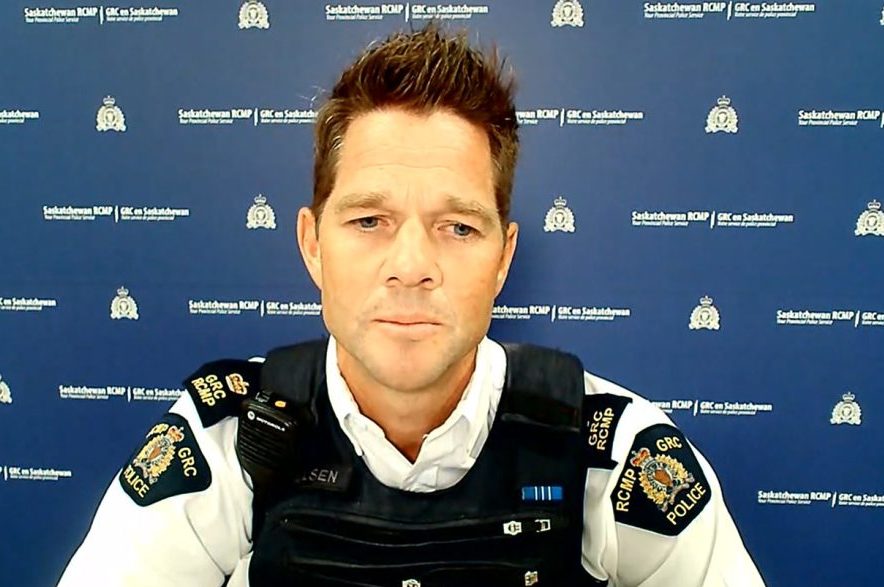
Insp. Lee Knelsen with the Saskatchewan RCMP on a video call on Wed, July 22, 2026 with Saskatchewan media, discussing the high number of fatal crashes in the province in June and July this year.
Insp. Lee Knelsen with the Saskatchewan RCMP on a video call on Wed, July 22, 2026 with Saskatchewan media, discussing the high number of fatal crashes in the province in June and July this year. (Image Credit: Microsoft Teams Screenshot)

Mandy Maier, director of strategic communications, listed the various collisions that resulted in death since July 10: A collision in North Battleford on July 10 and 11, each, resulting in two deaths; two deaths on July 12 in the Spiritwood detachment area; one death on July 12 in the Kamsack detachment area; one death in Prince Albert and one death in the Nipawin deatchment area on July 15; two deaths in the Outlook area on July 16; two deaths near Lumsden on July 18, one death in the Rosthern area on July 19; and three deaths in the Maple Creek detachment area on July 20, as well as one in the Swift Current Rural/Morse ddetachment area the same day.

Though Knelsen said he can’t speak to why or when people are using their phones when behind the wheel, he said drivers are certainly using their phones. He noted that the summer season can bring more people to roadways, lots of construction and, potentially, slower traffic. He asked people to be aware that the device in their hands is both distracting and illegal.

“The public expects you to put that down. We expect you to put that down and drive and make sure that those roadways are safe,” Knelsen said.

Though the province is large and these incidents are scattered across it, Knelsen said 100 RCMP traffic services officers are scattered across the province, actively patrolling many kilometres of highway, dirt and gravel roads and performing both roving and formal, stationary checkstops. The Mounties have also partnered with 34 municipal police agencies through Combined Traffic Services Saskatchewan efforts.

“We have a number of resources that are actively out there throughout throughout the day and the night, and on the days and into the evenings as well,” Knelsen explained.

“If you are drinking, if you are using drugs, do not drive.”

Knelsen emphasized planning ahead to find a safe ride, stay the night somewhere or to simply stay home. He also noted that some fatalities in recent crashes might have been prevented, had the individuals been wearing seatbelts.

“We’ve seen the statistics and we know that from what we’ve seen in the past is one in three,” Knelsen said, emphasizing how many collisions include alcohol or drugs as a contributing factors.

“That message just seems to not be getting out there. So we ask the public to be very cognizant of that,” he said.

Acknowledging the devastation that families of victims in these crashes go through, losing a loved one, Knelsen added that first responders and tow truck drivers to these scenes also suffer emotional scars.

“It’s not just something that you you attend the scene and and walk away from it,” Knelsen stated.

“When we have a July like we have already, this is certainly compounding that.”

The Government of Saskatchewan is currently considering changes to the Traffic Safety Act that would see new administrative penalties implemented at the roadside in an effort to further combat impaired driving.