Click here to sign up for our free daily newsletter.
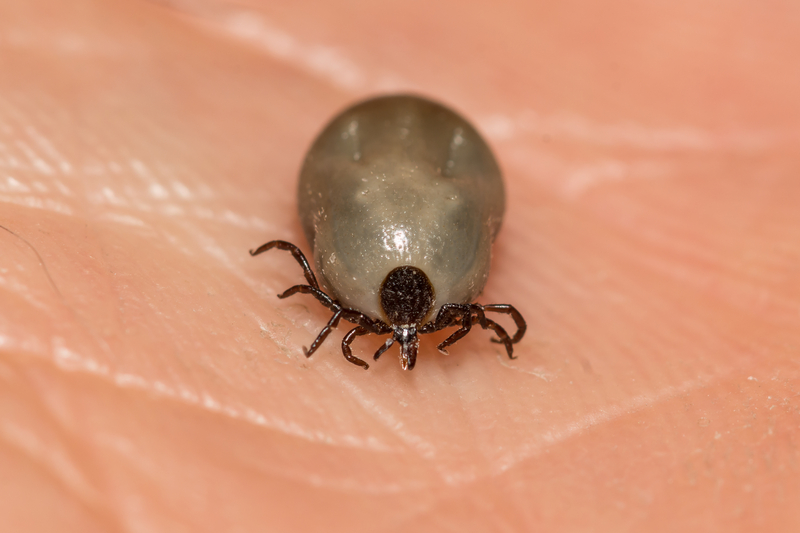
Through the eTick program, researchers received about 30 blacklegged ticks in 2023 and roughly 50 in 2024. (Image Credit: ID 303645465 © Jason Ondreicka | Dreamstime.com)
Risk still low

Prince Albert region seeing growing number of Lyme disease-carrying ticks: U of S researcher

May 15, 2026 | 3:00 PM

The number of blacklegged ticks linked to Lyme disease appears to be increasing in Saskatchewan, with a significant number of reported cases coming from the Prince Albert region, according to a University of Saskatchewan researcher.

Martin Zoordouw, an associate professor in the Department of Veterinary Microbiology at the Western College of Veterinary Medicine, said data collected through the eTick program suggests the boreal transition area around Prince Albert, Christopher Lake and Emma Lake may provide a more suitable habitat for the ticks than southern Saskatchewan.

“When we correct for the population size, we seem to be getting quite a few from the Prince Albert area,” Zoordouw said. “About half of the blacklegged ticks we received in 2024 came from that region.”

Blacklegged ticks, also known as deer ticks, are the species associated with Lyme disease. Zoordouw said Saskatchewan has seen a noticeable rise in reports of the ticks over the last several years.

Between 2009 and 2017, under a previous surveillance system that relied on residents mailing in ticks, Saskatchewan averaged about six or seven blacklegged ticks per year. Through the eTick program, researchers received about 30 blacklegged ticks in 2023 and roughly 50 in 2024.

Despite the increase, Zoordouw said researchers still do not believe Saskatchewan has an established blacklegged tick population.

“We only ever find the adult ticks, and mostly the adult females,” he said. “If there was an established population, we would expect to find all the different life stages, including larvae and nymphs.”

Researchers instead believe migratory birds are carrying immature ticks into the province from the United States before the ticks mature into adults in Saskatchewan.

Zoordouw stressed the overall number remains low compared to eastern Canada, where established blacklegged tick populations are common, but said residents should still be aware of the risks.

“We don’t want to blow it out of proportion,” he said. “But people should be aware that blacklegged ticks are here and they can carry Lyme disease.”

According to the Saskatchewan Health Authority, the majority of Lyme disease cases in Saskatchewan are related to travel to another province or country where blacklegged ticks are more common. Between 2019 and 2024, there have been 12 cases of Lyme disease reported in the province.

A close-up of an engorged female blacklegged tick.
A close-up of an engorged female blacklegged tick. (Image Credit: ID 347055789 © Jason Ondreicka | Dreamstime.com)

The eTick program, launched in Saskatchewan in 2020, allows residents to upload photos of ticks that bit them or their pets through an app or online platform. Researchers then identify the species and provide information about potential tick-borne diseases.

The program was created by Dr. Jade Savage of Bishop’s University in Quebec and expanded across Canada through partnerships with researchers in different provinces.

Zoordouw said most ticks submitted in Saskatchewan, about 98 per cent, are American dog ticks, which do not carry Lyme disease. However, those ticks and their close relatives can carry other illnesses, including Rocky Mountain spotted fever.

Last year, Zoordouw said a Saskatchewan resident contracted Rocky Mountain spotted fever after being bitten near Emma Lake.

“That disease is very dangerous,” he said. “Left untreated, it can become very serious.”

Zoordouw said blacklegged ticks are especially active in the fall, unlike American dog ticks, which are mostly active from April through July.

“When people in Saskatchewan think about ticks, they think about spring and summer,” he said. “But if you find a tick on yourself or your pet in September, October, November, or even early December, it’s much more likely to be a blacklegged tick.”

He encouraged residents to submit ticks through eTick, particularly in the fall months.

Zoordouw also acknowledged diagnosing Lyme disease can be difficult because Saskatchewan is not traditionally considered a high-risk area.

“If a doctor believes there are no blacklegged ticks in Saskatchewan, they may not consider testing for Lyme disease.”

He said the eTick program can help provide evidence for patients seeking medical attention by confirming the species of tick involved.

panews@pattisonmedia.com