Click here to sign up for our free daily newsletter.
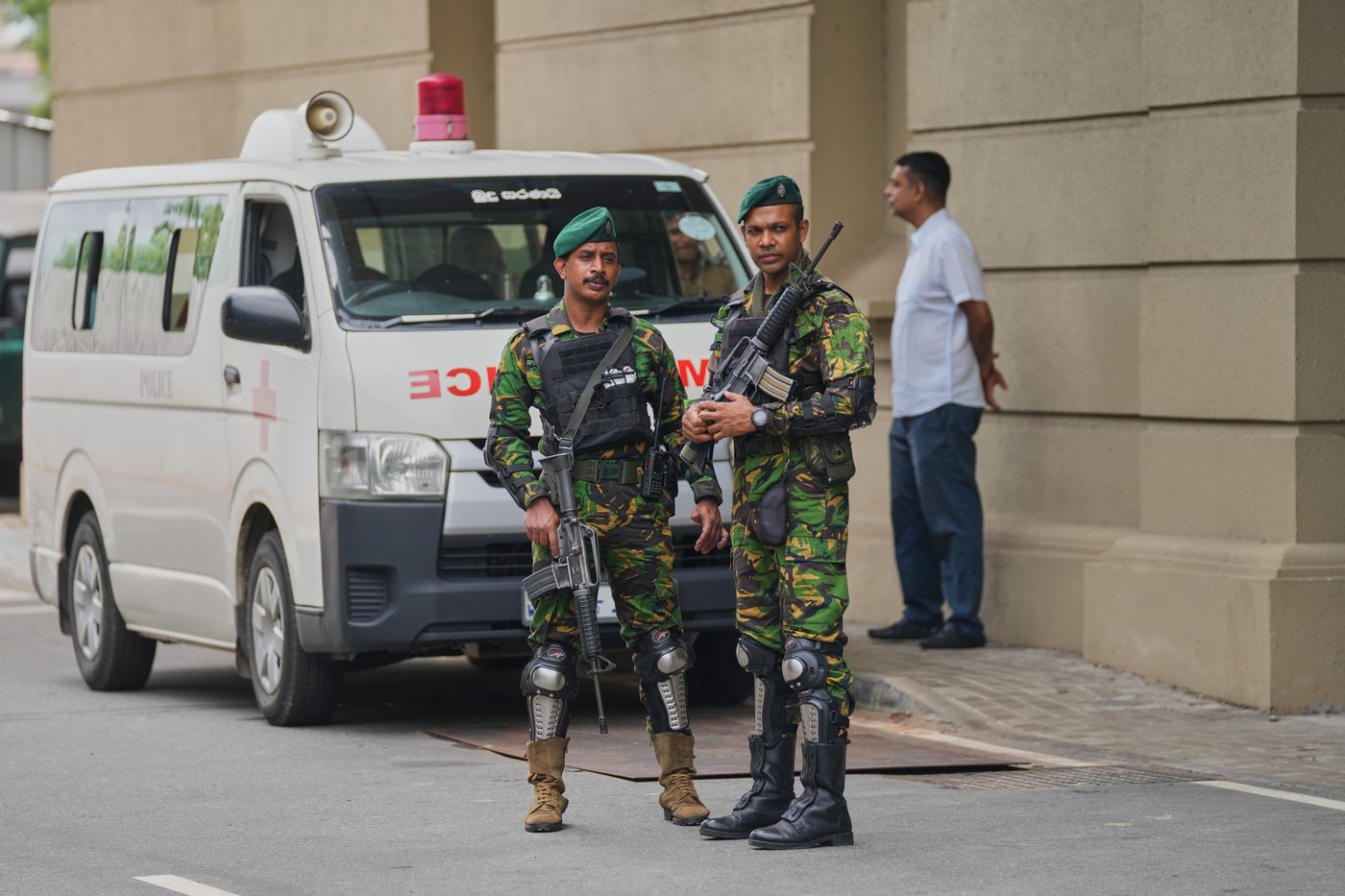
Police commandos stand guard at the High Court complex ahead of a verdict related to the 2019 Easter bombings in Colombo, Sri Lanka, Tuesday, Sept. 22, 2026.(Eranga Jayawardane)

Sri Lankan court convicts 15 men over roles in deadly 2019 Easter bombings

Sep 22, 2026 | 7:13 AM

COLOMBO, Sri Lanka (AP) — A Sri Lankan court convicted 15 men on Tuesday over their involvement in the 2019 Easter Sunday bombings, which killed more than 260 people and wounded about 500.

The April 21 attacks targeted three churches and three hotels across the island nation during Easter services and celebrations. The bombings, which were inspired by the Islamic State group, were among the deadliest attacks in Sri Lanka’s history. They killed 42 foreigners and devastated communities across the country.

A three-judge High Court panel delivered the verdict amid tight security, with hundreds of police officers deployed around the courthouse.

Authorities filed 23,270 charges in 2021 against 24 suspects accused of planning or inspiring the attacks. The charges included murder, conspiracy to commit terrorism, and firearms and explosives offenses under the Prevention of Terrorism Act.


None of those believed to have directly participated in the attacks are alive.

Two Sri Lanka-based Islamic militant groups were accused of carrying out the bombings.

Sri Lanka’s Catholic Church has claimed, without providing evidence, that those identified so far as perpetrators are not the masterminds behind the bombings, and that there was a bigger conspiracy behind the attacks.

A parliamentary committee found that police and intelligence officials failed to act on repeated intelligence warnings of the attacks.

In July, a former police chief and a former senior defense ministry official were also sentenced to death for failing to act promptly on foreign intelligence warnings of possible attacks.

Sri Lanka has not carried out executions since 1976, meaning death sentences typically result in life imprisonment.

After the bombings, allegations emerged that the attackers had links to Sri Lanka’s state intelligence services. The country’s Defense Ministry denied any involvement.

In February, police arrested Suresh Salley, a former intelligence chief and retired army major general, in connection with the bombings. The government has alleged that Salley, who remains in custody, had prior knowledge of the attacks and actively conspired to carry them out.

Salley was a prominent military intelligence official credited with playing a major role in the campaign that ended the country’s civil war in 2009.

The bombings shook the island nation and revived memories of the 26-year conflict with the Liberation Tigers of Tamil Eelam, widely known as the Tamil Tigers, a separatist group that fought to establish an independent state for Sri Lanka’s ethnic Tamil minority.

The Associated Press