Click here to sign up for our free daily newsletter.
(Image Credit: File photo/The Canadian Press)
Transparency

Police body camera-worn cameras key theme at coroner’s inquest

Jul 23, 2026 | 7:09 PM

At the conclusion of the Boden Umpherville Coroner’s Inquest, the six person jury will be tasked with drafting a set of recommendations to help prevent similar deaths from occurring in the future. Throughout the week, one of the re-occurring topics has been police body cameras.

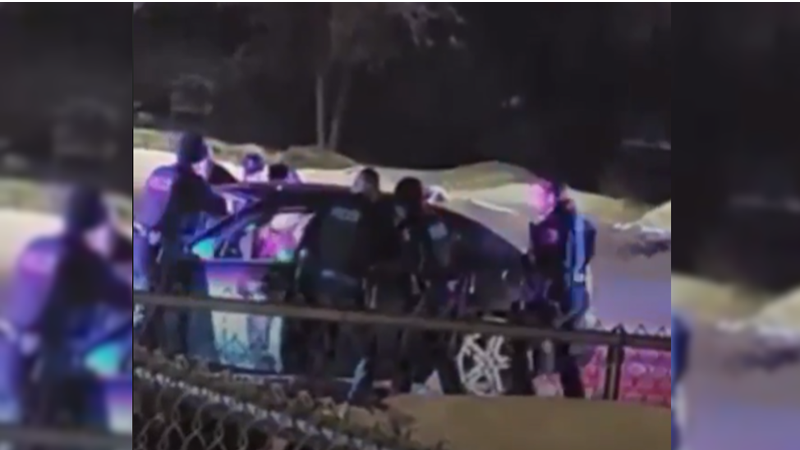
Unlike their RCMP counterparts, municipal officers in Prince Albert do not wear body cameras. During the inquest, the jury has had to rely on watching videos recorded by dash cameras and civilian cell phones to help them decipher what happened on April 1, 2023 during a violent altercation between Umpherville and the police officers who were trying to arrest him. The officers used conducted energy weapons, batons and pepper spray during a 20 minute struggle with Umpherville. He ended up dying in hospital weeks later after being taken off of life support. According to the coroner, the cause of his death was determined to be positional asphyxiation and cocaine intoxication.

The president of the Prince Albert Police Association, Darcy Bear, told paNOW the incident in question represented a unique set of circumstance involving multiple officers. He agreed that body-worn cameras could have helped with the investigation and perhaps better answered questions from the public.

“So you’d have the multiple perspectives of going around instead of just the three police car cameras that were shown,” he said, confirming the cameras could have also provided a clearer picture of how the situation escalated.

“And maybe a better perspectives of how they made the decisions they did.”

The topic of Prince Albert police officers wearing body cameras is not new; implementation in the past has, in part, been affected by budgetary pressures. Bear, who supports the use of cameras himself, explained that not all officers want to be recorded for the entirety of their shift.

“I think the opposition is coming around to seeing the benefits versus privacy breaches…so I think overall, I think we are getting to a place where it’s going to be appreciated when we can get them,” he said.

Police Chief Patrick Nogier has reserved comment until after the inquest is complete.

“It’s not so much the actual hardware that is expensive, it’s the backend – where you keep the video,” said Nogier during a previous interview with paNOW. “And what people don’t really know is when it comes to redacting video footage, whether it be for an access to information request or for court purposes, there is a lot of work that goes on behind the scenes.”

The incident on April 1, 2023 sparked criticism of the police service.

Witness testimony

During the coroner’s inquest on Thursday, the jury heard that Umpherville stopped breathing and had no pulse, just moments after being loaded onto a stretcher.

The testimony came from Chris Pacey, an Advanced Care Paramedic with Parkland Ambulance who responded to the incident mpre than three years ago.

Pacey explained the ambulance was called at 2:32 a.m. and by 2:37 a.m., paramedics arrived on scene. As Umpherville was still visibly aggressive and resisting, Pacey and his partner were only able to perform a check of his vitals from a safe distance. Pacey recalled Umpherville was face down, bleeding from the mouth area and his eyes were closed.

A decision was then made to place Umpherville on a stretcher.

“It is easy to restrain with a stretcher,” Pacey said.

Once in the ambulance, Umpherville was unconcious and so the handcuffs were removed. Police officers assisted with chest compressions until an automated mechanical CPR device could be brought in.

At the time of the incident not all the ambulances came equipped with a LUCAS machine, but Pacey explained since then, all the ambulances have one and they are paid for out of the ambulance service’s budget.

Pacey went on to testify that roughly 14 minutes after arriving, the ambulance left the scene and took about four minutes to reach the hospital.

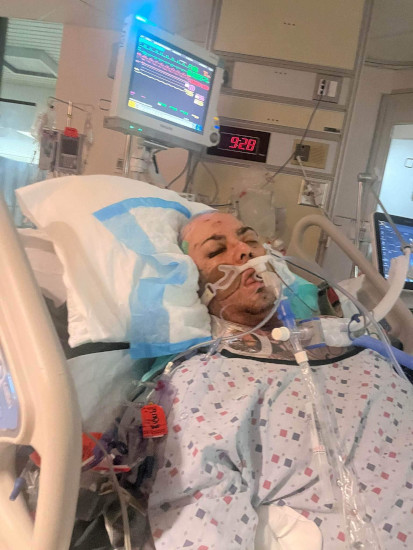
A view of Umpherville in hospital.
A view of Umpherville in hospital. (Image Credit: FSIN.)

During the ride, with the help of some infusions and medicine, paramedics were able to restore a pulse but lost it again before arriving at Victoria Hospital.

Peter Abrametz, the Umperville family’s lawyer, asked Pacey to comment on why in one of the dash cam videos shown to the courtroom, it appeared as if he and his partner were moving very slowly.

Pacey replied conditions were very icy and as paramedics, they make it a practice not to run so as to ensure personal safety.

Doctor Jacob Van Der Mewre was the physician on duty at Victoria Hospital’s emergency department that night and confirmed when Umpherville arrived, he was not conscious and had no pulse.

Unable to recall the circumstances surrounding what brought the patient to hospital, Van Der Mewre testified Umpherville had a laceration on his forehead, bleeding in his brain, fractured ribs and there was no response from his pupils.

“He had no other external injuries,” he said.

Umpherville then received more infusions and his vitals improved. Once safe to do so, he was transferred to the hospital’s ICU before he was later transferred to Royal University Hospital in Saskatoon where he remained for three weeks before passing away.

One of the questions posed to Van Der Mewre by the jurors were what caused the cardiac arrest. He replied Umpherville’s long period of agitation coupled with the cocaine he ingested prior to the incident, likely lead to a “cascade of events in the body.” 

A previous SIRT investigation found police did not commit any criminal offences and their use of force was appropriate.

nigel.maxwell@pattisonmedia.com