Click here to sign up for our free daily newsletter.
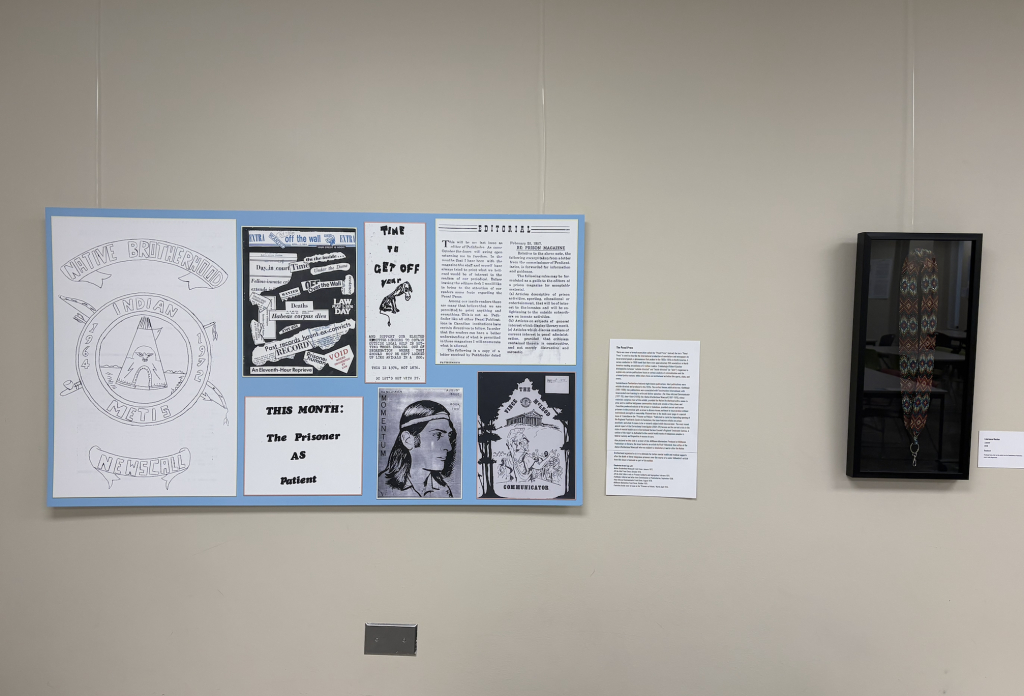
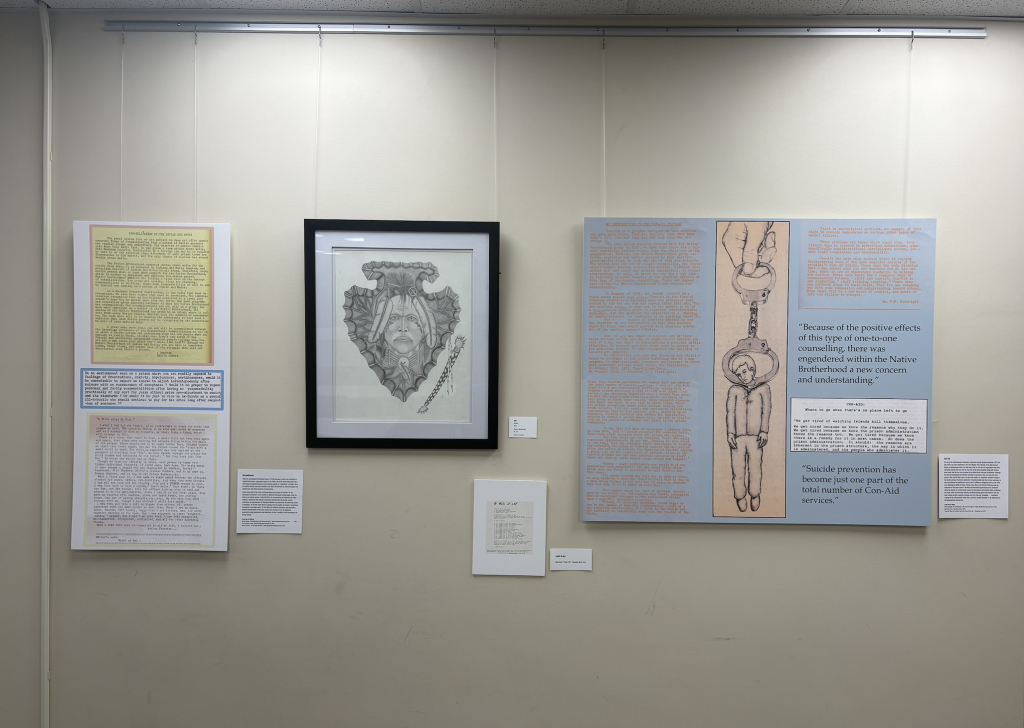
The Native Brotherhood at Saskatchewan Penitentiary exhibition, curated by Jason Demers, opened in May and runs through September. (Image Credit: EFN Media)
Native Brotherhood at Sask Penitentiary

New prison-art exhibit spotlights issues in colonial prison system

Jun 10, 2026 | 3:55 PM

A new, one-of-a-kind exhibition is spotlighting the ongoing issue of over-representation of Indigenous peoples in provincial and federal custody.

The exhibition, currently on display in Regina, has been years in the making and has produced some considerably emotional responses.

“People have had visceral responses to the boards, because they do contain a lot of trauma, so it can be triggering,” said Jason Demers, curator of the exhibition, and associate professor of English and Creative Writing at the University of Regina.

“But, people have also said the exhibit has helped them work through things.”

The exhibit features writing and artwork created by prisoners at the Saskatchewan Penitentiary in Prince Albert, dating back from the mid-1960s to present day.

Located in the Archway Exhibition Space at the main library at the university, the exhibit provides a window into life in prison, and the impact of being away from culture and family.

It includes writing, articles, poetry, and art, thematically organized into subjects like ‘rehabilitation’ and ‘depravations’, as well as the history of the Native Brotherhood.

The exhibition features writing, articles, poetry, art, beading, lanyards, and earrings made from inmates at the Saskatchewan Penitentiary.

“This (project) started out as a recognition of the way that incarcerated people are represented in a museum – it often reduces them to improvised weaponry and riots. And doesn’t do much to understand who incarcerated people are,” said Demers.

During his research, Demers came across a grassroots organization called the Native Brotherhood, a group formed in the Saskatchewan Penitentiary in 1964 by incarcerated Indigenous men who banded together in order to understand their shared struggles.

The Native Brotherhood produced newsletters and artwork, which helped Demers make connections between past and present struggles of incarcerated Indigenous men.

“The activism of (the Native Brotherhood) led to a number of gains and infrastructure to Indigenize prison, which means there’s Elders available, pipes, ceremonies, and sweats. So the artwork on display represents some of the culture that is practiced inside the institution as a result of their struggles,” he said.

“It’s also a recognition that these men were banding together and finding each other in the midst of crisis in the over-incarceration of Indigenous peoples.”

The Native Brotherhood movement began in 1964 at the Saskatchewan Penitentiary in Prince Albert, SK.

During his research, Demers found a 1967 report from the Canadian Corrections Association called ‘Indians and the Law’, which found that Indigenous peoples were disproportionately impacted by the justice system, often facing harsh sentences for minor, poverty-related offences.

Almost 60 years later, a report from Statistics Canada released in January found that Indigenous adults are incarcerated at a rate of 19.4 times than non-Indigenous adults, and represent roughly 78 percent of the adult provincial custody population.

“These are things that the government understood in their report in 1967, and here we are with an incarceration rate that is 19.4 times higher for Indigenous people,” said Demers.

This report, as well as articles from the Native Brotherhood, found that the Residential School system, as well as the high rates of incarcerated men, resulted in high poverty rates in Indigenous communities.

“It’s really remarkable. We’re so quick to discriminate, to box in our understanding of people who are incarcerated, but these are people who were at the forefront of advocating for community issues,” said Demers.

The exhibit on the Native Brotherhood is the product of about five years of research from Demers. Each piece not only credits, but financially compensates each of the artists – something of rarity with prison art, said Demers.

Each piece is also accompanied by a QR code, allowing visually-impaired visitors to listen to the captions, read by Indigenous voice actors Arron Naytowhow, Eric Standing, Thomas Maxie, and Dean Tanner.

Demers said he hopes the exhibition, which runs through mid-September, can spark or continue important conversations.

“Prisons are colonial institutions, and I think we need to work through how we understand each other and how we’re working together. That involves conversations,” he said.

“So I hope stereotypes are broken down, and long-stalled issues are started up again.”

*EFN Media (formerly known as Eagle Feather News) is Saskatchewan’s most widely circulated, 100%-Indigenous-owned news agency. It provides independent journalism, commentary, and community stories focusing on First Nations and Métis peoples.