Click here to sign up for our free daily newsletter.
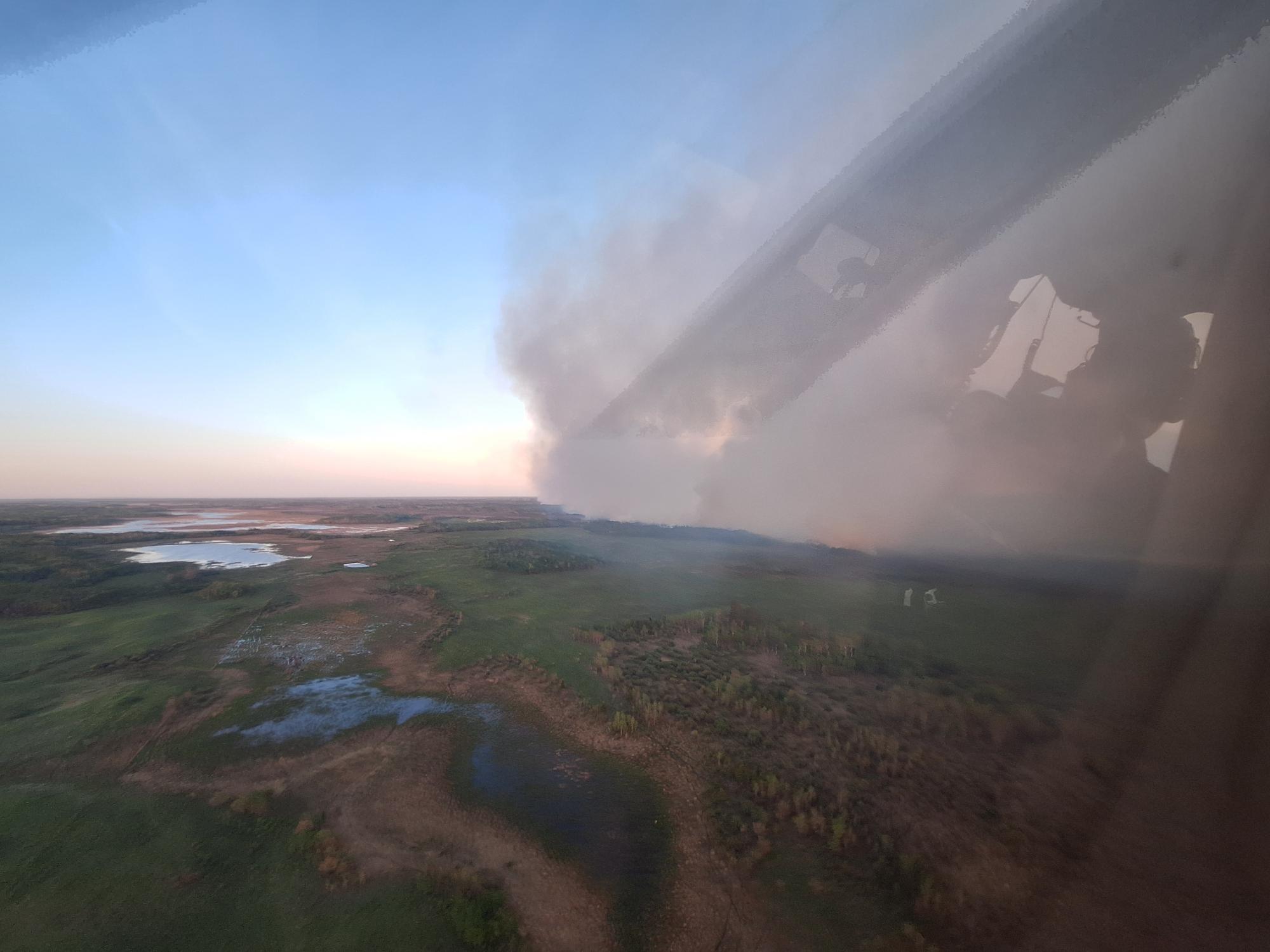
On Sunday, the SPSA warned that while the Lobstick fire may appear to be settled, it is still not fully contained and will be affected by the weather conditions. (Image Credit: SPSA/Facebook)
11 active wildfires

Resources pour into Lobstick and Cayford wildfires, as crews contend with challenging conditions

May 31, 2026 | 12:17 PM

No homes or significant infrastructure has been lost to the Lobstick wildfire, despite unpredictable conditions for firefighters and the growth of the blaze to 19,000 hectares. 

The wildfire prompted the evacuation of about 130 people in the Rural Municipality of Shellbrook and put Holbein on an evacuation alert. Earlier this weekend, it was burning about 11 kilometres away from the Town of Shellbrook.  

Saskatchewan Public Safety Agency (SPSA) Type 1 firefighters are working on both flanks of the Lobstick fire, supported by personnel from SPSA bases across the province. Type 2 firefighters, heavy equipment operators, water tenders, and local fire service crews from Shellbrook and Buckland are also assisting.  

A heavy helicopter from the federal government arrived in Prince Albert on Saturday. The feds are also sending a second specialized, high-performance turboprop airtanker to Saskatchewan. 

Crews are using fire protection measures to safeguard communities and properties. A fire gel contractor is applying protective gel to homes and vegetation on both sides of the North Saskatchewan River. Farther north, a wildfire contractor from British Columbia is installing a four-inch water line around Holbein to supply sprinklers positioned on the outskirts of the hamlet, helping keep the area moist and increase local humidity. 

The federal government sent a heavy helicopter and a high-performance turboprop airtanker to help fight forest fires in Saskatchewan.
The federal government sent a heavy helicopter and a high-performance turboprop airtanker to help fight forest fires in Saskatchewan. (Image Credit: SPSA/Facebook)

On Sunday, work was expected to continue on the construction of helicopter landing pads on the eastern flank of the wildfire, which started on Tuesday between Duck Lake and MacDowall before jumping the river into the RM. 

“On the north side of the Saskatchewan River, SPSA will be building a dozer line heading east towards the river to help prevent the fire from advancing to an important transmission line,” said Michael Weger, Saskatchewan’s Minister of Community Safety and Minister responsible for the SPSA. 

Aircraft crews successfully redirected and anchored the head of the fire into Callaghan Lake, helping slow its advance. 

On the fire’s east flank, in the South Nisbet block west of Macdowall, crews are working with dozers, water tenders and support teams to build containment lines and extinguish hot spots. 

Meanwhile, the Cayford fire in the province’s northeast, is just under 10,000 hectares in size and is burning about 2.5 kilometres south of Highway 55.  

About 1,200 evacuees from Red Earth and Shoal Lake Cree Nation are being evacuated and will be supported by the Red Cross.  

While the SPSA updated the situation on the two largest fires burning in the province, Weger said there are crews actioning 11 different wildfires across Saskatchewan right now, four of which are not contained. On this day last year, there were 16 active wildfires. 

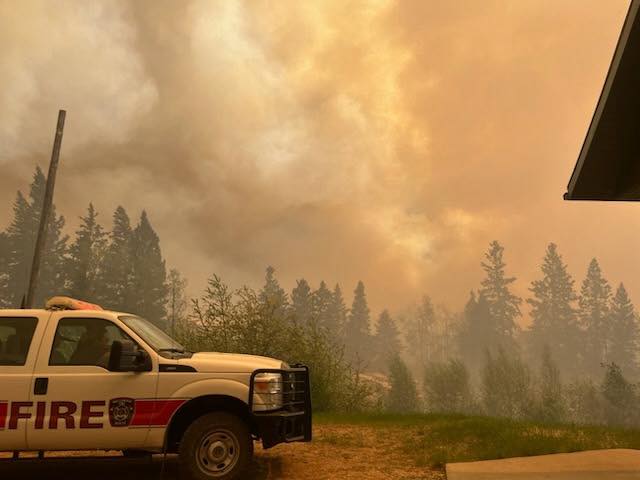
Winds are gusting to 70 kilometres per hour in the Shellbrook area Sunday, and the Environment Canada forecast included a risk of thunderstorm in the evening.
Winds are gusting to 70 kilometres per hour in the Shellbrook area Sunday, and the Environment Canada forecast included a risk of thunderstorm in the evening. (Image Credit: SPSA/Facebook)

The relatively low number of active incidents is what’s allowed the SPSA to allocate so many resources to the Lobstick and Cayford wildfires according to Weger, but he said it’s important for the public to remain diligent and be fire smart as crews contend with unpredictable conditions. 

“The Cayford fire moved about 11 kilometres yesterday and it was some old fire area that had burnt and had some new growth in it,” said Weger, explaining there are a number of factors that can fuel a fire including wind, material and terrain.  

“The Lobstick fire had a touch of rain and you’d think that’s a good thing, but it also came with some lightning and crews had to get out of the way and aerial assets had to back off to let the storm come through,” he said.  

“So, the SPSA has to monitor all of that and then try to project where it’s going and what angle they want to fight it from.” 

Environment Canada said a surface low and upper trough to the southwest will bring cloudy skies, east-southeasterly winds, chance of showers with the risk of thundershowers to the region Sunday. Up to 10mm of precipitation could happen, along with winds gusting to 70km/h and a risk of small hail in the thunderstorm.

With changing weather and fire conditions continuing to challenge crews, officials are urging the public to stay informed and follow all wildfire advisories and restrictions. 

panews@pattisonmedia.com