Click here to sign up for our free daily newsletter.
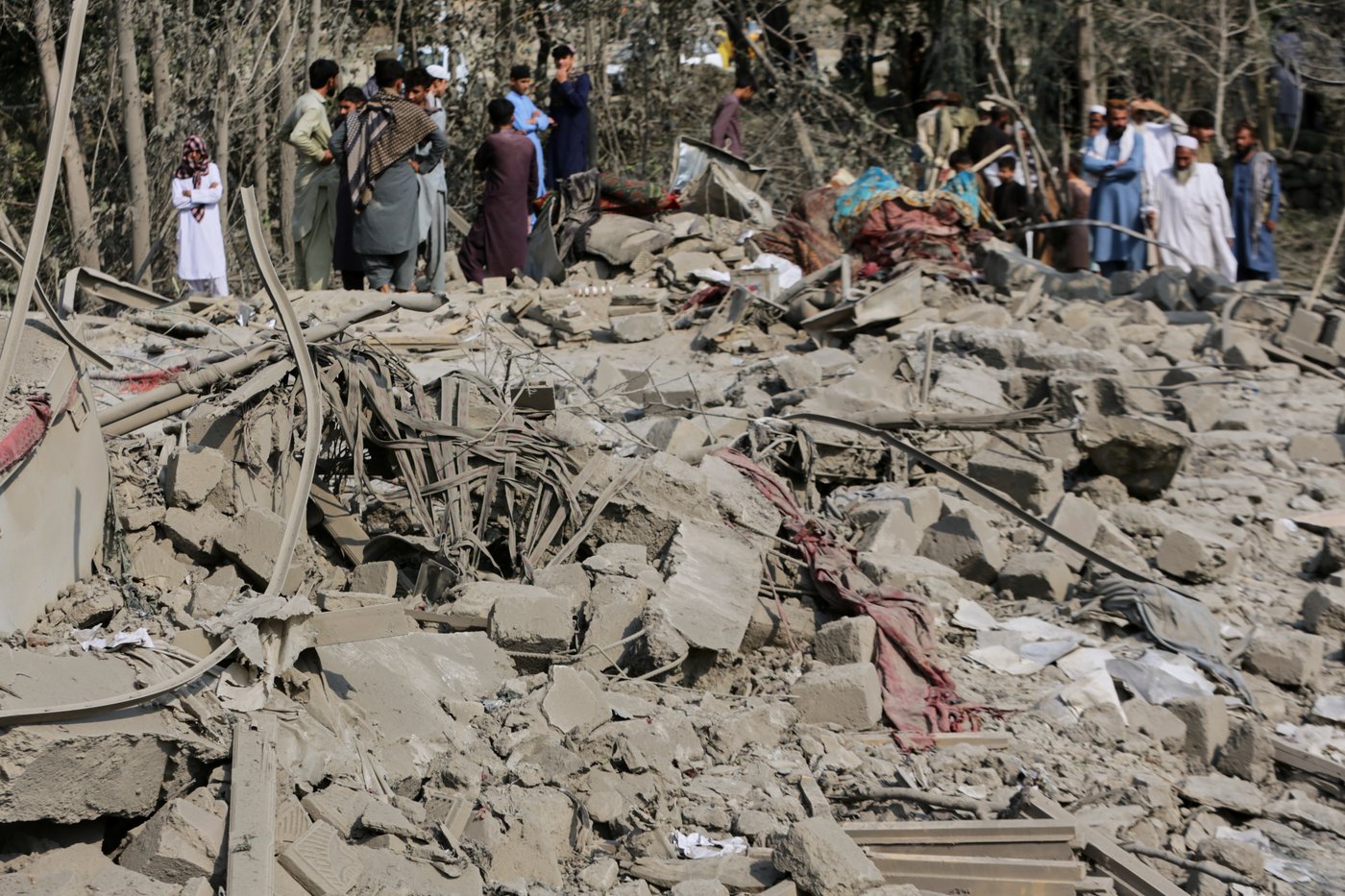
Residents inspect the rubble of a house destroyed in a strike in Patan village, Kunar province, eastern Afghanistan, Monday, Sept. 21, 2026. (AP Photo/Shafiullah Kakar)

Pakistan says airstrikes in Afghanistan kill 28 militants; Kabul reports 3 civilians killed

Sep 20, 2026 | 11:39 PM

ISLAMABAD (AP) — Pakistani fighter jets on Monday struck sites in eastern Afghanistan that Pakistani officials described as suspected militant hideouts. Pakistan said 28 militants were killed, while authorities in Kabul reported at least three civilian deaths.

The strikes near the countries’ shared border marked a renewed escalation in tensions, raising the prospect of further cross-border hostilities. They also threatened to complicate mediation efforts by regional powers, including China.

The strikes came after Pakistan warned that it could target militants inside Afghanistan following two deadly attacks on Pakistani security forces near the border in recent days.

The United Nations Mission in Afghanistan, known by its acronym UNAMA, said in a social media post on X that it had confirmed that “at least three civilians, including a man, a woman and a girl, were killed and four injured in apparent airstrikes” in Afghanistan’s Kunar province in the early hours of Monday.

UNAMA said it had documented over 1,100 civilian deaths and injuries in Afghanistan from cross-border violence so far this year.

“We reiterate our call for respect for international humanitarian law to prevent civilian casualties,” it added.

Escalating tension between Pakistan and Afghanistan

Pakistan’s Information Ministry said security forces conducted a planned, intelligence-driven ground operation in the northwest following a series of militant attacks in the country. The operation was followed by “calibrated airstrikes against the hideouts and safe havens of terrorist organizations responsible for these attacks.”

The ministry said in a post on X that the airstrikes killed 28 militants along the Afghan border. Afghanistan’s government said the strikes killed three civilians and wounded four others — a toll confirmed by the UN.

Militant attacks targeting Pakistan’s police and security forces have surged in recent years. The escalation follows months of military action. Hundreds of people have been killed in cross-border fighting since February, when Afghanistan launched retaliatory strikes after Pakistan carried out airstrikes inside Afghan territory.

Authorities in Islamabad have blamed the Pakistani Taliban and allied militant groups for most of the violence. The Pakistani Taliban are separate from but allied with the Afghan Taliban that returned to power in 2021.

Afghanistan vows to respond

Afghan government spokesman Zabiullah Mujahid condemned the airstrikes in a post on X and said there would be a response.

“We condemn this aggression and oppression, regarding it as a repetition of such crimes. Pakistani military circles have once again committed such a crime to divert attention from their country’s security failures,” he wrote. “The Afghans will give a fitting response to this, God willing.”

Afghanistan’s Foreign Ministry summoned Pakistan’s chargé d’affaires in Kabul and lodged a formal protest about the strikes.

“The Islamic Emirate of Afghanistan regards these attacks as a clear violation of Afghanistan’s national sovereignty and territorial integrity and condemns them in the strongest terms,” the ministry said in a statement. “The Islamic Emirate once again categorically rejects allegations that recent security incidents in Pakistan originate from Afghan soil.”

Afghan deputy government spokesperson Hamdullah Fitrat said the strikes occurred around 3 a.m. in Nurgal district of Kunar province and Barmal district of Paktika province. Citing preliminary information, Fitrat said a local resident’s home was struck, killing three family members and wounding four other relatives.

Fitrat said strikes in the Rakhah and Tor Kundi areas of Barmal destroyed a shop and an unoccupied house, but caused no casualties.

Attacks come after days of violence

The strikes came a day after six Pakistani security personnel, including two army officers, were killed in a shootout with militants in Hangu, a district in northwestern Khyber Pakhtunkhwa province near the Afghan border.

On Friday, a suicide bomber struck a mosque inside a police compound in the Pakistani city of Kohat. Eight gunmen stormed offices, setting off a 20-hour gunbattle during which at least 21 people, most of them police officers, were killed and more than 100 were wounded, Pakistani officials said.

Pakistan calls on Kabul to dismantle militant sanctuaries

Pakistan’s Information Ministry warned on Saturday that the country could strike militants inside Afghanistan in response to attacks on Pakistan. It blamed the Kohat attack on militants allegedly based in Afghanistan and accused the Afghan Taliban government of sheltering and supporting groups that carry out attacks in Pakistan.

Afghanistan has long denied Pakistan’s claims that it provides shelter or support to militants.

“Pakistan has both the will and the capability to eliminate terrorist threats wherever they are,” the ministry said. It also called on Kabul to take “credible, verifiable and sustained measures” to dismantle what Pakistan describes as militant sanctuaries and recruitment and training networks in Afghanistan.

No group had claimed responsibility for the attacks in Kohat or Hangu by the time of Monday’s strikes. Suspicion fell on the Pakistani Taliban, formally known as Tehrik-e-Taliban Pakistan, or TTP, which has intensified attacks on police and other security forces in Pakistan in recent years.

Pakistan has repeatedly accused the Taliban government in Kabul of sheltering TTP leaders and allowing militants to launch cross-border attacks. Afghanistan’s government denies the allegations.

___

Afghan reported from Kabul, Afghanistan. Associated Press writer Riaz Khan in Peshawar, Pakistan, and Elena Becatoros in Athens, Greece contributed to this report.

Munir Ahmed And Abdul Qahar Afghan, The Associated Press