Click here to sign up for our free daily newsletter.
Political leaders sign the agricultural benefits settlement agreements with The Key First Nation and Muskeg Lake Cree Nation in Muskeg Lake Cree Nation on Aug. 22, 2026. (Image Credit: Muskeg Lake Cree Nation/Facebook)
Ag Settlements

Two Saskatchewan First Nations settle agricultural benefits claims for more than $209 million

Aug 25, 2026 | 10:31 AM

Two Saskatchewan First Nations have reached settlements with Canada over historic agricultural benefits claims tied to Treaties 4 and 6.

The Key First Nation, about 26 kilometres northwest of Kamsack and northeast of Yorkton, and Muskeg Lake Cree Nation, located nearly the village of Marcelin, will receive a combined $209.5 million through individual settlement payments.

Muskeg Lake Cree Nation will receive $121,077,713, while The Key First Nation will receive $88,440,000.

The settlements were announced at Muskeg Lake Cree Nation over the weekend, where Crown-Indigenous Relations Minister Rebecca Alty and Secretary of State for Rural Development Buckley Belanger joined representatives from both First Nations to mark the resolution of the claims.
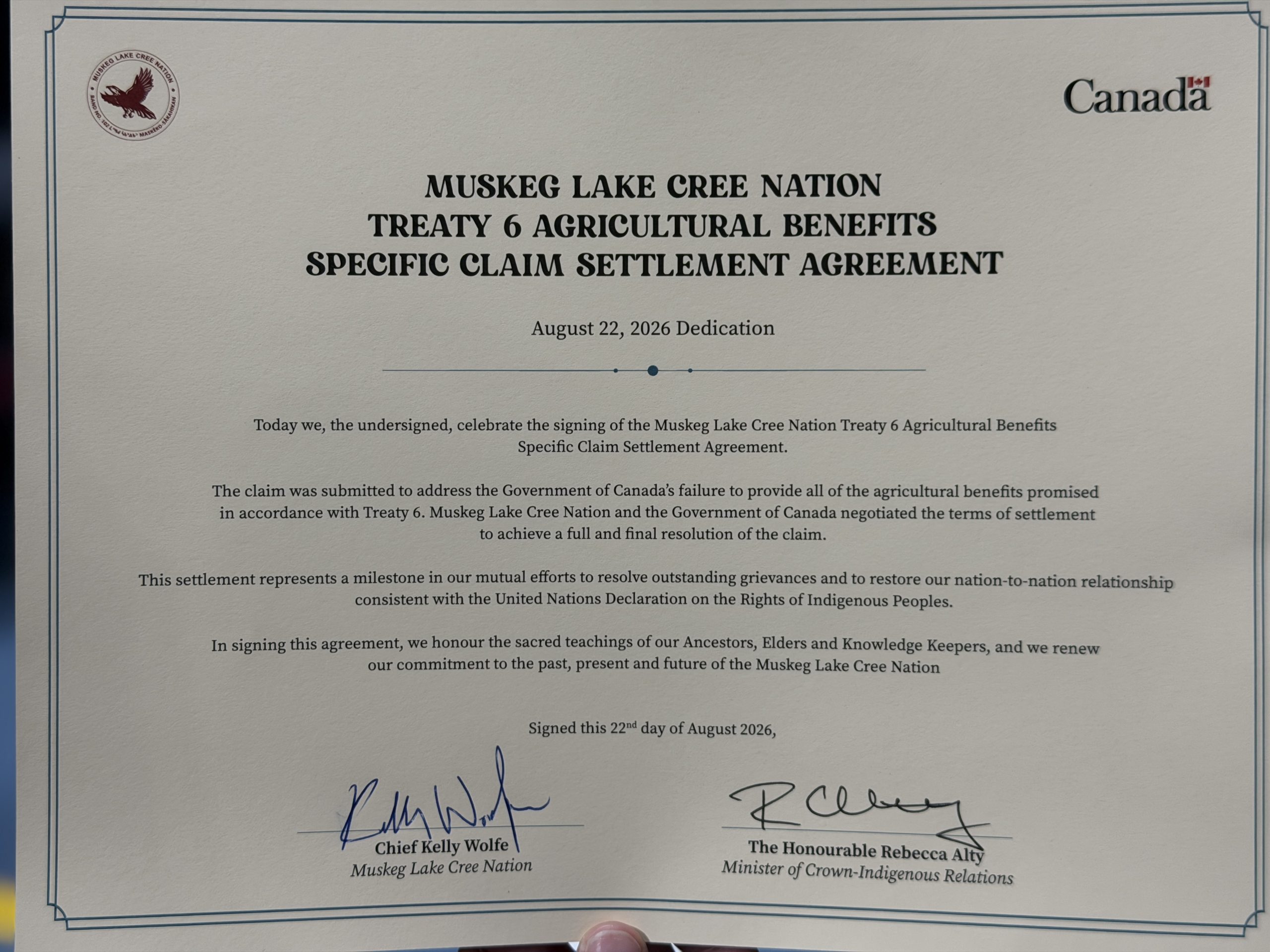


(Image Credit: Muskeg Lake Cree Nation)

The claims relate to Canada’s failure to provide some of the farming support promised under Treaties 4 and 6.

That support included ploughs, seeds, cows, bulls and other supplies intended to help First Nations transition into farming and other economic activities, particularly as buffalo populations declined.

Canada said without that support, the communities did not have the tools and resources needed to develop their lands for agriculture and support their members.

The settlements are being described by the federal government as another step toward renewing its relationship with First Nations and addressing historic Treaty obligations that were not fulfilled.

“The resolution of these claims marks an important milestone in Canada’s relationships with The Key First Nation, and Muskeg Lake Cree Nation,” Alty said.

“These settlements recognize the agricultural benefits promised to these communities under Treaties 4 and 6 and acknowledge the lasting impacts of Canada’s historic failure to fulfill those commitments.”

Chief Dustin Dayan Brass of The Key First Nation said the settlement represents the beginning of a renewed Nation-to-Nation relationship.

“This milestone marks an important moment in our Nation’s history, and we look forward to continuing to advance economic reconciliation between our Nation and the Crown,” he said.

Muskeg Lake Cree Nation Chief Kelly Wolfe said the settlement acknowledges Canada’s failure to uphold its treaty commitments and the lasting impacts on the First Nation.

“For Muskeg Lake Cree Nation, this settlement marks a significant milestone and reinforces our responsibility to invest in our Nation, advance our priorities, and create opportunities for future generations,” Wolfe said.

Belanger said the settlements address what he described as a historic wrong.

“By addressing the mistakes of the past, we can move forward together with First Nations as they invest in their people and build a more self-sufficient future,” he said.

Treaty 4, also known as the Qu’Appelle Treaty, was signed on Sept. 15, 1874, between Queen Victoria and Indigenous Peoples. The treaty covered a large area of the Canadian Prairies, including parts of Saskatchewan, Manitoba and Alberta.

Treaty 6 signings began on Aug. 18, 1876, and ran until Sept. 9, 1876. The treaty involved the Crown and the Plains and Woods Cree, Assiniboine and other band governments at Fort Carlton and Fort Pitt.

Aug. 23, 2026 marked the 150th anniversary of the signing of Treaty 6.

panews@pattisonmedia.com