Click here to sign up for our free daily newsletter.
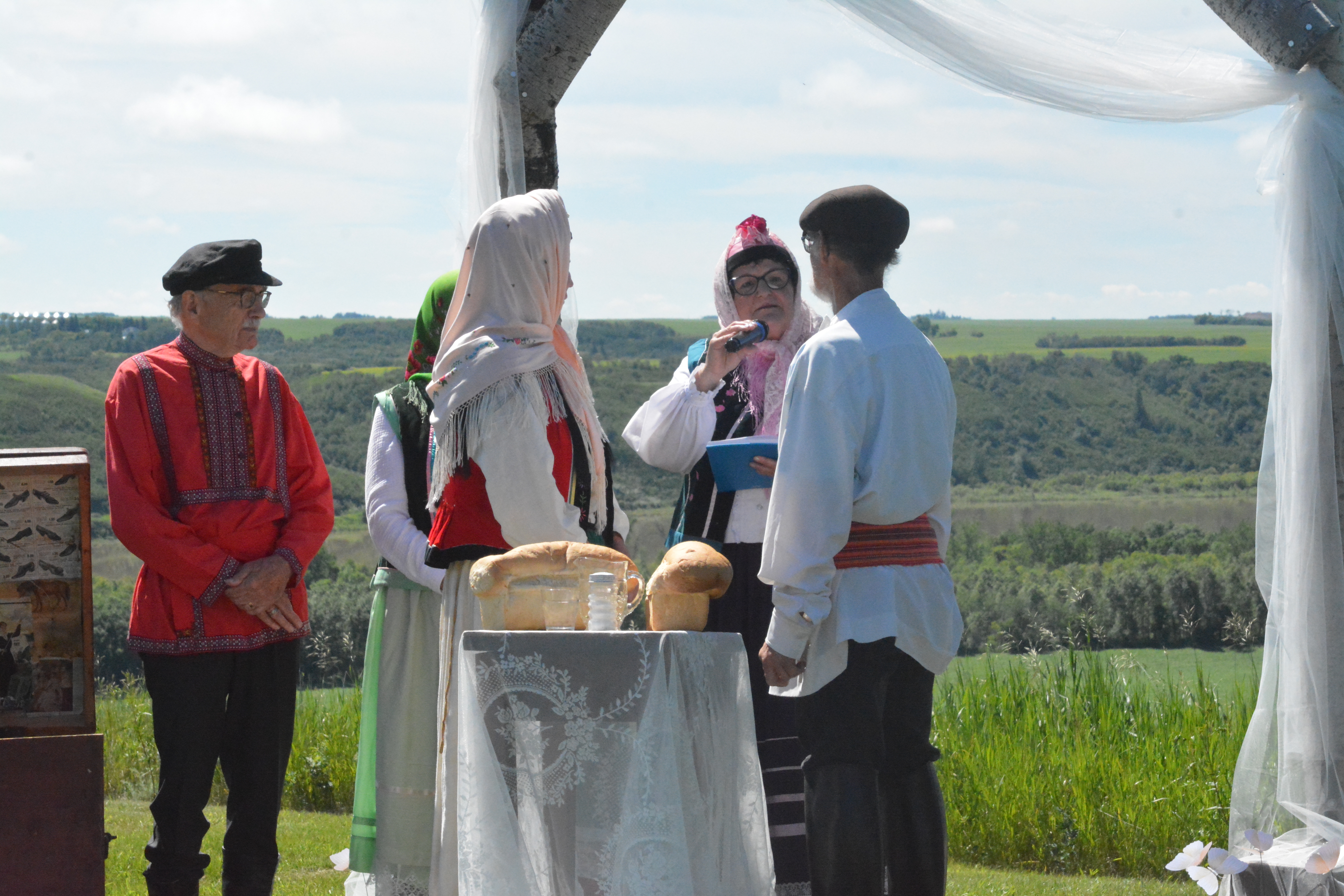
Brenda Cheveldayoff, left, takes part as the bride in a traditional Doukhobor wedding re-enactment at the Doukhobor Dugout House National Historic Site of Canada near Blaine Lake on Saturday, July 4, 2026. (Image Credit: Kenneth Cheung/battlefordsNOW)
culture

The groom lost the ring. At this traditional Doukhobor wedding, it didn’t matter

Jul 6, 2026 | 5:10 PM

The groom had lost the ring.

At most weddings, that would be a disaster. But at a hillside dugout near Blaine Lake, the ceremony carried on.

There was bread and salt. Water and an old trunk. A rug passed from one generation to the next.

There was no need for a ring.

“We never used rings,” said Elder Jeanette Stringer.

The missing ring was the playful twist in a traditional Doukhobor wedding re-enactment on July 4 at the Doukhobor Dugout House National Historic Site of Canada. It is one of Saskatchewan’s most important early-settlement heritage sites. Located about 80 kilometres north of Saskatoon near Blaine Lake, it preserves the remains of a dugout home built by Russian Doukhobor immigrants in 1899.


A video captures most of a traditional Doukhobor wedding re-enactment at the Doukhobor Dugout House National Historic Site of Canada near Blaine Lake on Saturday, July 4, 2026. (Video Credit: Kenneth Cheung/battlefordsNOW)

While the missing ring was a plot twist in the performance, the tradition behind it was real. In the early days, Stringer said, Doukhobor couples did not exchange wedding bands.

“Well, because there was no need for the rings. …There was no need as long as the family, and they loved each other.”

Stringer said the bride and groom receive their blessings from the community “rather than just from one person.”

The parents stand at the heart of the ceremony.

Traditionally, the bride and groom would arrive together, accompanied by their parents. The mothers would each give a loaf of bread to help bring the two families together. The parents would offer their blessings, followed by an elder.

The couple would bow to one another. Around them, ordinary objects told the rest of the story.

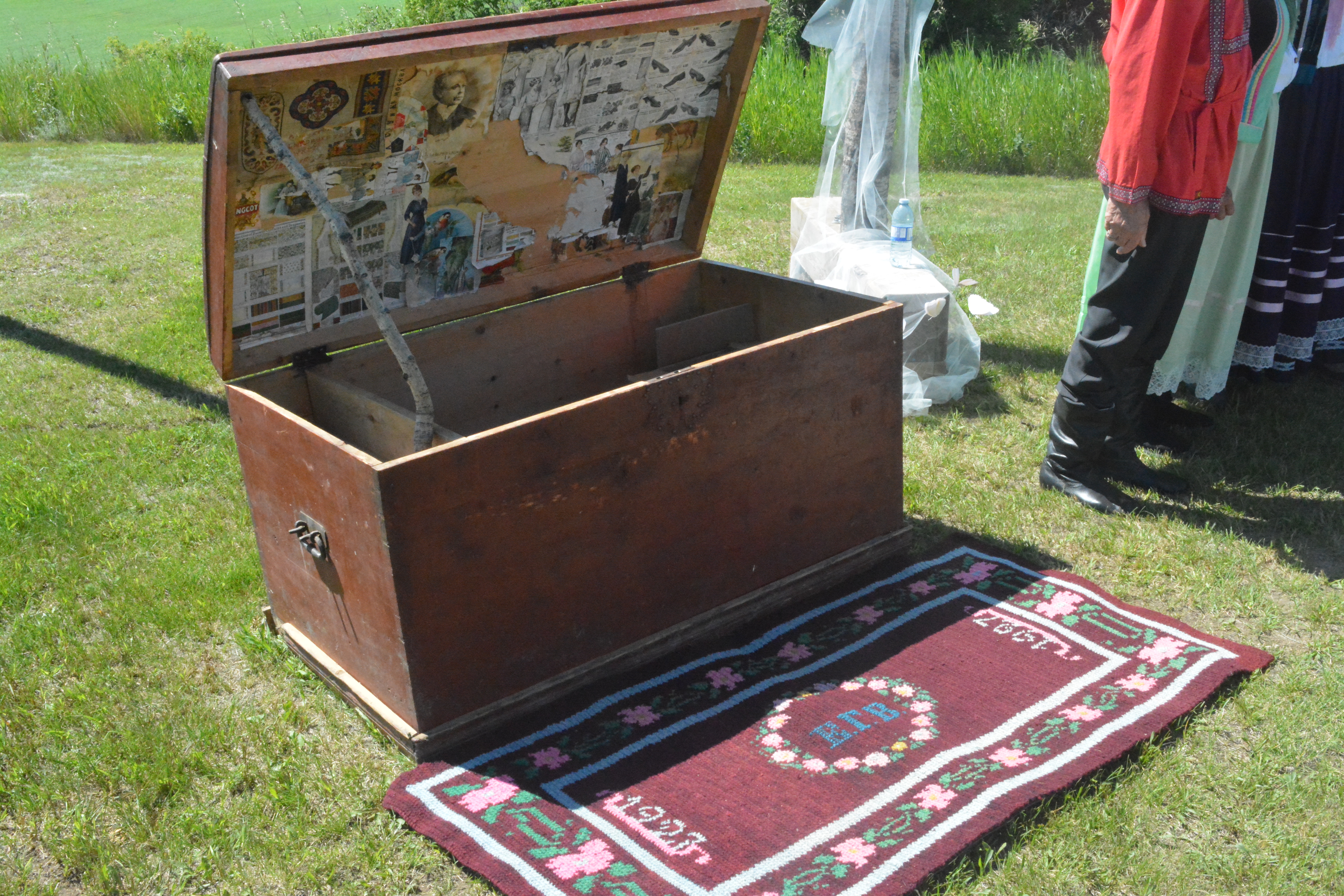
A trunk represented a young woman’s preparations for married life. Stringer said she would have spent years gathering practical belongings – tea towels, aprons and other things she would need – before taking them with her when she married.

Families did not have much, Stringer said, so they took what they could.

Brenda Cheveldayoff, left, takes part as the bride in a traditional Doukhobor wedding re-enactment at the Doukhobor Dugout House National Historic Site of Canada near Blaine Lake on Saturday, July 4, 2026.
Brenda Cheveldayoff, left, takes part as the bride in a traditional Doukhobor wedding re-enactment at the Doukhobor Dugout House National Historic Site of Canada near Blaine Lake on Saturday, July 4, 2026. (Image Credit: Kenneth Cheung/battlefordsNOW)

A rug could be handed down from one generation to the next. And then there was the bread, salt and water.

Stringer said the three are present not only at Doukhobor weddings, but also at funerals and prayer services, a tradition brought from Russia.

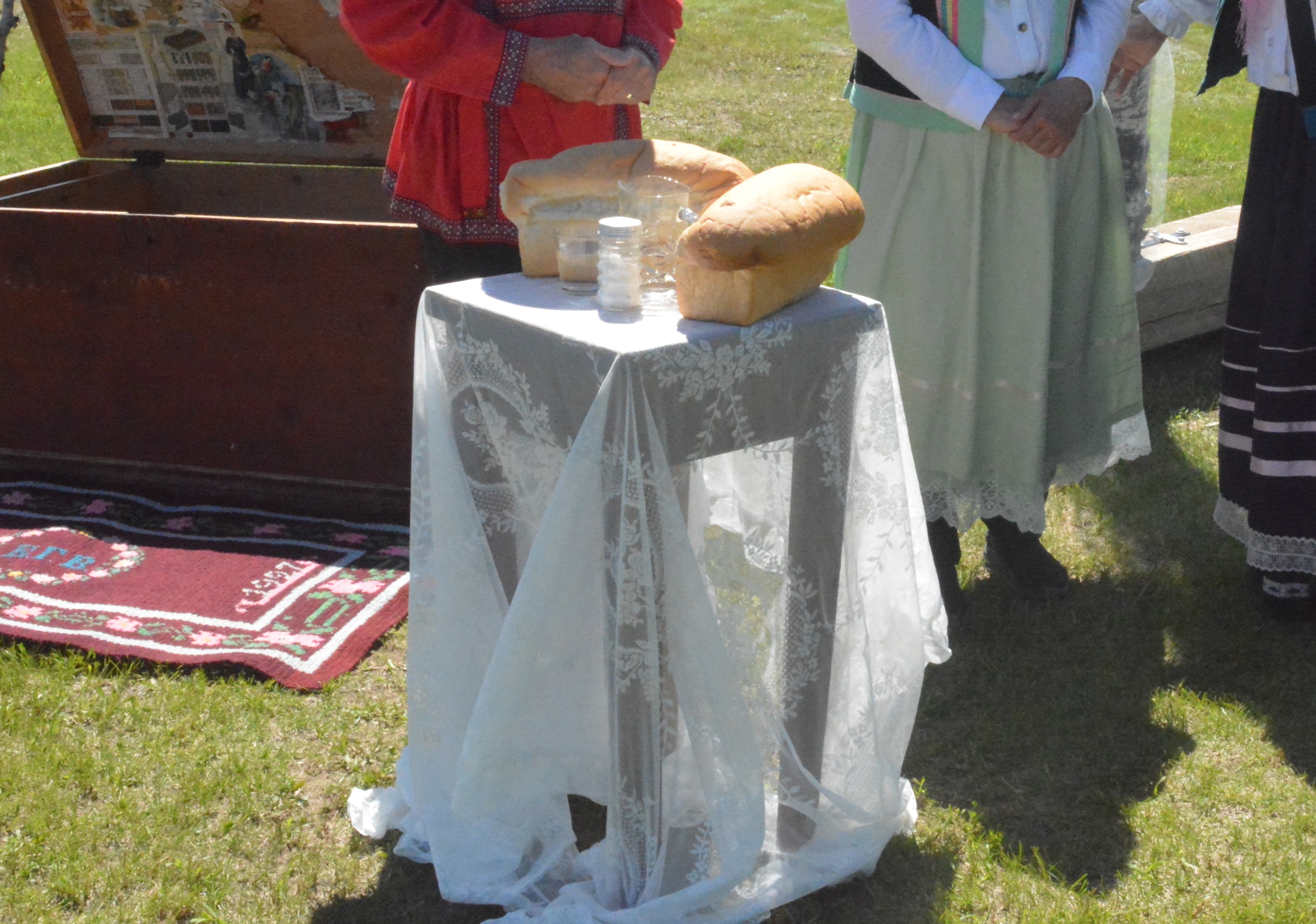
“The bread is a staff of life, the salt has the essence of life, and the water is the spirit of life,” she said. “The three things that we can’t live without.”

For Brenda Cheveldayoff, founder of the historic site, recreating the wedding was a way of putting that history back into motion.

The site chooses a different theme from Doukhobor heritage each year. This time, Cheveldayoff wrote the script and stepped into the role of the bride.

“It was a lot of fun even creating the script because I knew I needed to bring in the history, but I also knew I needed to engage the audience because this is Saskatchewan’s place. This is all the people’s place,” she said.

The lost ring gave the audience something familiar to laugh about. It also opened the door to a tradition built around something else.

“Well, one thing about weddings, they become very materialistic, and with the Doukhobor wedding, it’s not,” Cheveldayoff said.

“You don’t even need the ring as a symbol to make it significant. You just need each other and the commitment of each other.”

A traditional trunk and rug are displayed during a Doukhobor wedding re-enactment at the Doukhobor Dugout House National Historic Site of Canada near Blaine Lake, Sask., on Saturday, July 4, 2026. The trunk traditionally held practical items a bride gathered for married life, while the rug was passed down from generation to generation.
A traditional trunk and rug are displayed during a Doukhobor wedding re-enactment at the Doukhobor Dugout House National Historic Site of Canada near Blaine Lake, Sask., on Saturday, July 4, 2026. The trunk traditionally held practical items a bride gathered for married life, while the rug was passed down from generation to generation. (Image Credit: Kenneth Cheung/battlefordsNOW)
Bread, salt and water are displayed during a traditional Doukhobor wedding re-enactment at the Doukhobor Dugout House National Historic Site of Canada near Blaine Lake on Saturday, July 4, 2026. The three symbolize the staff of life, the essence of life and the spirit of life.
Bread, salt and water are displayed during a traditional Doukhobor wedding re-enactment at the Doukhobor Dugout House National Historic Site of Canada near Blaine Lake on Saturday, July 4, 2026. The three symbolize the staff of life, the essence of life and the spirit of life. (Image Credit: Kenneth Cheung/battlefordsNOW)

Stringer said Doukhobor couples use wedding bands today. In the 1800s, she said, there may also have been a practical reason for going without them.

“Where would they have gotten extra money to buy gold?” she said.

For Stringer, the day was about more than showing visitors how people once married.

“We want to share our traditions with the public,” she said. “So we like to keep it alive with the heritage that our ancestors brought for us.”

Service is actually available for couples to renew their vows in the Doukhobor tradition. And, the historic site isn’t finished finding new ways to bring the past into the present.

Cheveldayoff said the wedding was the first of a series of themed events planned over eight Saturdays and one evening this season, with something different each week.

One evening will turn to one of the most well-known mysteries in Doukhobor history, the assassination of Peter Verigin. Cheveldayoff said characters will bring the story to life, with visitors taking part rather than simply watching.

The site is also opening the new Ellianna Guest House this season after visitors asked for a place where families could stay.

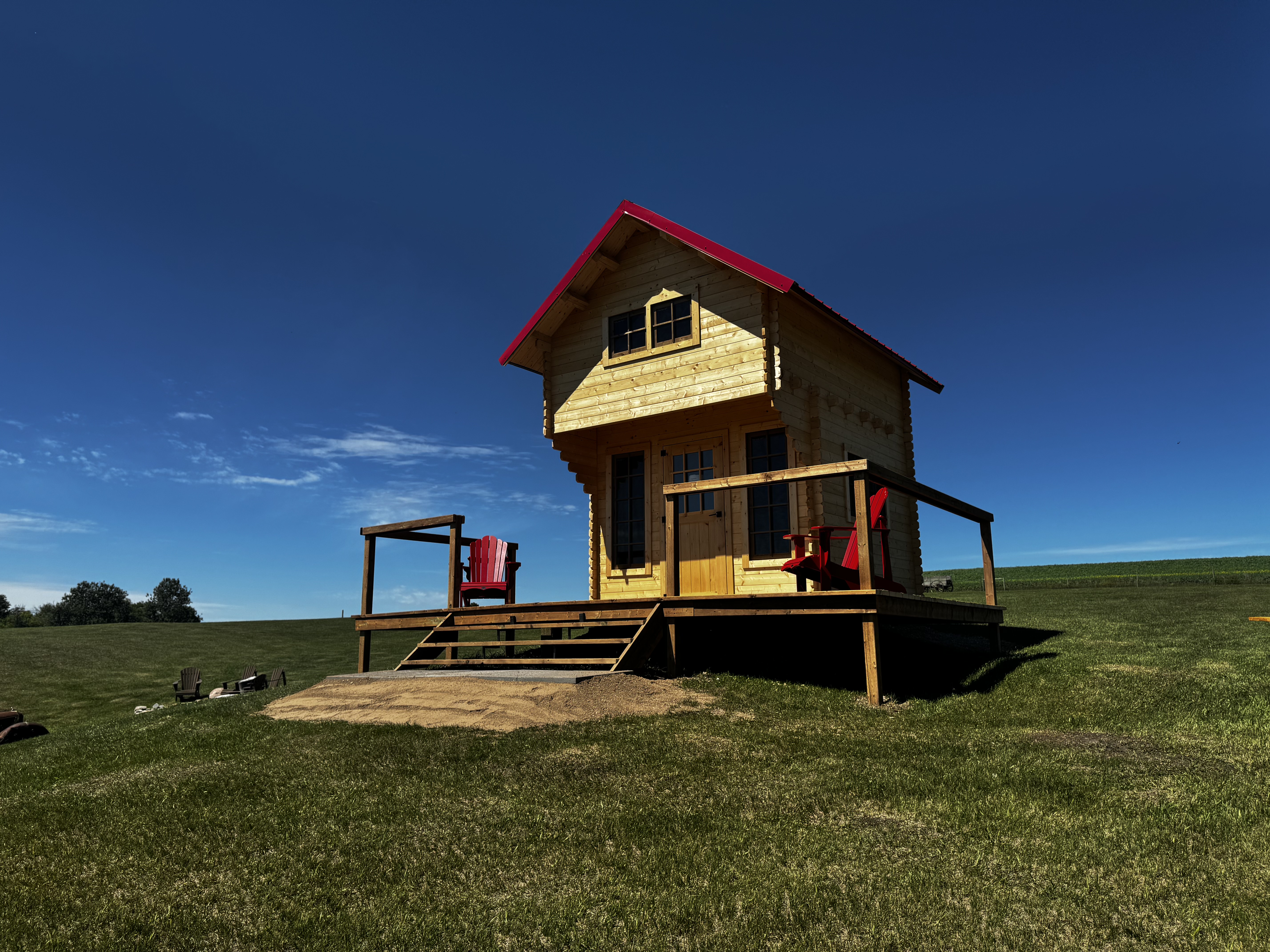
The new Ellianna Guest House is pictured at the Doukhobor Dugout House National Historic Site of Canada near Blaine Lake on Saturday, July 4, 2026. The family guest house, which sleeps four, is opening for the 2026 season.
The new Ellianna Guest House is pictured at the Doukhobor Dugout House National Historic Site of Canada near Blaine Lake on Saturday, July 4, 2026. The family guest house, which sleeps four, is opening for the 2026 season. (Image Credit: Kenneth Cheung/battlefordsNOW)

Built with support from Tourism Saskatchewan, the guest house sleeps four. Cheveldayoff said its log-style structure was assembled without nails or screws, reflecting a method used by Doukhobor settlers.

When guests stay overnight, she said, the historic site is closed to the public, leaving them with the grounds to themselves and the option of experiencing cultural foods.

Whether through a wedding, a mystery or a night spent on the land, Cheveldayoff believes the aim is to make history something people can step into.

READ MORE: ‘War… what is it good for?’: Doukhobor stories share peace through tourism

Kenneth.Cheung@pattisonmedia.com