Click here to sign up for our free daily newsletter.
Canadian Energy Metals announced the discovery of the critical mineral alumina near Tisdale. (Image Credit: Submitted photo/Christopher Hopkins)
Alumina powerhouse

Premier Moe: Discovery of alumina near Tisdale of global importance  

Jan 30, 2026 | 12:16 PM

The discovery of a large amount of alumina – the source mineral for aluminum – near Tisdale, will be a game changer for the community, the province, the country and beyond.

Saskatchewan Premier Scott Moe spoke alongside Christopher Hopkins, hea d of Canadian Energy Metals, several engineering firms and local officials at a formal announcement on Friday morning in Saskatoon regarding the ‘Thor Project.’

“We believe we’ve got a game changer when it comes to greening of the industry,” Hopkins said.  
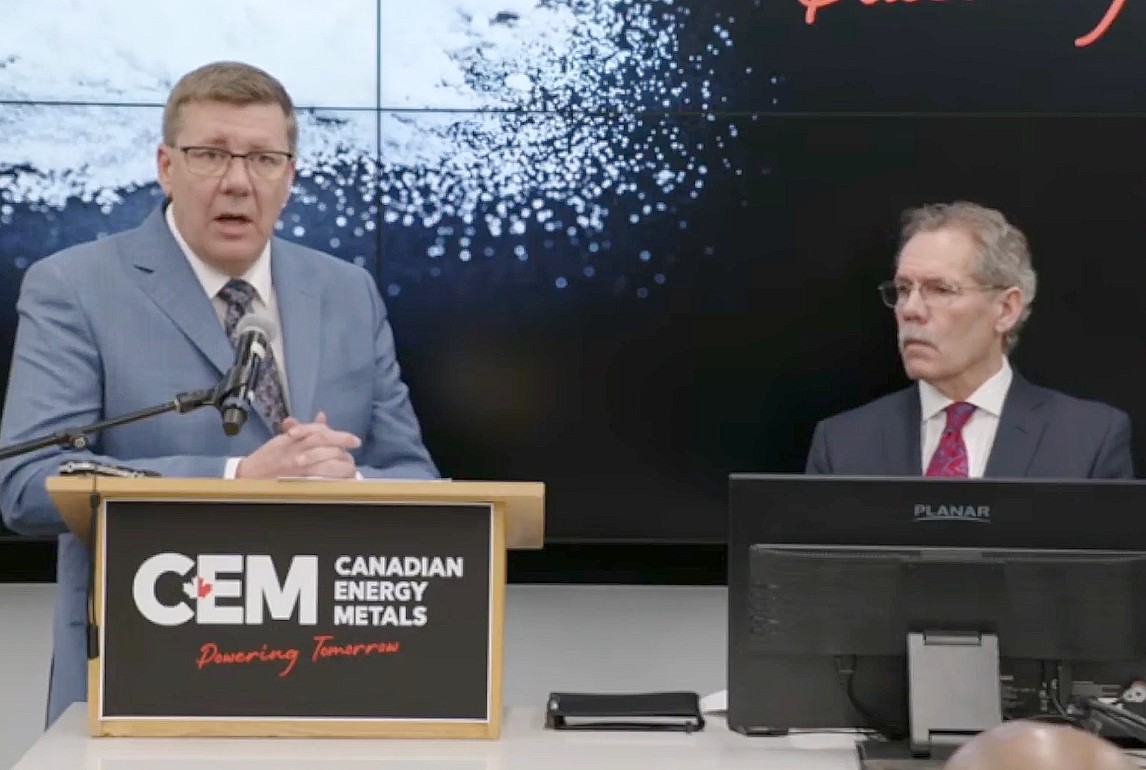
Saskatchewan Premier Scott Moe and Canadian Energy Metals CEO Christopher Hopkins spoke at a press conference Friday morning.
Saskatchewan Premier Scott Moe and Canadian Energy Metals CEO Christopher Hopkins spoke at a press conference Friday morning. (Image Credit: Screenshot/Premier Moe Facebook)

This particular find contains 50-billion tonnes of critical minerals, including close to 7-billion tonnes of alumina. It also includes scandium and vanadium, which are highly concentrated in a small area near existing infrastructure. Both are important minerals used in alloy production.

That makes the find attractive to investors, along with being in a province and a country offering stable investment opportunities at a time of global change and increased investment in defense.  

“That’s significant to these types of industries,” Moe said.  “The security of a having a resource that is about one-third of global reserves today, I think that’s incredibly significant, far beyond the economic terms we could discuss from a strategic general security perspective.”  

northeastNOW first talked to Hopkins about the find back in September, when he explained why this discovery is different.  

“Long term, it offers a source of economic activity for the area, and I would say, because of its scale, it offers economic activity for the rest of Saskatchewan and Canada. This is a major resource that’s been identified. We’re going to be active in continuing exploration activity, and we are proposing to develop a demonstration plant here in Tisdale over the next couple of years,” explained Hopkins. 

“The deposit is very large and appears to be amongst the largest deposits of alumina in the world, and it’s all in a fairly small area. Our objective is to establish that there is, in fact, a resource here and that it’s economically and technically feasible to develop. It’s not, however, our ambition to build a large mine and processing complex, as that’s not within our abilities, and we would expect a major to come and do that for us.” 

According to Hopkins, there is enough resource in the ground in the roughly 200-square-mile area, drilled by the company north of Tisdale, to mine for more than 2,000 years at 50-thousand tonnes per day. All of that represents an amount approximately equal to more than thirty per cent of the known world’s supply. 

“In terms of the metal, alumina is the most sought-after major mineral, certainly in the context of the transition from hydrocarbons to electric use. The efficiencies that you need require lightweight materials and aluminum is a lightweight metal, so it’s highly sought after. Most of the world’s aluminum comes from China, but that’s not a secure supply chain anymore,” he added. 

“Canada is a major producer of aluminum, but to the extent of about three to four percent of global consumption, so it’s not really a large producer in that context. With this resource, and the development of this resource, Canada could stand as a major producer in global terms, but that’s not up to us; that’ll hopefully evolve from this resource.” 

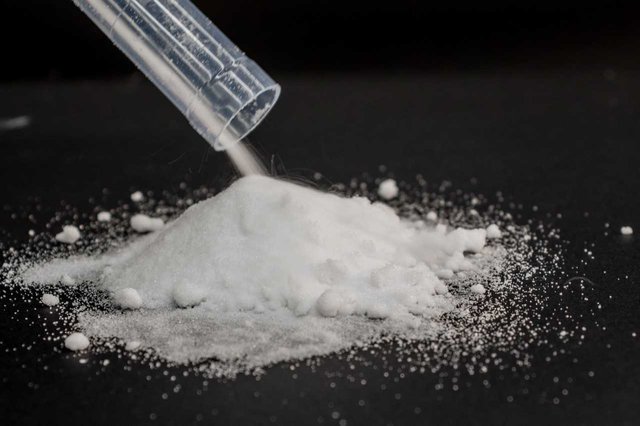
High purity alumina.
High purity alumina. (Image Credit: Submitted/Christopher Hopkins)

Another advantage of this resource, which is an alternative to bauxite, is the purity of alumina. Typically, alumina is recovered from bauxite, a process that is not as environmentally friendly. 

CEM, however, working with a global engineering firm and with its pilot facility at the Saskatchewan Research Council (SRC), is recovering very high purity alumina (up to 99.991 per cent). 

“It’s industry, and industry has impacts, so we would not say there are no impacts; however, this is a very clean industry, and it’s being designed on the principles of low carbon and high ESG (environmental, social, and governance) approach. In the context of aluminum, this would be the greenest aluminum on Earth available,” Hopkins concluded. 

CEM said the metals it targeted are essential to Canada’s advancement in aerospace, defense, and sustainable energy. 

Hopkins said during Friday’s news conference that he was impressed by the speed of the development of the project so far.  

“From an industrial perspective, the discovery hole was drilled in May of 2022. In basically 40 months, we’ve taken a resource from completely unknown to a point where we have  economic feasibility confirmed for two products,” he said. “Zero to sixty in months. I don’t think we could have done that anywhere else.” 

Moe confirmed that he spoke about the project to fellow premiers and Prime Minister Mark Carney at the First Ministers meeting on Thursday, and all expressed interest and questions about its impact on the global market.  

The community of Tisdale, with a population of just under 3,000 people, is welcoming the opportunity.

“Today marks a significant milestone for Tisdale, for Canadian Energy Metals’ preliminary economic assessment,” said Mayor Mike Hill. “It confirmed what many had hoped, the Thor project has potential to become Canada’s first major domestic alumina resource, an achievement with national and global significance. “

He said that while the community values its agricultural roots, it is ready to embrace the future.

“Tisdale is stepping into a new era of economic opportunity, the Thor project positions our region in the forefront of Canada’s alumina and critical mineral supply chain and we’re ready to grow with it.”

Both Moe and Hopkins pointed to the ‘green’ value of the discovery. Alumina takes less energy to smelt into aluminum and Canada uses hydroelectric supply to do so.

“This is the greenest of the green,” said Hopkins.

“Saskatchewan is very proud of what we produce, not only from an environmentally sustainable perspective, but also from an ethical perspective,” Moe said.

He equated the importance to the province with potash and uranium, the top two minerals Saskatchewan currently exports.

 —

susan.mcneil@pattisonmedia.com