Click here to sign up for our free daily newsletter.
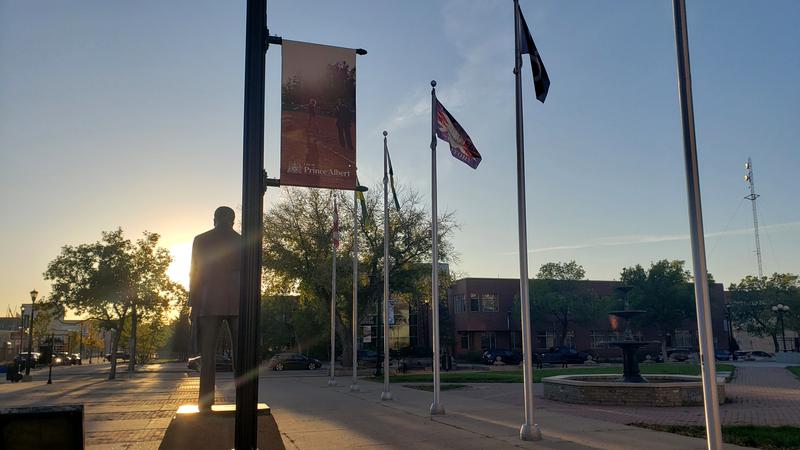
(file photo/paNOW Staff)
Religion and government

Group calls Prince Albert council prayer into question

Oct 10, 2024 | 6:00 PM

An ongoing effort by a group from British Columbia that aims to make sure governments are secular has taken aim at the prayer read at every council meeting in Prince Albert.

The Saguenay Project is an ongoing effort to monitor compliance with a 2015 Supreme Court of Canada decision that ruled prayers in council meetings are unconstitutional.

“Our goal with the Saguenay Project is to encourage municipalities to become compliant with the Supreme Court of Canada’s ruling. We think this is incredibly important as a way to make sure our city halls and our local democracies are welcoming and inclusive of people of all backgrounds and beliefs,” said Executive Director Ian Bushfield.

They are looking at council meetings in municipalities across Canada, breaking them down by province. They found four municipalities in Saskatchewan that include prayer in 2024.

Their report into Saskatchewan municipalities was released this month and covered all municipalities with a population of 1,000 or more.

“We begin with the most egregious example we identified: Prince Albert, where every regular council meeting opens with a prayer. While the prayer itself is short, it is nevertheless still problematic,” said the report.

Moose Jaw, North Battleford and Pinehouse all have a prayer at the inaugural meeting of a council following an election. Pinehouse and Prince Albert include them in regular council meetings.

The prayer reads: “Oh God, let us each in our own way ask your wisdom and guidance in our deliberations. Help us to incorporate into all our decisions those values, which will enable us to fulfill our mission, to act as responsible stewards, and to respect and value the cultural and spiritual tradition of all citizens of the City of Prince Albert. For this we pray. Amen.”

Digging by a clerk at Prince Albert City Hall and shared with paNOW, shows that a prayer has been a continuous part of council meetings since March 1992. Whether there was ever a prayer before that is unknown.

Alderman Lawrence Joseph (more recently an elected representative of the FSIN) made the following motion on March 16, 1992:

“That the Correspondence from Social Concerns Committee of the Crossroads Pentecostal Assembly dated March 16, 1992, providing support and congratulations to Alderman Joseph for his motion to start Council meetings with prayer be received: and, that all regular Prince Albert City Council meetings start with a prayer.”

Having the prayer is included in Prince Albert’s Procedures Bylaw and is not prohibited by the provincial legislation.

The city also hasn’t had any resistance or public pushback, so the practice has continued unchallenged.

Bushfield said that often the prayers are holdovers from before the ruling and municipalities just need a nudge to drop them, which the Humanist Society provides.

“There aren’t police on the Supreme Court rulings, right, it’s kind of up to individual citizens and interest groups like ours to identify potential breaches of precedent and challenge it either politically or legally,” he said.

In 2014, the Supreme Court said that municipalities as governments have a duty to be neutral after a Quebec man challenged the municipal prayer in Saguenay, saying it made him uncomfortable as a non-believer.

“The prayer creates a distinction, exclusion and preference based on religion that has the effect of impairing Mr. Simoneau’s right to full and equal exercise of his freedom of conscience and religion,” said the court.

Bushfield said that the gap is who enforces it after that.

“Every public body does have to follow the Charter, and if you don’t, you can be sued for it, and you’ll probably lose pretty quick, especially if it’s an established situation,” he said.

susan.mcneil@pattisonmedia.com