Click here to sign up for our free daily newsletter.
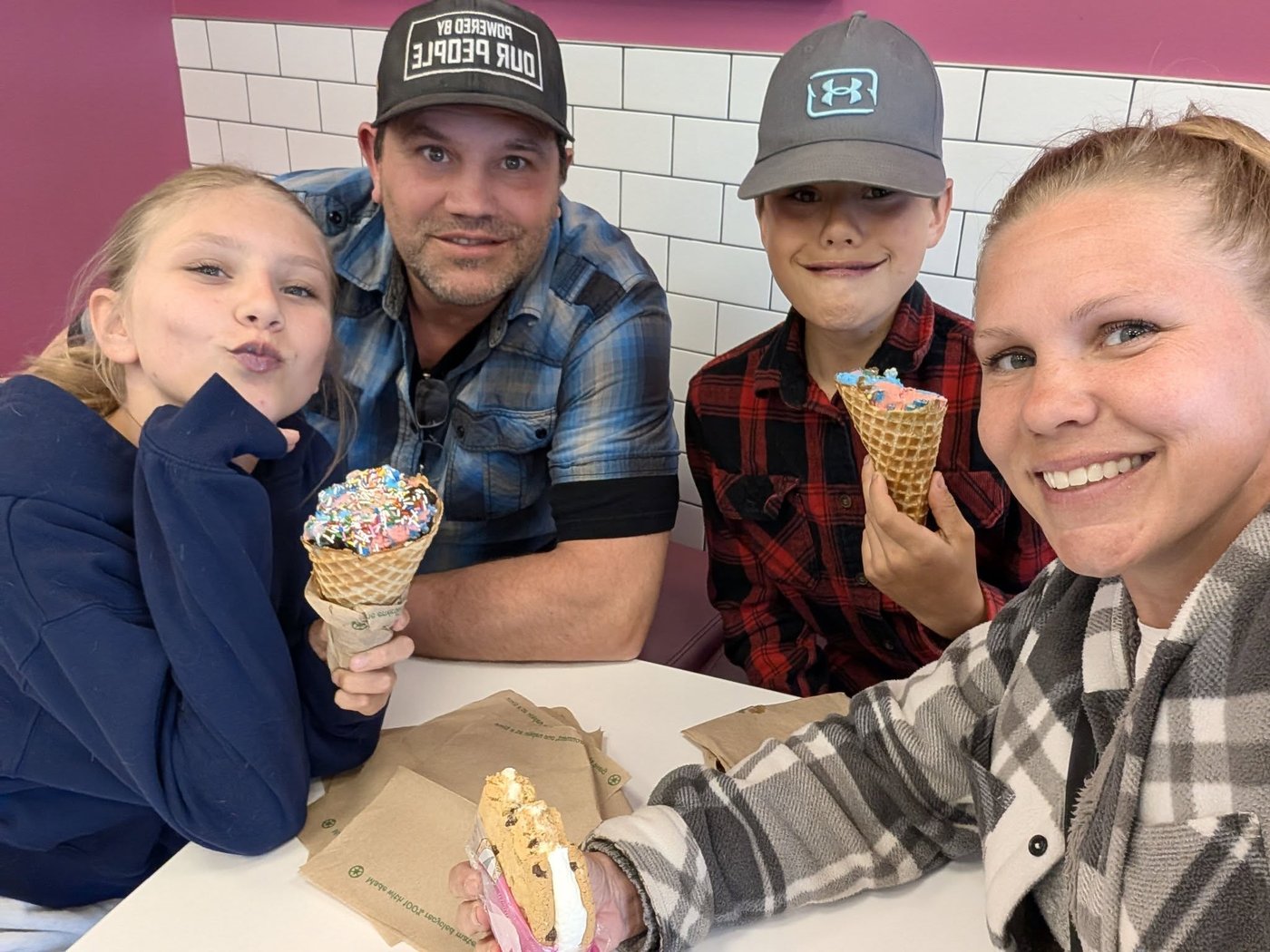
Rich Rogers, pictured second from left with his family, said his former firefighter training allowed him to help 20 people injured in a bus crash on Highway 39 near Mackenzie, B.C., on Wednesday, Nov. 4, 2026. THE CANADIAN PRESS/Handout — Corynn Rogers (Mandatory Credit)

Driver who helped B.C. bus crash victims credits firefighter training

Nov 6, 2026 | 2:55 PM

A man from Mackenzie, B.C., who was the first to respond to a crash that injured 20 people when a shuttle bus careened off the highway said he is grateful he was in the wrong place at the right time.

Rich Rogers was driving along Highway 39 with his wife and 11-year-old son on Wednesday, when they saw the bus flip on its side and veer off the route about four kilometres south of Mackenzie.

The bus struck a tree and fell into a ditch as Rogers and his family looked on.

“My boy just started screaming ‘no, no, no’ over and over,” Rogers said in an interview on Friday.


The former firefighter, who works as a driver transporting mine workers, said his emergency training kicked in as he rushed to assess and triage the injured, while his wife called emergency services.

Rogers said he found one person who had been ejected from the bus and did not appear to be breathing, while three others were unconscious aboard the vehicle.

The bus was chartered by a contractor for a data centre company.

After turning off the still-running vehicle and identifying four passengers who needed critical care, Rogers said he encountered the driver, who was pacing back and forth and seemed to be in shock.

Police and emergency health services arrived and Rogers helped a paramedic treat the ejected passenger. He then stayed to help clean up debris from the road, later catching a ride back into town with the local fire department.

Rogers said he’d left his job as a firefighter in Prince George due to mental stress and moved to Mackenzie in September.

He said the crash had brought up tough emotions from his earlier work, but he was thankful for the training he’d received, because it allowed him to help give the injured patients a chance at recovery.

“I went through a lot of emotional stress that I feel that I didn’t get the support or help that I deserved,” he said of his previous job.

“I’m very thankful that my wife recognized it in me before I did that I was struggling, and we’re definitely going to have to watch for those types of emotions and feelings creeping in again.”

Returning to his job as a driver after the crash, Rogers said he reminded his passengers about the importance of seatbelts and asked that they wear them in his vehicle, which is very similar to the one involved in Wednesday’s crash.

Rogers said he does not think of himself as a hero and instead praised the efforts of first responders who helped control the chaos at the scene.

“I just think of myself as wrong place, right time, right skills,” he said.

“If it was me or my family in that position I hope somebody else that had skills would do anything they could to help us, which is basically all I could do,” he said.

Northern Health issued an update on Thursday saying 15 of the 20 people assessed and treated in its facilities after the crash had been discharged.

The crash, which happened in a remote part of northern B.C. about 1,000 kilometres north of Vancouver, had triggered Code Orange mass-casualty declarations at two hospitals.

This report by The Canadian Press was first published Nov. 6, 2026.

Marissa Birnie, The Canadian Press