Click here to sign up for our free daily newsletter.
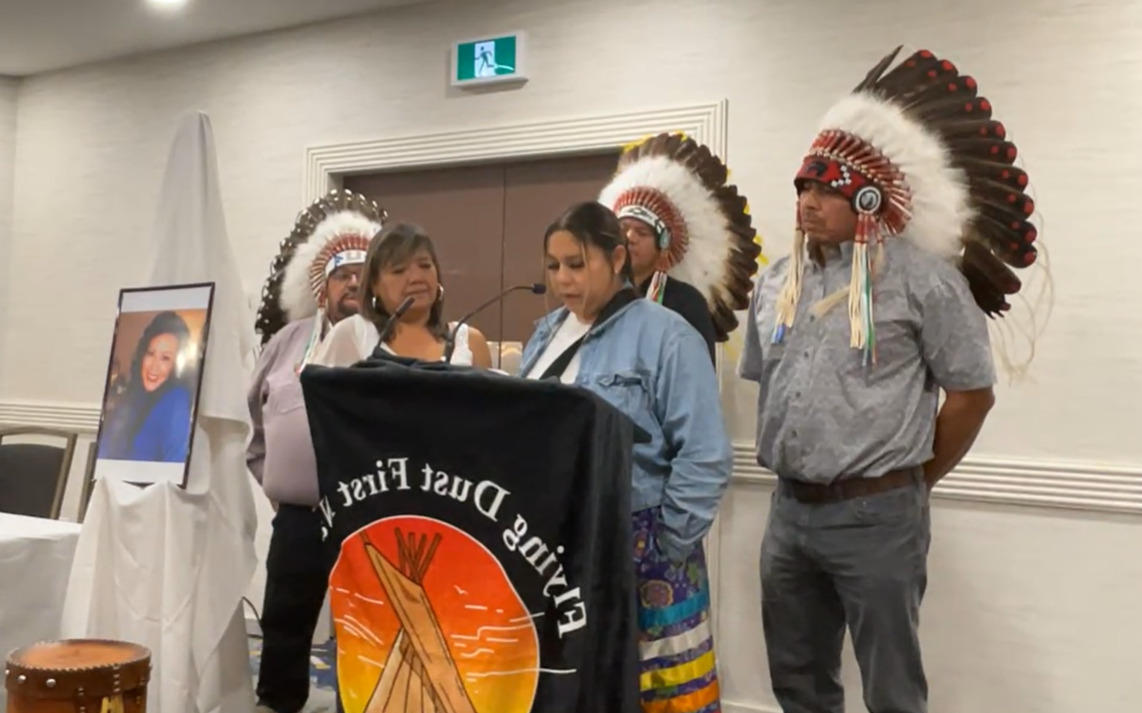
Members of Chelsea Bear’s family speak at a news conference in Saskatoon on Sept. 22, 2026. Meadow Lake Tribal Council leaders are calling for an independent investigation into the care Bear received before she and one of her twins died. (Image Credit: Meadow Lake Tribal Council/ Facebook)
accountability

SHA official urged silence after mother and baby died, MLTC leaders allege

Sep 23, 2026 | 12:54 PM

Chelsea Bear was pregnant with twins when she waited nine hours at Meadow Lake Hospital and was sent home while bleeding, according to the Meadow Lake Tribal Council (MLTC). 

She and one of her babies later died.

The tribal council is now demanding an independent investigation and alleging a Saskatchewan Health Authority (SHA) representative discouraged them from going public because it could make recruiting doctors more difficult.

Bear, 36, a member of Flying Dust First Nation, died in August. Her surviving daughter, Gracie, remained in intensive care at the time of Tuesday’s news conference in Saskatoon, Flying Dust Chief Tyson Bear said.

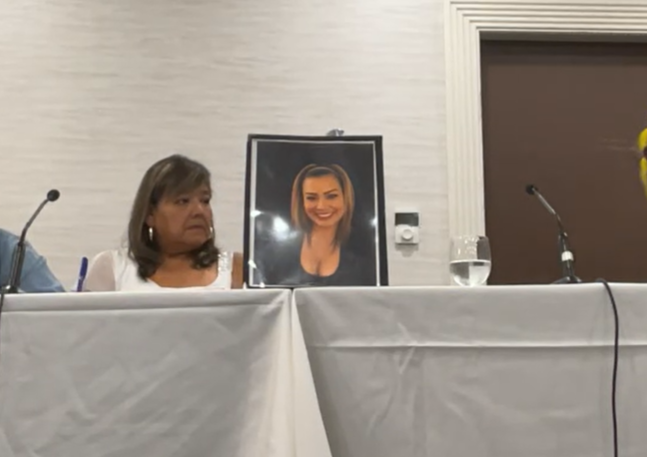
“Nobody deserves to go through what my girl and her baby went through. I don’t want to point fingers at anybody, I just don’t want this ever to happen to anybody else,” her mother, Debbie Bear, said.

Tribal Chief Jeremy Norman of the MLTC said leaders approached SHA seeking answers before turning to the media. During a Zoom meeting, he said, an SHA representative “basically told us keep quiet because it’s so hard to get doctors in our region. It’s so hard to get people to come and work in the north.”

“That’s not the answer that SHA should be saying,” Norman stated. 


(Image Credit: Meadow Lake Tribal Council)

SHA’s written response did not address the allegation about discouraging publicity. It offered condolences, said clinical leaders had met with the family and referred to a patient safety review.

“We are committed to continuing to engage directly with the family and community to discuss this review,” the authority said.

The statement did not specify whether the review would be independent, when it would be completed or whether its findings would be public. SHA declined to discuss clinical details with the media, citing patient privacy.

Debbie said her daughter first went to hospital in pain and returned to Green Lake, where she was staying, after being sent home.

The next day, Chelsea experienced severe bleeding at her mother’s home on Flying Dust First Nation, Debbie said. An ambulance took her to Meadow Lake Hospital before she was transferred to Saskatoon.

Debbie said Chelsea died after giving birth. One of the twins was stillborn.

MLTC Vice-Chief Richard Derocher, who gave the account of the nine-hour wait, attributed Chelsea’s death to hemorrhaging. SHA did not confirm the cause of death in its statement.

Chief Bear called for the investigation to examine her prenatal care, hospital assessments, waiting times, discharge and communication with the family. He also wants it to consider broader concerns affecting First Nations patients in northern Saskatchewan.

He called for meaningful family involvement and public findings and recommendations.

Norman said SHA had indicated during the Zoom meeting that an external investigation would take place. By the news conference, he said, two weeks had passed without follow-up to the tribal council.

Derocher said he was also on the call and characterized the alleged warning against publicity as a form of systemic racism. He separately questioned whether Chelsea’s Indigenous identity affected her treatment.

“Our families should not have to go through this process of media to have their concerns heard,” he said.

SHA said it met with MLTC with support from its First Nations and Métis Health team, but did not have the family’s consent at that time to discuss the specifics of the case with the council.

“We have since received the family’s consent and will continue our discussions with MLTC in the coming days,” the authority said.

Its statement did not directly address Derocher’s concerns about racism.

Leaders also called for more health services closer to northern communities.

Derocher called for investment in diagnostic imaging and long-term care in First Nations communities, saying those services would also create local jobs. He said frontline workers were constrained by shortages of staff, equipment and services.

SHA acknowledged “the complex and dynamic conditions that our maternal health and obstetrical clinical teams operate within, and appreciate their commitment, clinical expertise and professionalism.” 

Norman said health clinics in MLTC’s nine First Nations could take on more responsibility with additional resources. He also wants more services in Meadow Lake so patients do not have to continue to Saskatoon or North Battleford for care.

“It’s not something above or greater than the rest of Saskatchewan. It’s just equal, you know, to have the same opportunity, the same resources,” Norman said.

Kenneth.Cheung@pattisonmedia.com