Click here to sign up for our free daily newsletter.
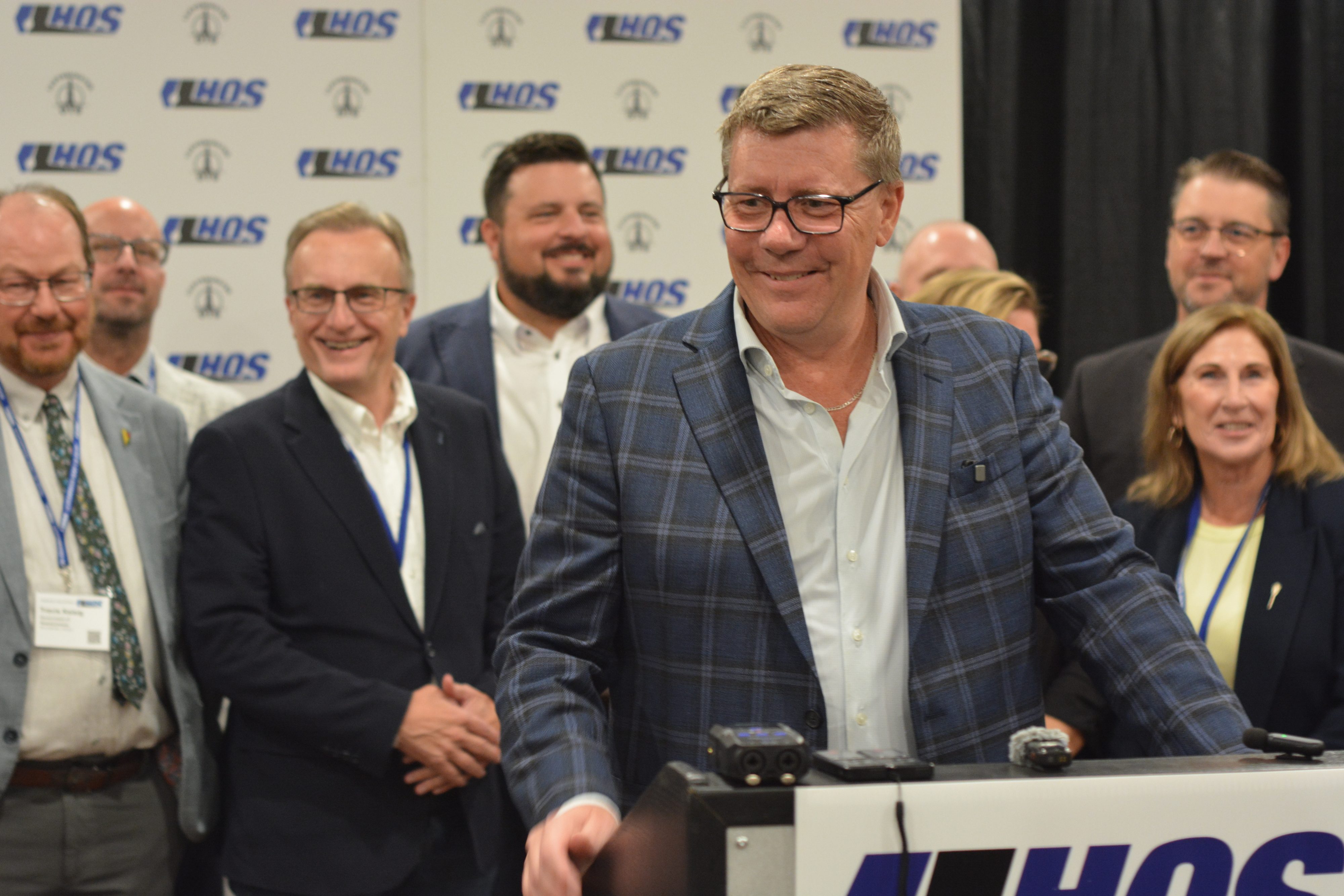
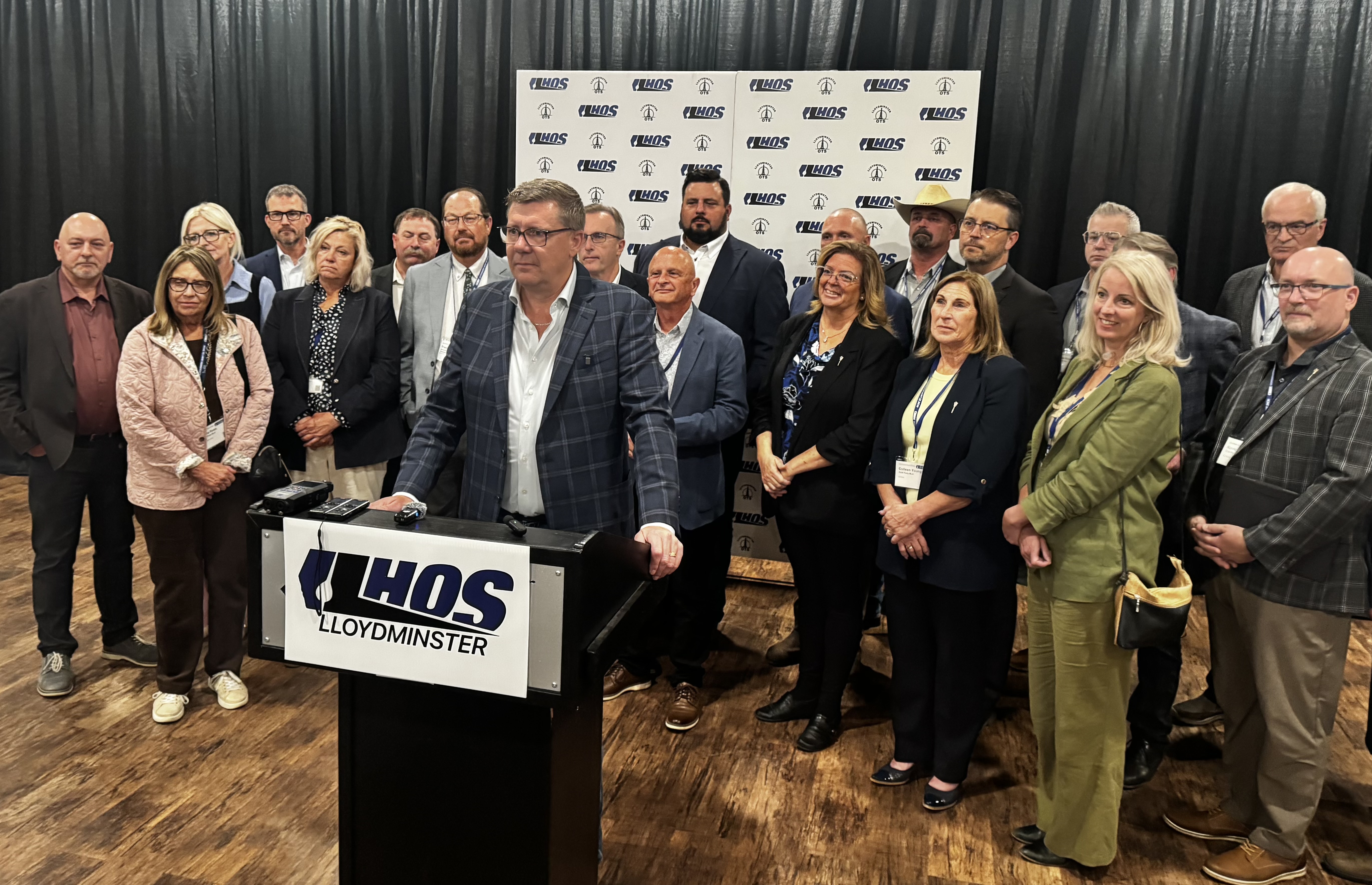
Saskatchewan Premier Scott Moe speaks to reporters during a media scrum following his luncheon discussion at the Lloydminster Heavy Oil Show on Thursday, Sept. 17, 2026, as members of his cabinet look on. (Image Credit: Kenneth Cheung/battlefordsNOW)
energy

Potential nuclear reactor sites along North Saskatchewan River back under consideration, Moe says

Sep 18, 2026 | 7:29 AM

Saskatchewan is taking another look at potential nuclear-power sites along the North Saskatchewan River as it considers one or possibly two large-scale reactors in the province’s west to power anticipated growth in heavy oil and mining, Premier Scott Moe said Thursday.

Moe raised the prospect during a luncheon discussion with Mayor Gerald Aalbers at the Lloydminster Heavy Oil Show, describing the potential reactors as being “not too far from where we’re sitting here right now.”

Speaking with reporters afterward, Moe said work conducted more than a decade ago examined various sites along the North Saskatchewan River. The province is now “reviving some of that information” as it considers how to move forward with a western nuclear site.

Moe stopped short of announcing a project. He did not identify a specific site, reactor capacity, cost estimate for a defined project or construction schedule. He said SaskPower would ultimately determine how many reactors the province needs and can operate.

“This isn’t going to happen overnight. However, we would hope that it happens in the next number of years,” Moe stated. 

The potential western project would be considered alongside SaskPower’s examination of nuclear generation in the Estevan area. Moe said the options there could include two small modular reactors or a shift toward large-scale units, which he described as less expensive per megawatt.

Moe linked the western proposal to growing electricity demand from Saskatchewan’s resource sector. He said three uranium mines are being built in the northwest and predicted substantial new heavy-oil development on both sides of the Saskatchewan-Alberta boundary.

He also pointed to more than $100 billion in private-sector investment he said is already underway across Saskatchewan, with further projects expected to increase demand from industries and a growing workforce.

“All of that is going to need power, as are the families that live here today, and the families that are going to come here to help us build the economy of tomorrow,” Moe said.


(Image Credit: Kenneth Cheung/battlefordsNOW)

Heavy oil could account for a significant share of that growth. Moe said Saskatchewan’s official oil-production target remains 600,000 barrels per day, although he believes production could eventually reach one million barrels per day.

“Our target in this province is 600,000 barrels a day,” he said.

Moe acknowledged reaching that target would depend on attracting investment, expanding production and securing enough pipeline capacity to move the additional oil to market.

He attributed his optimism to what he described as recent and proposed federal policy shifts, including changes involving Bill C-69, a one-year capital-cost allowance and a proposed “one project, one review, one year” approval process.

“The policies are starting to open that window for us in the oil and gas industry,” Moe said. 

“And I would suggest that we work together, and we will be here to be your partner in any way that we can, so that we can climb through that window sooner rather than later, and really see some investment flow into the oil and gas industry.” 

Asked about pipeline operators, Moe said discussions have been preliminary and ongoing. He identified additional access to the United States and a West Coast export route as opportunities for Saskatchewan producers.

During the luncheon, Moe projected the region could see another $10 billion to $15 billion in energy-sector investment and $15 billion to $20 billion in nuclear investment. He did not provide a breakdown of projects or a timeline behind those figures.

If a western nuclear project proceeds, Moe said it would involve significant local procurement alongside modularized procurement intended to keep costs affordable. He said Saskatchewan could use its own reactor development to help provincial supply-chain companies expand and secure work on nuclear projects elsewhere.

“That is going to open up a whole new industry of opportunity in the supply chain, in the jobs and careers that are available in Lloydminster, North Battleford, and everywhere in between,” Moe said.

Kenneth.Cheung@pattisonmedia.com