Click here to sign up for our free daily newsletter.
On the left: one of the three controversial rocks in Saskatoon. On the right, the statue of John Diefenbaker standing outside Prince Albert City Hall. (Image Credit: 650 CKOM/Mia Holowaychuk; File photo/paNOW Staff)
Saskatoon vs. Cornerstone rocks

How do public art projects get approved in Prince Albert?

Aug 5, 2026 | 6:00 AM

Over the course of the Saskatchewan Day long weekend, the talk around the province was the three plastic rock art pieces the City of Saskatoon recently unveiled. 

With a price tag near $300,000 once all said and done and criticism from the Canadian Taxpayers Federation, it’s opened up a question around the province of how public art pieces get approved for taxpayer spending.  

Here in Prince Albert, there is a policy that has been in place since 2016 to vet art projects for approval in the city. Judy MacLeod Campbell, the City’s Arts and Culture Manager, acknowledged the importance of public art in providing a city its identity. 

“I think public art does a lot of things, right? It’s free and accessible, that’s the whole concept of public art. Unlike perhaps a facility with an entry fee or a ticket fee, public art is something that anyone can go and engage with. Definitely it beautifies a city, it helps with a community’s identity, their pride, and I think what’s important too about public art is that it evokes conversations.” 

Adding public art displays is not an easy task, and one that will never satisfy everyone’s tastes. In Prince Albert, only $30,000 of the city’s budget per year is set aside for public art projects as a part of the earlier mentioned policy from 2016, and that’s overseen by a public art working group that is made up of people from different community organizations around the city. 

MacLeod Campbell said that the policy was reviewed five years ago and is up for another review soon, and the same people involved from the start. They make the decisions on what art pieces in the city need refurbishing, which ones need to go, and areas of the city that need new exhibits. 

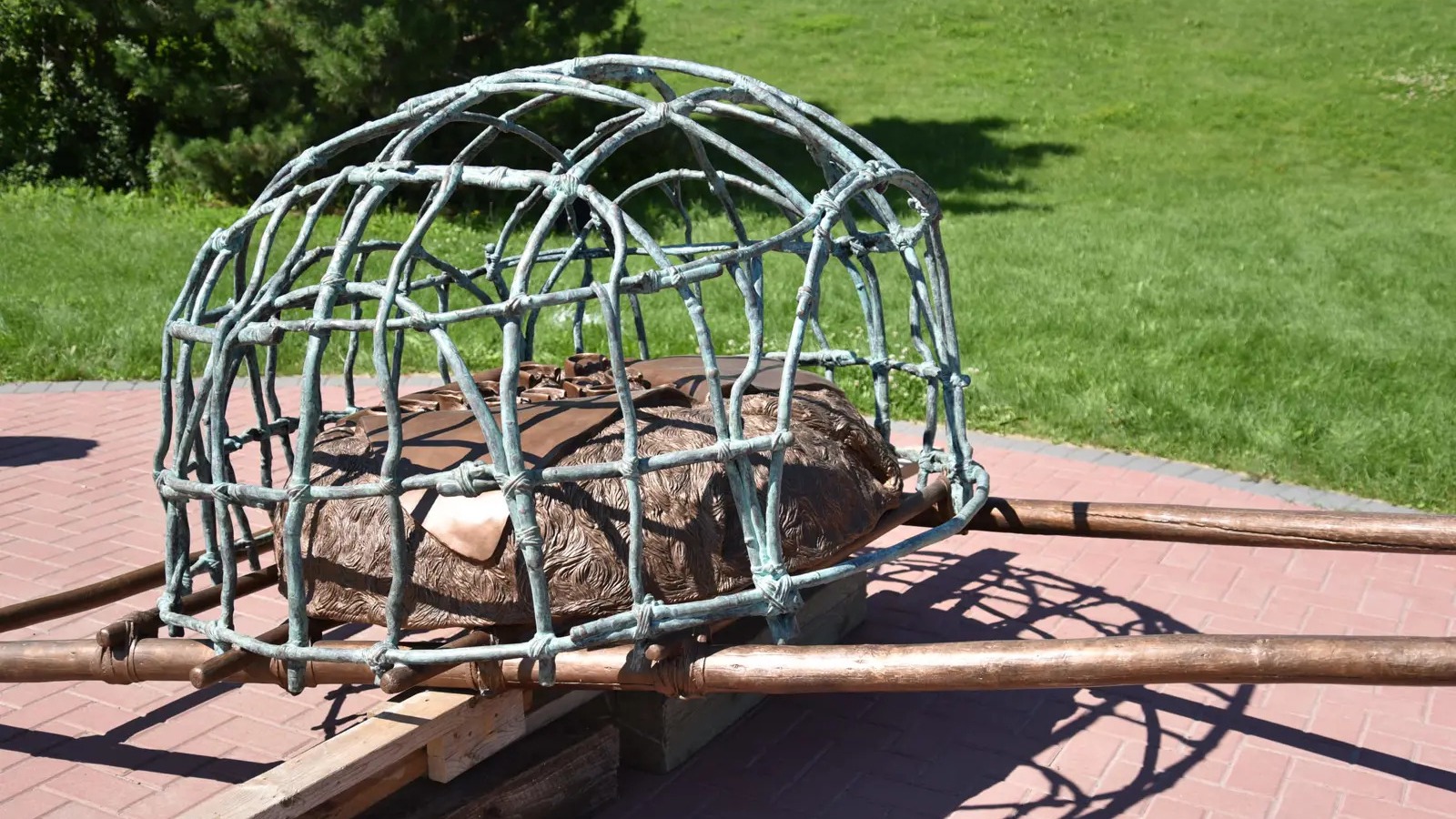
“The committee has really tried to use that $30,000 wisely. We’ve looked at everything. We just acquired our first sort of major public art piece of the sculpture Passage Home, which will be dedicated on August 22nd. So the group had decided to save up for that piece right when we first got started, so that was early 2017. At the same time, we look to make sure that we’re looking at all of the existing art, and there actually wasn’t an inventory when we started either. So that was one of our first projects, to create an inventory of all the public art, what condition they’re in, and then every two to three years, we do a check on the condition of that art.” 

The Passage Home sculpture will be located in Scarrow Plaze at River Street West and 11th Street West. The bronze statue made by sculptor Mary Longman will honour Indigenous children who passed away from residential schools and similar circumstances. 

The 'Passage Home' statue at Scarrow Plaza in Prince Albert.
The ‘Passage Home’ statue at Scarrow Plaza in Prince Albert. (Image Credit: City of Prince Albert)

To stretch that budget a little bit further, MacLeod Campbell said that the city has a ‘public art stimulus’ grant that community organizations can apply for. Businesses, community organizations, and schools that have some money for projects of their own can apply to have those funds matched by the city. 

“The most recent piece is a partnership we did with the Mann Art Gallery, Prince Albert Downtown, Studio Q. The Mann Art Gallery applied on behalf of that collaboration, and then we’re able to do the really cool downtown art alley project with 10 painted doors in back alleys. There’s numerous projects, we’ve had a project every year I think since we started that. So that’s a way to support other organizations in our community to be able to create more public art as well, so it’s not all on the city.” 

When it comes to final approval on art projects in the city, MacLeod Campbell said that unless it’s a really big-ticket item, it won’t go through City Council and instead her committee will be the one’s to approve it in the end. But, if the project is being funded entirely by taxpayer money, that conversation opens up to council. 

“We don’t have a threshold written in policy, but I would say probably anything over $10,000 we have gone to city council for, maybe $15,000, and it has been somewhat dependent on if we were able to find any other funding towards that project.” 

Cost isn’t the only consideration when it comes to adding art to the city, but it also has to be a proper fit for the city. There isn’t a specific guideline on what can and can’t get approved for display in the city, as long as it represents the people and history of Prince Albert. 

“They’re about rich environment, inspiring community belonging, telling the story, highlighting our heritage. Of course, with a population of over 50 per cent Indigenous, that includes our First Nations and Métis, we have cultural groups looking for at least some public art around the city, right? So it’s not all concentrated in say downtown or Second Avenue, but definitely looking to get as much as possible moving around.” 

The situation in Saskatoon has come under fire quite heavily since the addition of the rocks, but MacLeod Campbell didn’t want to spend her time adding to the pile. In her role, MacLeod Campbell said that she knows just how tough it can be to bring in public art that fits the city’s budget, aesthetic, and is something all the citizens who see can relate to. 

“You’re not always going to please everyone. When I read about the art, it really does have some interesting background as to what it’s representing and why it was created, which I think is important, and those are the discussions that artists are often wanting to happen.” She added, “I’m not going to make a critique on what Saskatoon has done. I think it is important for anyone when this kind of thing happens to read the backstory on it.” 

The short version of the Saskatoon Modern Erratics backstory is that the rocks are meant to represent glacial boulders found in Saskatchewan, while also honouring Saskatchewan’s agriculture history by using plastic from recycled grain bags, bottle tops, and broken garbage bins. The reason for one of the rocks locations being at the Saskatoon landfill is because 87 per cent of recyclable Canadian plastic still ends up in landfills or the environment. 

Amid the jabs at Saskatoon’s pricy rock art displays, McLeod Campbell has heard some of the jokes about turning Prince Albert’s infamous rocks in Cornerstone into a similar display. 

“I don’t want to poke our neighbors or their decision. Like I said, reading about the project, now I kind of understand what it’s about and why a little bit further. But yes, the (Cornerstone) rocks painted could be on our massive list of ideas the community gives us.” 

nick.nielsen@pattisonmedia.com