Click here to sign up for our free daily newsletter.
A screen shot from one of several videos recorded at the time of Umpherville's arrest and played for tge inquest on Monday.
Seeking answers

‘Get out before they kill me’: Day one of Umpherville coroner’s inquest

Jul 20, 2026 | 8:09 PM

Complete chaos. 

That’s how Kevin Montgomery, a member of Saskatchewan’s Serious Incident Response Team (SIRT), described the events leading up to Boden Umpherville’s arrest in Prince Albert in April 2023.  

Montgomery was the first of 19 expected witnesses at the coroner’s inquest running all week at Court of King’s Bench in Prince Albert. His testimony, which included dashcam video from the police vehicles at the scene and photographs of the items seized, represented the first time SIRT has provided evidence for an inquest. 

The arrest 

On the morning of April 1, around 2 a.m., Adriea Thomas called 911 and told police her vehicle had been stolen. The black Dodge Avenger had been left unlocked and running outside a residence in the East Flat. 

While on patrol, police came across the vehicle and conducted a traffic stop. The woman behind the wheel was identified as the same woman who had initially called police. Montgomery said sometime between making the call and the traffic stop, the woman’s vehicle had been returned to her, but she didn’t call police to cancel the report.

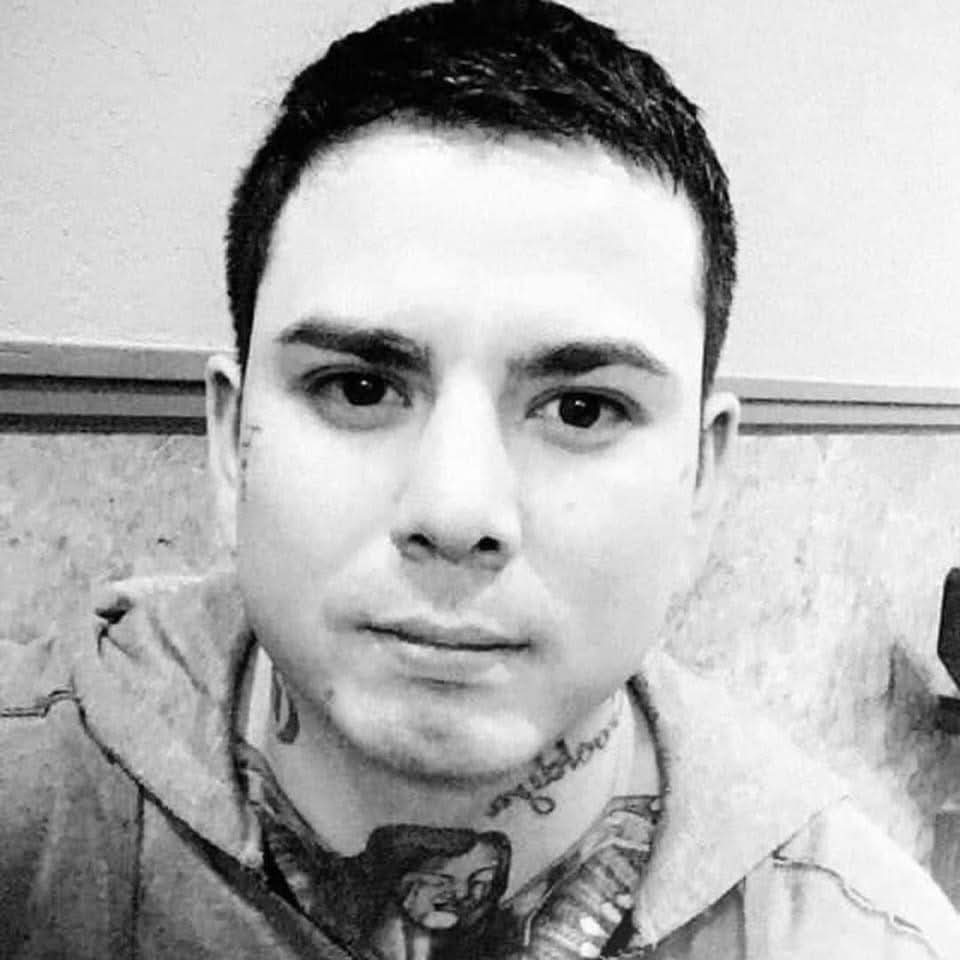
Boden Umpherville.
Boden Umpherville. (Image Credit: Submitted/ Chase Sinclair)

Umpherville, a passenger in the front seat, initially provided police with a false name. When another officer identified him and told him he was under arrest for outstanding warrants, Umpherville refused to exit the vehicle and became distraught. 

“He became more nervous and was reaching toward his waistband, which was a cause for concern for patrol officers,” Montgomery said. As part of his investigation, Montgomery reviewed multiple police and civilian videos. 

While attempting to remove Umpherville from the vehicle, police used conducted energy weapons multiple times, as well as OC spray and metal batons. All methods proved ineffective. Montgomery explained that can happen when someone is highly motivated and/or intoxicated. 

A forensic report confirmed Umpherville had a significant amount of cocaine in his system. 

During the incident, after the driver fled, Umpherville moved over to the driver’s seat and, while attempting to shut the open car door, stepped on the gas. The car then surged forward and crashed into a police vehicle.

The struggle between police and Umpherville continued, and Umpherville attempted to reverse the vehicle. However, the car, hung up on the melted ice, did not move. 

After being removed from the vehicle, Umpherville was brought to the ground, and police seized a loaded gun that had been strapped to his chest in a holster, as well as a small folding knife that was attached to the magazine. 

“I haven’t seen that before,” Montgomery said about the shoulder holster, likening it to something someone might see in an old police movie. 

While trying to lead Umpherville to a waiting ambulance, Umpherville again resisted officers. Montgomery noted there was a delay in medical treatment because of his resistance. 

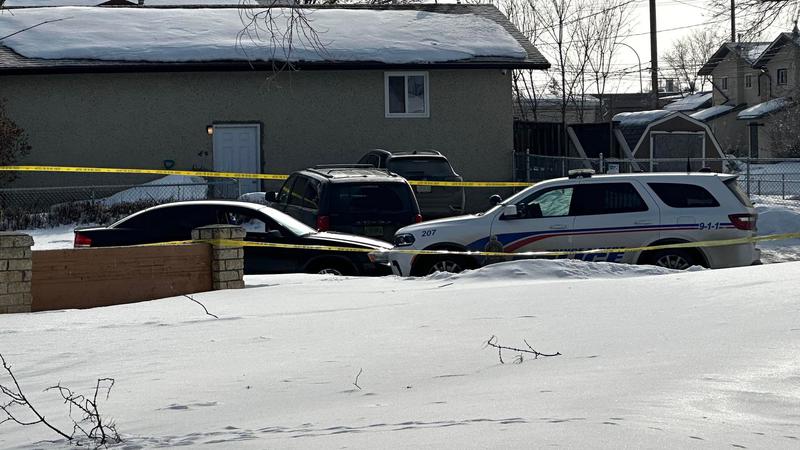
A picture taken on April 1, 2023.
A picture taken on April 1, 2023. (Image Credit: File photo/ paNOW Staff)

Umpherville remained on life support for three weeks before he passed away. The cause of Umpherville’s death was determined to be cardiac arrest brought on by positional asphyxia and cocaine intoxication, with the involvement of a CEW (Conducted Energy Weapon) identified as only a possible, but unlikely contributing factor.

Peter Abrametz, the lawyer representing the Umpherville family, noted the multiple conducted energy weapon deployments and asked Montgomery if the investigation included a review of standard policy for their use. Montgomery explained the SIRT investigation focused on criminal conduct, not policy. 

“We’re not the policy police.” 

Dashcam footage from the police vehicles captured the actions of officers, but the audio was difficult to hear in the courtroom. Montgomery confirmed body-worn camera footage with audio and video can help with investigations of this nature. 

Another set of questions focused on the baton strikes. Montgomery said police officers are instructed not to intentionally strike people on the head with a baton. Umpherville had a large gash on his forehead, which Montgomery said was likely inflicted after Umpherville was speared in the face with a conducted energy weapon. While on the ground, Umpherville was also kicked and kneed and suffered broken ribs. While stating the SIRT investigation found the level of force reflected the level of resistance, Montgomery conceded he was unsure if all the strikes inflicted on Umpherville were within police policy. 

 “You can watch that video 100 times and still see something different,” he said. 

Mitch Holash, the lawyer representing the Prince Albert Police Service, asked Montgomery to confirm the SIRT investigation found no fault with the officers and that the incident had been fully investigated. 

 “Correct,” Montgomery replied. 

Holash also raised the point that breaches and warrants are a concern, as are weapons charges, and had Montgomery confirm Umpherville was seen reaching for something. 

“They would’ve had no idea what type of weapon was there.” 

Upon further questioning by Holash, Montgomery also confirmed a vehicle can be viewed as a dangerous weapon.

 Witness accounts 

Adriea Thomas was the vehicle’s registered owner and had purchased it one day earlier in Saskatoon. 

She testified that after returning to Prince Albert, she picked up Umpherville and then, upon his instruction, drove to a house in the East Flat and waited outside while he went inside. 

“I don’t know what he was doing there,” she said. 

Growing restless and needing to use the bathroom, Thomas walked up to the house and knocked on the door. Upon leaving the house, she discovered both Boden and her car were gone. After multiple attempts to contact Boden failed, Thomas waited an hour before calling police. 

 “I just reacted out of panic,” she said, confirming she didn’t know he had warrants and describing him as a nice guy. 

Thomas eventually was offered a ride and, while stopping by the apartment building where Boden lived, discovered her car was there. She immediately got into the driver’s seat. 

A short distance away, the car was pulled over by police. Acknowledging she forgot to report that her car had been located, Thomas said she had no idea Boden had a gun or warrants. 

“He was kind of scared,” she said, adding Boden told her not to stop. 

While unsure if Boden was intoxicated at the time, Thomas said she knew Umpherville both used and sold drugs. When asked why Boden gave police a false name, Thomas replied she did not know. 

Meanwhile, sitting in the back seat was Lindsay George, who had travelled with Boden from the house in the East Flat to his apartment, where they were drinking. 

“I’m scared … I’m stuck in the back seat,” she said, adding she feared she would be attacked next and had never been in a situation like that before. She then asked police if she could get out. 

“He said get out before they kill me.” 

Recalling the sounds of people yelling and seeing hitting motions and several conducted energy weapons, George said she initially thought Boden was only getting arrested but learned days later he was in hospital. 

Five days have been set aside for the inquest, and witnesses on the stand Tuesday are expected to include the forensic pathologist who performed the autopsy, as well as multiple police officers. 

nigel.maxwell@pattisonmedia.com