Click here to sign up for our free daily newsletter.
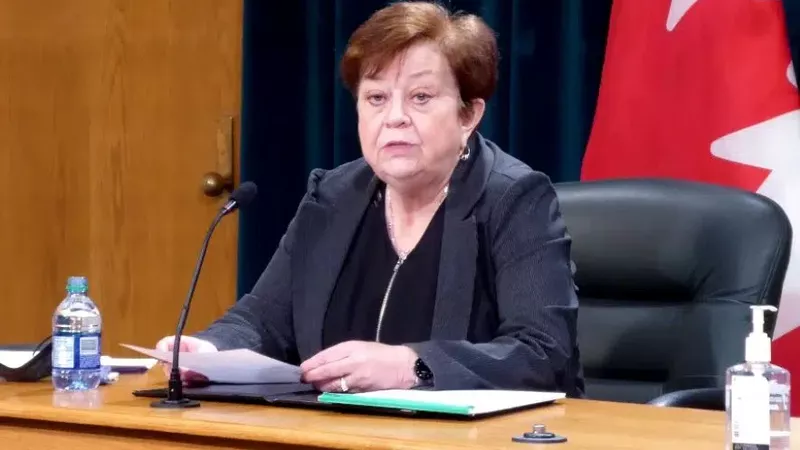
Finance Minister Donna Harpauer. (Lisa Schick/980 CJME file photo)

Sask. forecasts $250M deficit in mid-year financial report

Nov 27, 2023 | 10:30 AM

Saskatchewan’s finances have taken a downturn.

The province’s mid-year financial report is forecasting a deficit of $250.5 million at mid-year, down $1.27 billion from budget and $736.1 million from the first-quarter report in August.

However, the government still plans to retire up to $1 billion in operating debt.

According to a media release Monday from the government, lower potash prices and reduced sales due to what it called “global market conditions” have played a major role in the turnaround. So have higher crop insurance claims as a result of the drought that hit parts of the province this past summer.


“The drought was unforeseen, reducing projected crop production by 20 per cent in 2023 when compared to 2022,” Finance Minister Donna Harpauer said in the release. “Crop insurance and relief programs are in place for Saskatchewan producers.

“Potash prices and sales dropped because potash from Russia and Belarus flowed to large markets including China and India despite being subject to Western sanctions in response to Russia’s invasion of Ukraine.

“Even considering these impacts, our fiscal picture is solid, more people than ever are living and working in Saskatchewan, and our economy is resilient.”

The report said total revenue is expected to increase by $35.2 million from budget, to $19.7 billion.

But while taxation and other sources of revenue are up a total of $753 million from budget, those were largely offset by a $717.8-million decrease in non-renewable resources revenue since March.

The report said potash revenue is expected to fall by $551.8 million from budget, reflecting a 28.6 per cent drop in potash prices. According to the report, the average price in 2023 is now expected to be $263 US per tonne, down from $368 US per tonne in March.

As well, potash production in Saskatchewan is down 5.9 per cent since the budget was delivered.

The province’s expenses at mid-year are forecast to be up by $1.3 billion from budget, to $20.0 billion.

The largest driver there was agriculture, with expenses that were $853 million above budget. The government said that was due mainly to increased crop insurance claims as a result of the drought.

Dry conditions reportedly resulted in a 20 per cent dip in production in 2023.

Expenses for protection of persons and property – mostly due to wildfire response and evacuations during the summer – as well as education also showed marked increases from the budget, at $111 million and $271 million respectively.

The province’s gross debt is forecast to rise by $709.5 million from budget, to $31.6 billion.

“Borrowing is increasing to finance capital, including investment into schools, highways, hospitals and other valued infrastructure,” the report said.

Net debt is forecast to be $15 billion at the end of the fiscal year, up $918 million from budget.

The government said the net debt as a percentage of gross domestic product is expected to be 13.3 per cent at the end of the fiscal year, the second-lowest such figure among the provinces.

The report noted that Saskatchewan had the highest economic growth among provinces in 2022, with real GDP growth of 6.0 per cent. An average of private sector forecasts says the province’s economic growth will be the second-highest among the provinces in each of the next two years, with real GDP growth of 1.6 per cent in 2023 and 1.3 per cent in 2024.