Click here to sign up for our free daily newsletter.

Mandela’s legacy continues through Truth and Reconciliation Commission

Dec 15, 2013 | 11:13 AM

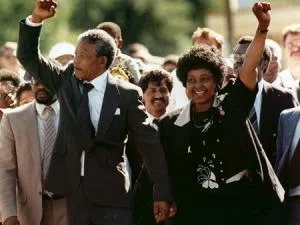
Nelson Mandela was laid to rest in South Africa on Sunday but his legacy will live on in Canada's Truth and Reconciliation Commission.

“(The commission) was inspired by South Africa's commission,” Marie Wilson, one of three Truth and Reconciliation Commissioners in Canada, said.

“It was one of the first in the world to ever happen and it certainly was the most high profile because of the political context of that commission was one that the whole world had been involved in.”

Wilson spoke on Meeting Ground about the differences and the similarities between the two commissions.


“There are some very fundamental differences… The South African Truth and Reconciliation Commission was a political initiative,” she said.

“Mandela saw it as a vehicle for creating a new kind of social environment and allowing a vehicle for people to state what was on their minds and go forward and in a way that would be peaceful.”

Wilson also noted the South African commission had powers to subpoena people and to give amnesty for criminal acts which Canada did not.

“In the case of the Canadian commission, it was not a politically motivated commission… It came about because there was a court case and because survivors of residential schools took the government and churches to court,” she said.

“One of the terms of settlement… was the establishment of the Truth and Reconciliation Commission.”

For Wilson, the most important lesson from the South African commission was how to bring the residential school issues into the spotlight.

“It created public forums and public venues where those who were not aware, or who claimed to have not been aware, or who were sort of aware but not really could be made aware. The incredible public education potential,” she said.

“The idea of having a very public element of the Truth and Reconciliation through a public hearing process was something that we had seen in south africa and we could see the value in that.”

Wilson met Mandela in South Africa in 2002 and brought him a gift from the North West Territories.

“I was invited to be a part of a smaller group that were in a reception… I had two or three minutes to talk about what we had been doing and to acknowledge the important role he had played even in Northern Canada,” she said, adding what she remembered most was his personality.

“His personal style and manner. This is a person who makes eye contact. You are clear when he's talking that he is talking to you… It was very meaningful to me.”

kmalone@rawlco.com

Follow on Twitter: @KellyGerMalone