Click here to sign up for our free daily newsletter.
(Image Credit: Heritage Funeral Home)
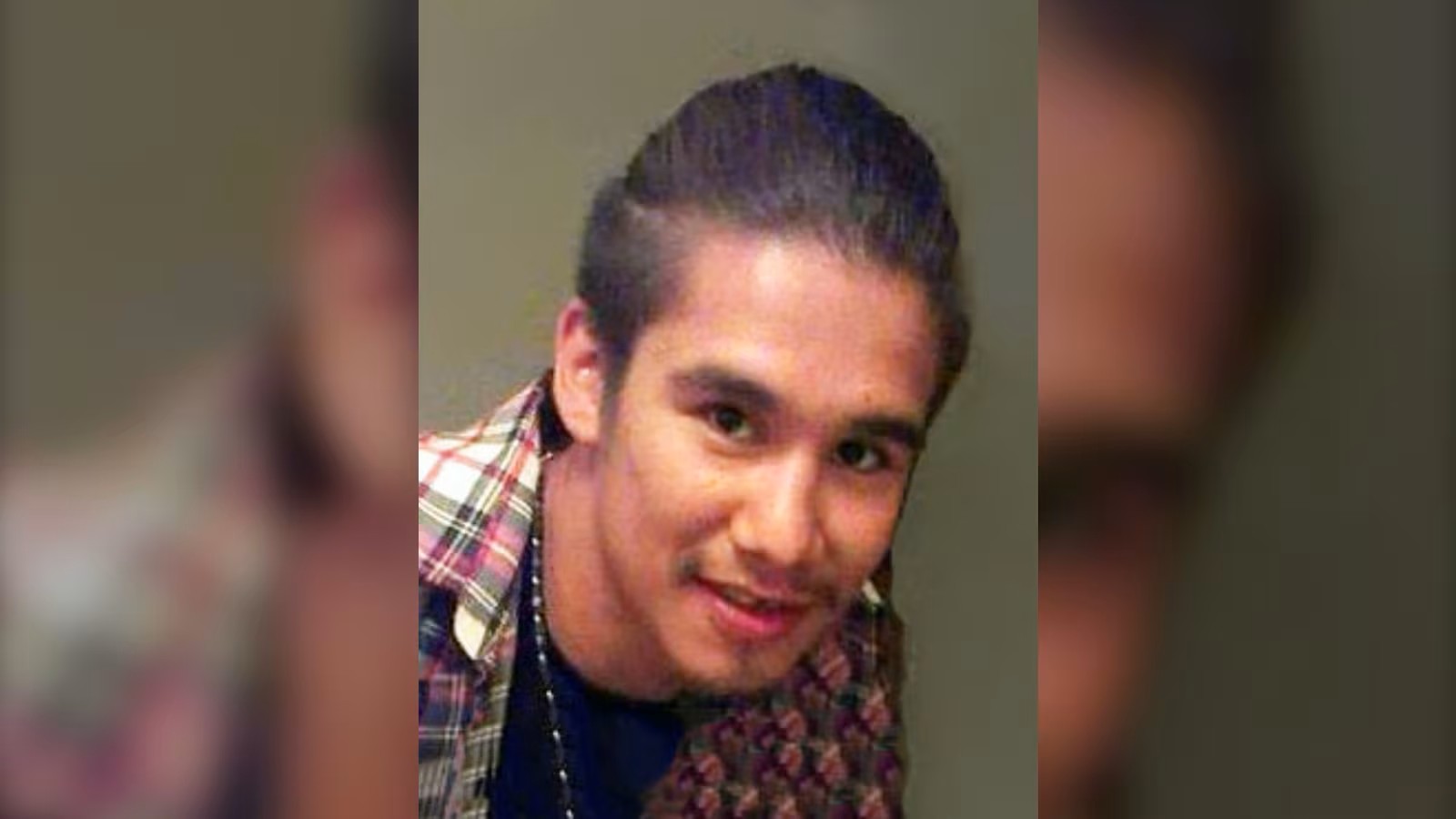
Saul Laliberte

Prince Albert inquest watches cellblock videos of hours leading up to prisoner’s death 

Oct 26, 2026 | 5:38 PM

Saul Laliberte suffered multiple violent seizures in the hours before he was taken from Prince Albert police cells to Victoria Hospital on the day he died. 

The first day of an inquest into the circumstances of Laliberte’s death began Monday at the Coronet Hotel in Prince Albert. 

Multiple police officers testified, beginning with Saskatoon police Det. Sgt. Ken Kane, who investigated the conduct of the Prince Albert police officers and staff who interacted with Laliberte on Nov. 7, 2021, the day he died. 

Laliberte called 911 multiple times that day from the Tamaron Apartments, reporting that someone with a shotgun was in his building and banging on his apartment door. 

Because of the nature of the call, four constables and Sgt. Adam Dunn responded. They found no one with a gun in the building or inside Laliberte’s unit, No. 201. 

Inside, Dunn noticed that Laliberte’s apartment was tidy and that Laliberte could stand steadily and express himself well, but seemed a little off. 

“He was a little anxious or paranoid,” Dunn said. After learning Laliberte had outstanding warrants from Saskatoon, the officers arrested him. 

“I couldn’t prove or disprove what he had been saying. Those were serious warrants. We had no choice but to deal with them,” Dunn said. 

Dunn was the supervising sergeant, which meant he oversaw the junior officers’ work to ensure it was done correctly. He interacted with Laliberte only briefly, asking whether he had taken meth or was under the influence of methamphetamine. 

The question was prompted by Laliberte’s slight paranoia and signs of sweating, although those symptoms could also be attributed to other factors, such as being arrested, the inquest heard. 

The arresting officer, Const. Dean Smith, drove Laliberte from the Tamaron Apartments to the police holding cells. 

Video of the car ride shown at the inquest depicts Laliberte getting into the car without difficulty and appearing mostly fine for the first several minutes. He understood why he had been arrested. 

Then he became more agitated. He wiped his mouth on his pants several times — his hands were cuffed behind his back — and then licked his pants. Although the video showed this, Laliberte was sitting directly behind Smith, who was driving and did not see it. Smith did not see the video until it was shown to him at the inquest. 

During the car ride, Laliberte spoke several times and said he had not used meth for a long time. 

“I never did anything wrong,” he is heard saying on the video. “I didn’t take anything. I only smoked weed.” 

Minutes later, he also said, “I did take medications for panic attacks though. My mouth is drying up.” This is when he licked his pants. 

As time passed, Laliberte began squinting as if he were having difficulty focusing. He appeared to pass out for several seconds but was able to get out of the car without difficulty when it arrived at the station. 

In the booking room, Laliberte removed his extra clothing and put his pants back on after removing a second pair of pants or long underwear worn underneath. 

The detention area had a dated camera system at the time. The sergeant responsible for operations inside the building and prisoner safety had a desk upstairs, and guards in the basement had to call upstairs if there were problems. 

Guards were expected to physically check prisoners every 10 minutes and also had access to monitors for every cell in the range. 

Laliberte’s mother called and told Dunn about a text Laliberte had sent her saying he had taken pills. Dunn relayed the message to Sgt. Tyson Morash, who replaced him at the end of the shift. 

Morash, who has since retired from the police service, said he spoke to on-duty guard Clem Benrot about the mother’s concern and told him to report any problems. 

What happened after that is known only through video of Laliberte inside his cell and testimony from other prisoners and Dunn. 

Benrot will not testify at the inquest after his doctor provided a note saying he is no longer medically able to do so. 

The inquest heard, however, that Benrot conducted 13 prisoner checks, averaging one every 18 minutes during the 4 1/2 hours Laliberte was in the cell. 

He did not report seeing on the monitor any of the seven seizures Laliberte suffered, some of which caused him to fall around the cell and twitch on the floor for several minutes. 

“He did not believe there was a concern based on his experience as a guard,” Kane said, describing his interview with Benrot. 

Kane also said Benrot told him he could not conduct checks every 10 minutes because that was how long the checks took. Video of the guard area showed Benrot occasionally using his phone or reading a book. 

Laliberte was not treated until the evening emergency medical services medic — who at the time worked only overnight — conducted her first check at 7 p.m. Kane described her response as “stellar,” noting that she acted immediately. When the severity of Laliberte’s condition became apparent, she could be seen running to get more equipment, including a defibrillator. 

Neither the guard nor the medic could open cell doors. The RCMP uses the same policy, which requires a sworn officer to be present. 

Testimony at the inquest also noted that while Laliberte was the last of several prisoners to die in Prince Albert police custody, conditions have changed drastically since Chief Patrick Nogier took on the role. 

All the cells are now equipped with biometric monitoring, the sergeant’s desk is downstairs, and Benrot was fired shortly after the investigation began. 

“I do believe that will be Saul’s legacy,” Kane said. 

The inquest resumes Tuesday with testimony from Dr. Derek Musgrave, Saskatchewan’s chief medical examiner.