Click here to sign up for our free daily newsletter.
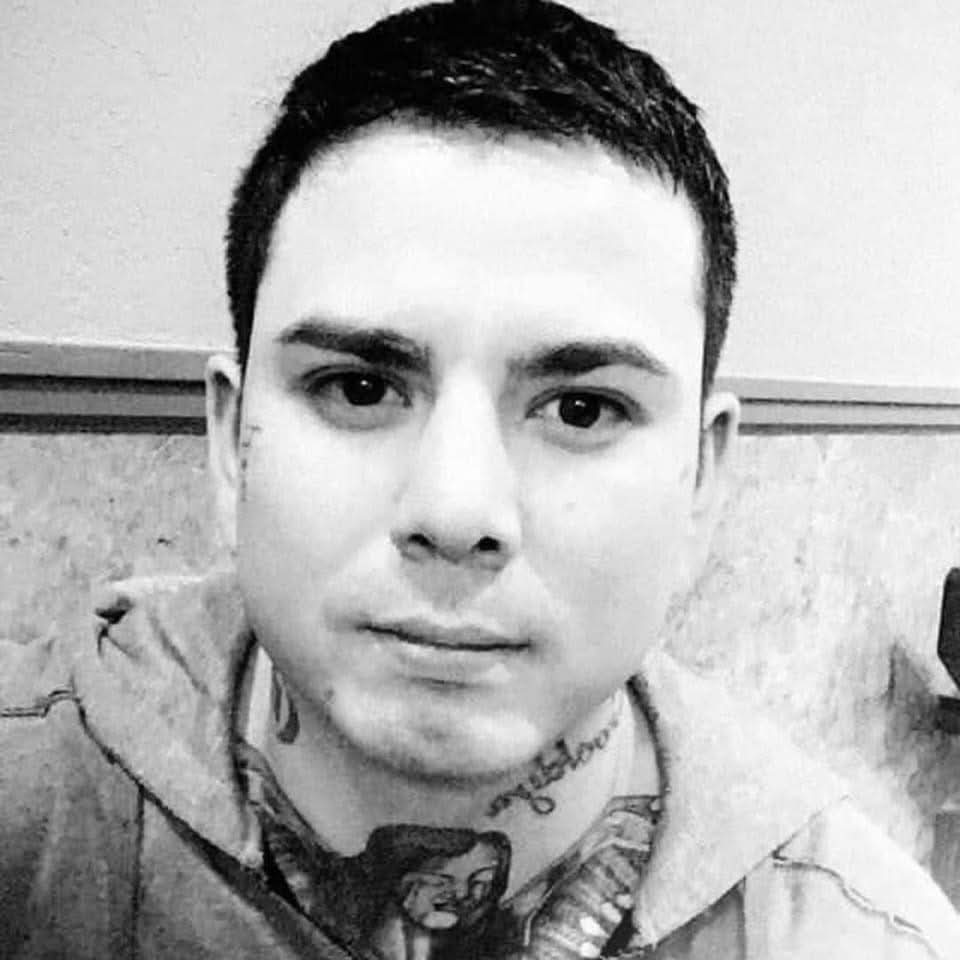
The SIRT investigation found Boden Umpherville died of a heart attack, aggravated by cocaine ingestion and positional asphysxia. (Image Credit: File photo/paNOW)
Unanswered questions

Coroner’s inquest into the death of Boden Umpherville begins Monday

Jul 18, 2026 | 6:00 AM

Just over three years after his brother’s passing, Chase Sinclair confirms feelings of nervousness about a coroner’s inquest that he hopes results in real changes.

Boden Umpherville’s inquest begins Monday at Court of King’s Bench in Prince Albert and a total of five days have been set aside to review the circumstances surrounding the 40-year-old’s death in April 2023.

After an altercation with police, where he was tased multiple times, Umpherville spent three weeks in hospital before he passed away.

Sinclair who has spoken on behalf of the family since the incident, supports the idea of the inquest.

“I think it’s gonna do some good things, people will get to see the truth… but you still see bias and one side of the story, and I just don’t like it,” he said.

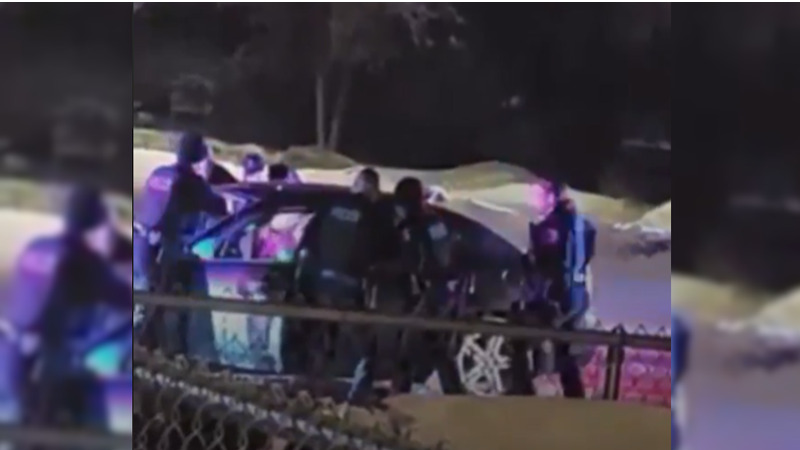
A video recording of the incident was posted to social media and is expected to be played during the inquest.
A video recording of the incident was posted to social media and is expected to be played during the inquest. (Image Credit: Facebook)

The purpose of the inquest is not to lay blame and no charges will be laid. Rather a jury, after hearing the witnesses, will be tasked with coming up with a list of recommendations to prevent future similar incidents from happening in the future.

Acknowledging he personally has a lot of questions, Sinclair said changes need to come from the top, and he hopes to see the people in the courtroom who can create those changes.

“I want to hear a sorry, and I want to see emotion,” he said, adding next week will mark the first time family members see and hear from the officers who were involved.

“I want to see if they have remorse.” 

Unsure how many of his own family members will be in attendance next week, Sinclair explained one of Boden’s brothers committed suicide a year after the incident, and the oldest brother isn’t doing good. 

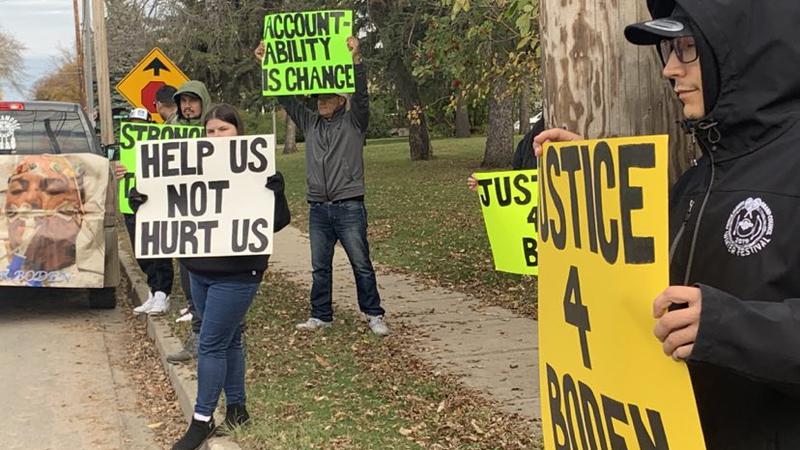
Following the incident in April, 2023, several public protests were held in the city.
Following the incident in April, 2023, several public protests were held in the city. (Image Credit: File photo/ paNOW Staff)

Nearly two years after Umpherville’s death, the results of the investigation by the Saskatchewan Serious Incident Response Team (SIRT) were released

The report stated Umpherville was in a stolen car with two other people at the time of his arrest, had a loaded Smith & Wesson 9mm gun on his body and a knife strapped to his chest.

The car, a black Dodge Avenger, had been bought that same day by the first witness, a woman, who had then reported it stolen. She told police later she had recovered the vehicle about three or four minutes before they were pulled over at about 3:30 am on April 1, 2023.

Since the vehicle had been identified as stolen, police pulled it over and in the ensuing confrontation, Umpherville first lied about who he was and then refused to be arrested. He had multiple outstanding warrants, was on release conditions from previous offences, and had a lifetime weapons ban.

A second woman, who was in the back seat of the vehicle, was later determined to have been buying cocaine at the time.

Other officers called to the scene recognized Umpherville, and although he was told he was being arrested, he refused to get out of the car, going so far as to brace himself inside, according to findings from the report.

During the continuing struggle with up to five officers who used various means to try to detain him, including OC spray and collapsible batons, Umpherville managed to get from the passenger seat into the driver’s seat, put the car into drive and turn the wheel in an attempt to get away. Video footage shows the car driving forward and striking a parked police vehicle.

Five conducted energy weapons were also used by officers. CEWs (Tasers) have different settings and usage is recorded in the device, so SIRT could determine how many times the devices actually had an impact.

In this case, warning arcs were fired followed by drive stuns, which cause pain but do not incapacitate the target. If the CEW’s probes are deployed, the target’s muscles between where the two probes hit cause the muscles in between to briefly ‘freeze’ up.

The five CEWS were deployed in 15 individual usages; that included four warning arcs and 11 trigger presses that deployed nine sets of probes. Of the nine, four resulted in neuromuscular incapacitation.

The report’s conclusion was that police did not commit any criminal offences and their use of force was appropriate.

The coroner's inquest into the death of Boden Umpherville begins Monday at Prince Albert's Court of King's Bench.
The coroner’s inquest into the death of Boden Umpherville begins Monday at Prince Albert’s Court of King’s Bench. (Image Credit: Submitted)

The cause of Umpherville’s death was determined to be cardiac arrest brought on by positional asphyxia and cocaine intoxication, with the involvement of a CEW (Conducted Energy Weapon) identified as only a possible, but unlikely contributing factor.

Sinclair took issue with the fact the SIRT report took almost two years and was released four days before the statute of limitations expired.

“That was cruel, and people don’t see it that way. And so the recommendations, I hope, go towards the top rungs. We should be informed of how this works, and furthermore, why did it take that long?”

Prior to next week’s inquest, Sinclair wrote a letter to Saskatchewan Minister of Justice Tim McLeod, calling for better communication with families. He also implored representatives from the Ministry to attend the inquest – in his words, not just to hear the evidence but to hear the people living with the consequences of the system.

When asked what recommendations he would like to see come of the inquest, Sinclair mentioned body cameras and more people trained in mental health support. 

“We need people to follow the policies that they get trained on every year so that people don’t die. We need time off from work when we’re burnt out,” he said. “There’s a lot of things that could have prevented this, and we’re not talking about it.” 

Following the inquest, Sinclair confirmed plans to follow up and make sure the recommendations are implemented.

Comments from Prince Albert Police Chief Patrick Nogier

Speaking earlier this week with paNOW, Police Chief Patrick Nogier commented on the upcoming inquest.

“I want to start by emphasizing the degree and impact this is going to have on the community, both family members that were involved, the police officers that were involved in directly and indirectly the organization. It’s a tough and challenging situation for a community to go through but an important one.”

While stating the Serious Incident Response Team did a full investigation to ensure that police were following proper policies and protocols at the time, Nogier added these are very challenging, dynamic situations, especially with the use of weapons, both on the police side and on the individual side. 

“So all those circumstances need to be understood and I think the coroner’s inquest really allows for a thorough, deeper dive into these circumstances so that people can walk away with a better feeling and a better impression of what actually occurred, rather than maybe perhaps speculating on what occurred.”

Nogier said the coroner’s inquest will have more depth and detail than the SIRT report.

“So that’s something that we support….transparency in policing requires that level of interaction. We support it, we’ll participate, and we’re willing to discuss any potential outcomes that come as a result of it.”

nigel.maxwell@pattisonmedia.com