Click here to sign up for our free daily newsletter.
Pysanky Easter eggs made by Rona Painter and her daughter. (Image Credit: Rona Painter)
PYSANKY EASTER EGGS

“It’s special to pass this on”: Saskatchewan family celebrates Ukrainian Easter heritage

Apr 2, 2026 | 5:00 PM

You will treasure that egg forever.  

That’s what Rona Painter said as she recalled the collection of Ukrainian pysanky Easter eggs passed down to her by her own Baba – delicate heirlooms rich with history, colour, and care.

“They are beautiful. We got to divide them up between all the grandkids, and we all have some of them. I just love that you can keep them forever,” said the Watson, Sask. resident. 

She remembers the first time she learned to make the intricately designed traditional treasures in her fifth-grade class.  

“I actually had packed that one away back then, and I recently discovered it maybe two years ago. I was unpacking some stuff from childhood, and I found that original one.” 

When Painter later received her own set of pysanky tools, it inspired her to carry on the tradition with renewed dedication.

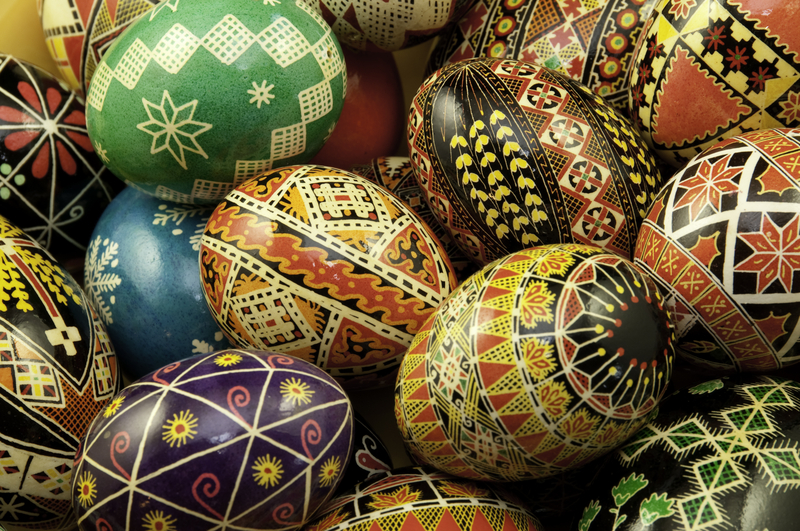
A file photo of pysanky with traditional designs on them.
A file photo of pysanky with traditional designs on them. (Image Credit: ID 8744144 © Frank Pali | Dreamstime.com)

Painter explained creating a pysanka is a meticulous process that varies in time based on the complexity of the design; some take several days to complete.

“You start with a whole raw egg and lightly trace your dividing lines; geometry is usually the starting point. You’ve got some straight lines around the center of your egg and then some vertical ones to divide your egg into sections,” she explained.  

To do this, she uses a small pen-like tool with a wax pot on the end called a kiska.  

“You use a candle to heat it up and then put the wax inside of it and the wax will melt and you keep having to redo that constantly.” 

Layer by layer, the design takes shape. The wax preserves what lies beneath, keeping parts of the egg white while it is dipped into dye. The process is repeated several times to build up depth and colour.

“Let’s say you’re making a yellow flower… You would color all your petals right now in wax, cover them up and protect that yellow color, then you’re going to dip into a darker color,” said Painter.  

Once complete, she holds the egg over a candle flame to melt off the multiple layers of wax. Slowly, the design is revealed.  

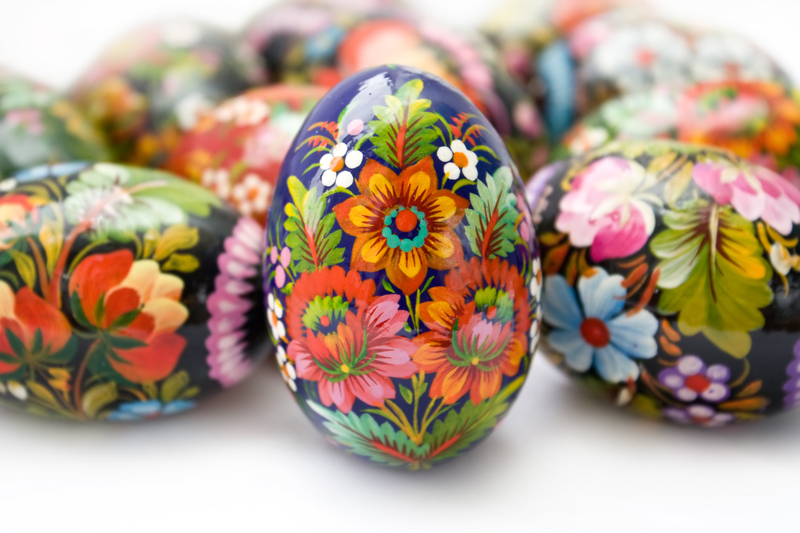
A file photo of Ukrainian handmade pysanky Easter eggs.
A file photo of Ukrainian handmade pysanky Easter eggs. (Image Credit: ID 16208615 © Fishara | Dreamstime.com)

“They last forever… the one that I have from Grade 5 is many decades old, and it’s as beautiful as the ones we made last night.” 

For Painter, psyanky are more than art. They are a living thread connecting generations. She believes deeply in the importance of carrying traditions like these forward.

“I think you can confidently say all cultures have lost lots of ancient art forms and traditions and all kinds of things,” she said. “It feels good to do something that your ancestors did and create something beautiful at the same time.” 

This year Orthodox and Ukrainian Greek Catholic Easter in Canada falls on April 12, while Western Catholic/Protestant Easter is April 5.

alyssa.rudolph@pattisonmedia.com