Click here to sign up for our free daily newsletter.
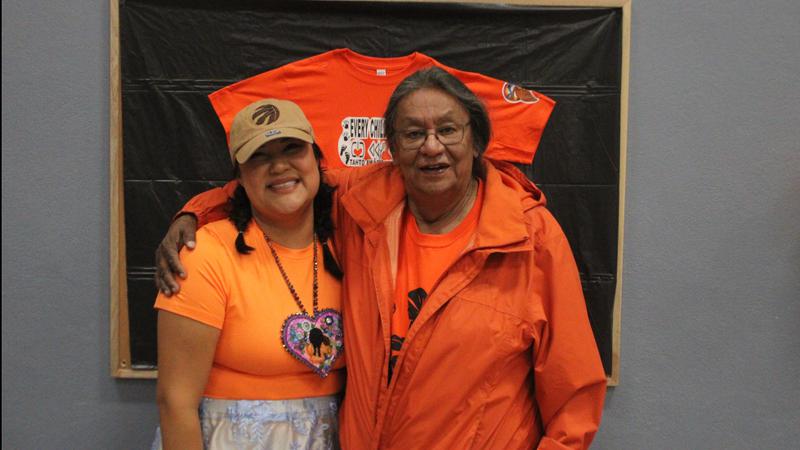
Wendy and George Merasty attended Tuesday's Truth and Reconciliation Day event at the PAGC Cultural Centre. (Nigel Maxwell/ paNOW Staff)
Breaking the cycle

Prince Albert family finds healing after residential school trauma

Sep 30, 2025 | 4:44 PM

George Merasty was only six years old when he attended the All Saints Residential School in Prince Albert, and as he reflects on his life since then, his eyes well up in tears.

“I was never the same little boy that I was before I came to residential school. Everything shut down because of the straps, the abuse that happened,” he said.

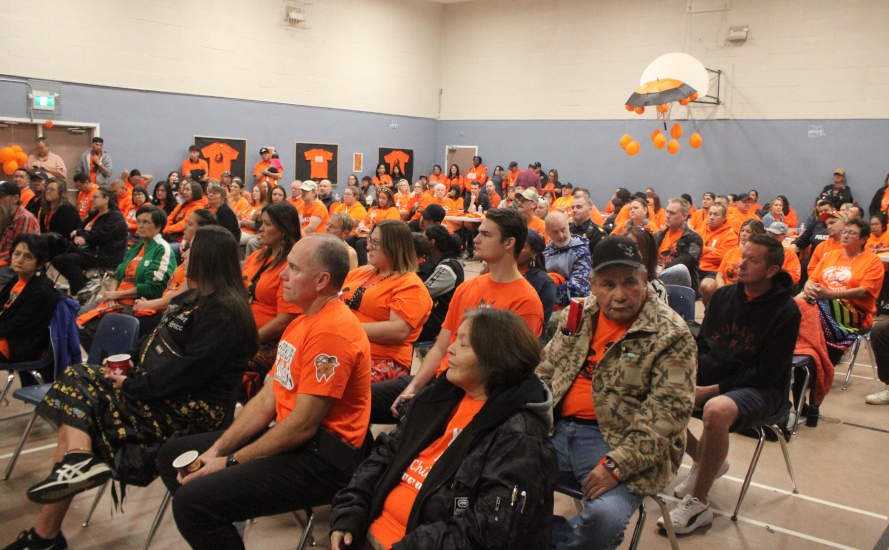
On Tuesday, Merasty was among more than 200 people who gathered at the Prince Albert Grand Council (PAGC) Cultural Centre for an event honouring the former residential school students who survived and those who did not return home.

Multiple guest speakers talked openly about intergenerational trauma and their own experiences with alcohol abuse and family violence. Acknowledging the Indigenous and non-Indigenous people who were in the audience, Merasty who is now on a positive healing journey, said he was grateful they all came to listen.

“You know everyone in the audience has a link to residential school, whether they know it or not because it’s part of Canadian history now.”

There was standing room only. (Nigel Maxwell/ paNOW Staff)

One of Tuesday’s speakers was Merasty’s daughter Wendy, who spoke openly and honestly about growing up in a home where there was alcohol abuse and where the words “I love you” were not spoken often. However, after graduating high school, she received a gift from her father that has forever left a mark on her heart – a hug.

“I remember my dad coming up to me and it was like a moment of that, you know, not only did I finish grade 12, but it was a moment that me and my dad shared together that nobody could take away. When he hugged me, it felt like a blanket like it just wrapped around me and it held me and we shared that moment together.”

Determined to create a better life for her own children, Wendy talked about the importance of family trips and how she is pursuing a PhD in Education. One of her goals is to create parenting programs for Indigenous mothers.

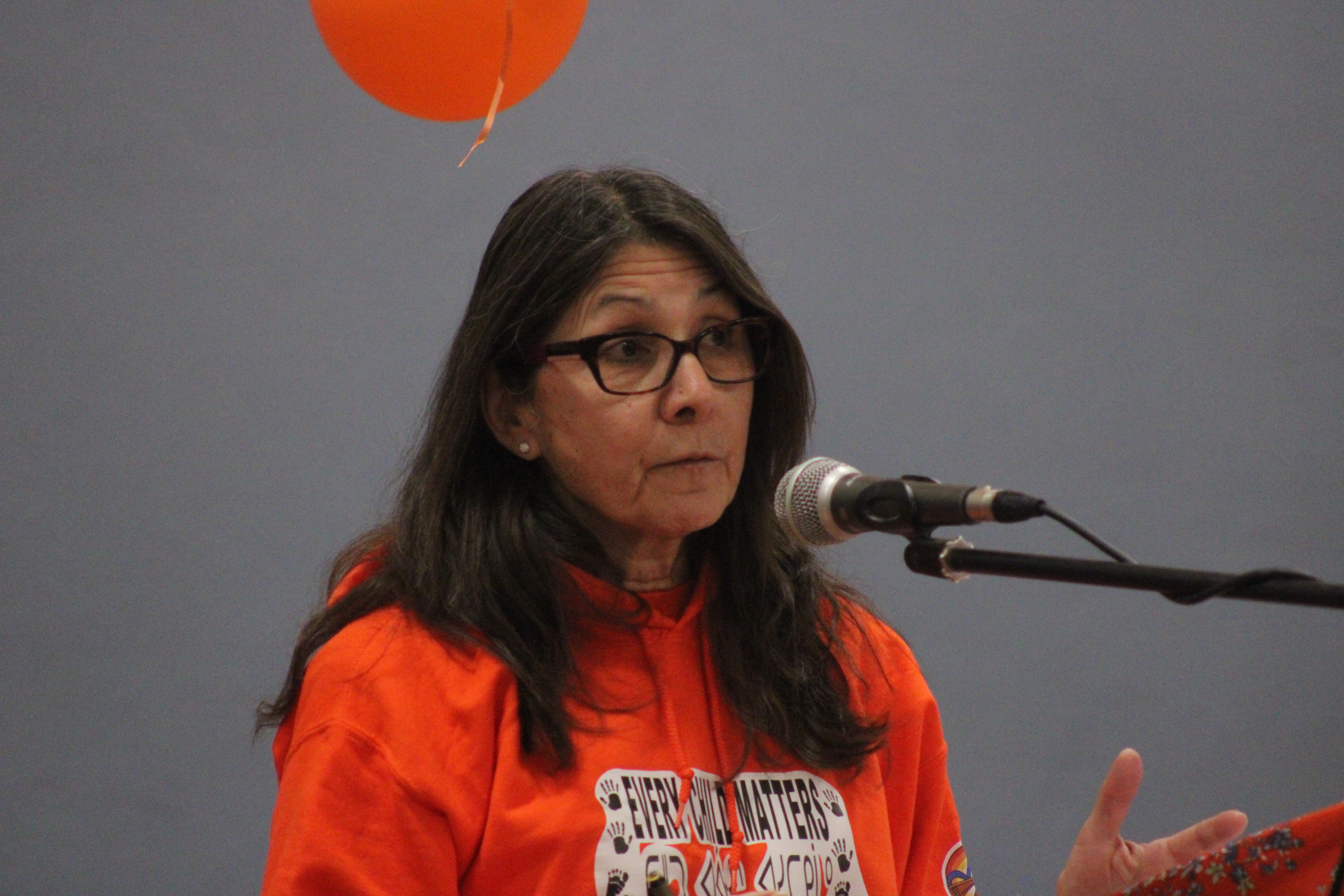
Also among Tuesday’s speakers was PAGC Health Director Shirley Woods who talked about her mother’s experience at a residential school in Duck Lake. She explained when the students entered the school, they were given a number, and her mom’s number was 383; her grandmother’s was 198; and her grandfather’s was 91.

Woods explained her mother was very, very adamant that the residential school wasn’t going to define who she was as a person and how she was as a parent.

“She rarely spoke at that time about residential school. She did talk about some of the friends that she met there and on occasion she did sometimes talk about some other stuff that happened, and you could see that trauma was still there beneath that really strong exterior.”

Shirley Woods. (Nigel Maxwell/ paNOW Staff)

Woods went on to explain how despite her mother’s struggles with self esteem and anxiety, she was also a real ‘mama bear’ and was always there for her children, and would have been very happy to see the changes that there are today.

“She did talk about the public humiliation on the fact that you were strapped in front of all the rest of the students until you cried…my mom never cried. She said she never, ever would let those nuns win. And so as kids growing up, that’s how we were raised. You didn’t cry, you don’t show emotion, you can’t let them win,” Woods said.

PAGC Grand Chief Brian Hardlotte said there is much work to be done by all levels of government when it comes to reconciliation.

He also noted Monday’s announcement from Premier Scott Moe relating to compensation for former students at Île-à-la-Crosse and said Timber Bay must be next.

“It would be the right thing to do,” he said, noting the numerous meetings that have already occurred with the Premier and federal ministers.

Prince Albert Mayor Bill Powalinsky stated truth and reconciliation starts inside of us.

“We need to reconcile our assumptions with the truth. We need to reconcile our biases and our ignorance of what has happened,” he said.

Going forward, Powalinsky said the city will need the support and guidance of Elders, as well as a solid relationship with the Grand Council.

(Nigel Maxwell/ paNOW Staff)

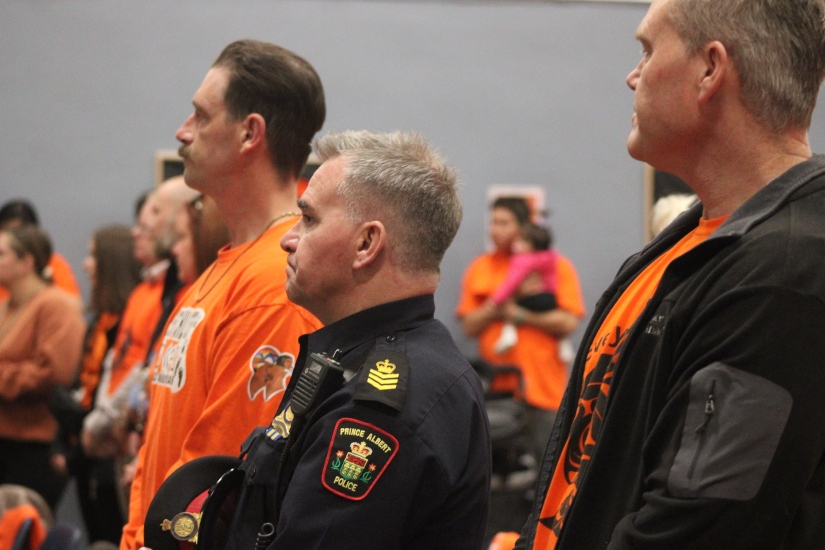
Representatives from both the RCMP and city police were present and P.A. Police Chief Patrick Nogier said reconciliation comes down to two words: sincerity and acknowledgment. 


“This organization will be sincere in our approach. We’ll make sure that the relationships that we build within our community are maintained with sincerity, and moving forward that sincere approach to ensure that we have a foundation to work from.”

“We need to acknowledge the historical injustice that have led to Indigenous communities being traumatized and coming into conflict with the law. We need to acknowledge the fact that self governance and Indigenous policing are concepts that we need to get our head around moving forward. 
And we certainly need to acknowledge calls for action and calls to justice.”

nigel.maxwell@pattisonmedia.com

On X: @nigelmaxwell