Click here to sign up for our free daily newsletter.
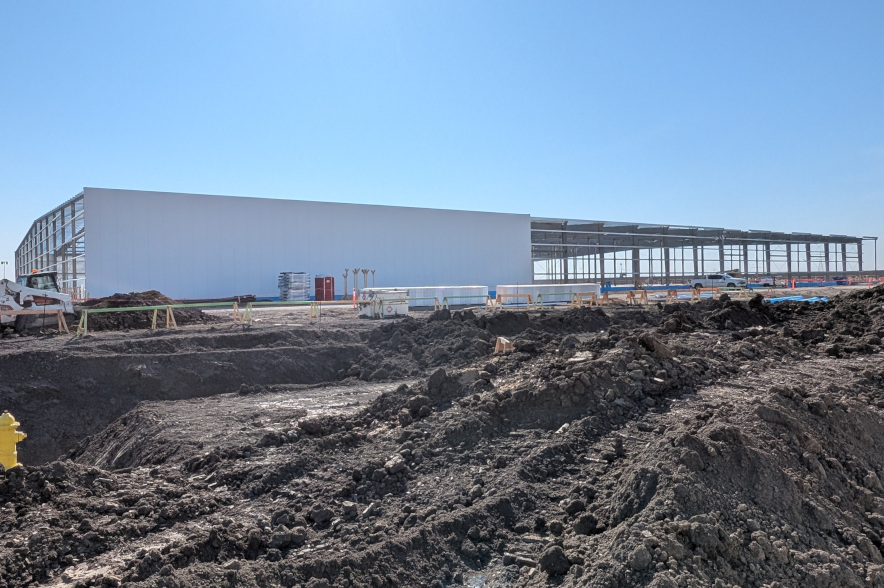
The Bell AI data centre is being built just outside Regina’s city boundaries and it was recently announced that it will expand from 300 MW to 1.2 GW in a second phase. (Image Credit: Lisa Schick/CJME)
assurances

Premier Moe says Sask. families won’t pay to power Bell’s planned AI data centre expansion

Sep 18, 2026 | 3:17 PM

Premier Scott Moe said Saskatchewan families will not pay to power Bell’s planned AI data centre expansion and that the facility will use less water than a hockey rink or golf course, as he sought to address concerns about the project’s electricity and water demands.

Bell recently announced plans to quadruple the capacity of its project in the Rural Municipality of Sherwood from 300 megawatts to 1.2 gigawatts. Moe has described the development as the single largest investment in Canadian history.

“It does use electricity; they’re going to bring their own. Saskatchewan families aren’t going to pay for it,” Moe told reporters Thursday following a luncheon discussion at the Lloydminster Heavy Oil Show.

The additional 900 megawatts falls under Saskatchewan’s Bring Your Own Power policy. Bell is contracting with private power producers to develop natural gas generation dedicated to the data centre.

On water, Moe compared the facility’s cooling system to a car radiator.

“It cools the water. It actually doesn’t use water. Uses less water than a hockey rink or a golf course,” he said.

Moe did not provide a projected water-use figure or explain the basis of the comparison.

Bell said the facility would use a sealed, closed-loop cooling system paired with air-cooled heat rejection, eliminating the need for evaporative cooling towers or a routine supply of cooling water. Cooling fluid would be trucked to the site and added once when the system is commissioned, then remain inside rather than being discharged or regularly replaced.

The company said no municipal water or groundwater would be drawn for cooling. Any municipal-water connection would be limited to fire protection and normal building uses such as washrooms.

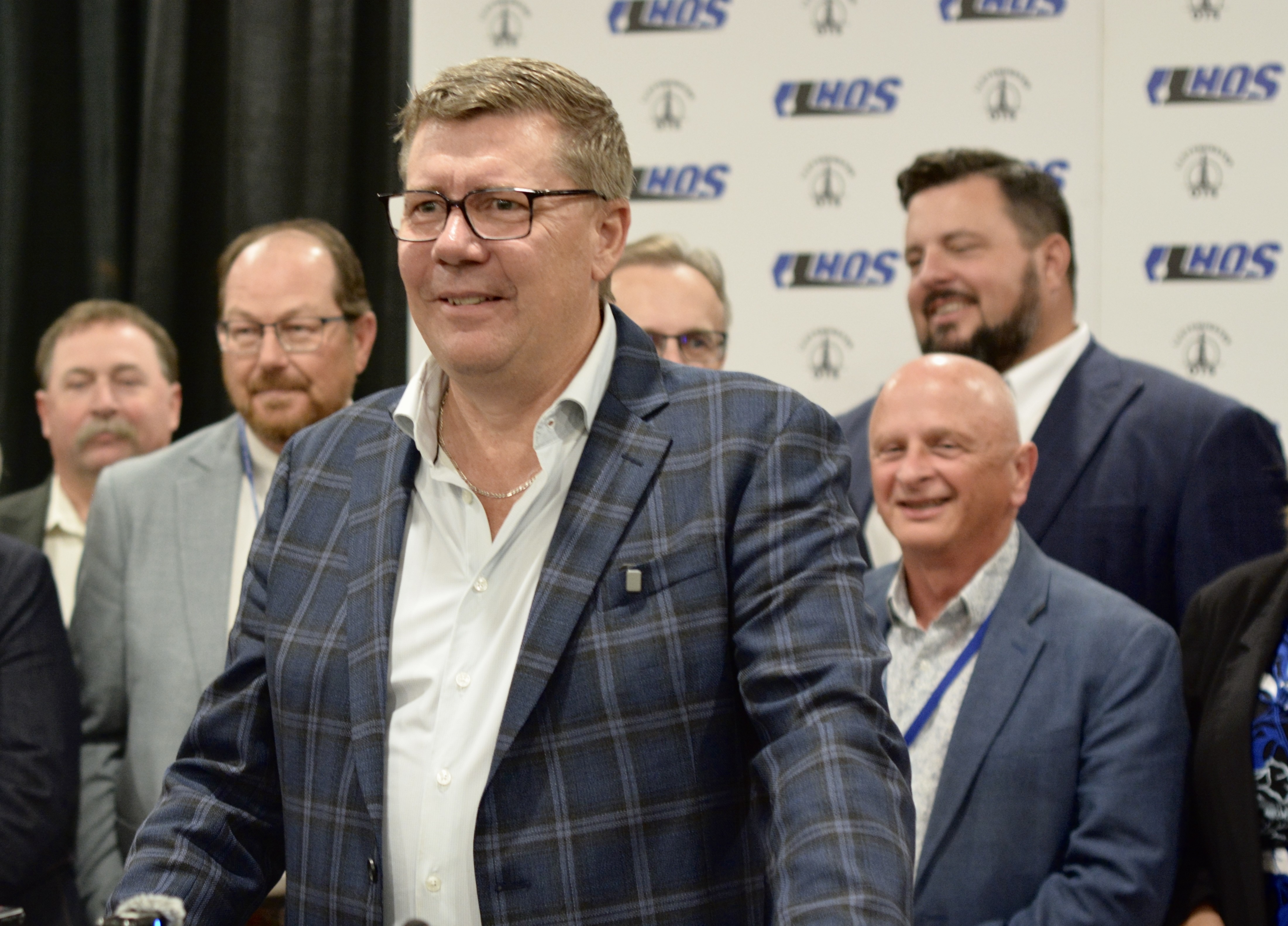
Saskatchewan Premier Scott Moe speaks to reporters during a media scrum following his luncheon discussion at the Lloydminster Heavy Oil Show on Thursday, Sept. 17, 2026, as members of his cabinet look on.
Saskatchewan Premier Scott Moe speaks to reporters during a media scrum following his luncheon discussion at the Lloydminster Heavy Oil Show on Thursday, Sept. 17, 2026, as members of his cabinet look on. (Image Credit: Kenneth Cheung/battlefordsNOW)

The expansion has prompted questions from nearby landowners and opponents about consultation, electricity demand, water, noise, lighting and environmental effects.

Doug McKell, a landowner near the project, told The Evan Bray Show that the scale of the expansion surprised him and other residents. He said Bell has responded to their concerns and conducted baseline testing involving water and air quality, lighting and noise.

McKell said a Bell representative had also assured residents that the company would discuss any additional measurements and assessments required because of the expansion.

Jeremy Harrison, the minister responsible for SaskPower, recently said that the original project underwent an environmental assessment and that the power-generation component of the expansion would also have to go through one.

“Those are fair questions. Questions that I would have,” Moe stated.

“The answers are fairly straightforward and understandable as well.”

Moe also highlighted that the development would support more than 600 ongoing direct positions and more than 3,000 indirect jobs. The direct positions would include 100 Bell head-office jobs in Saskatchewan, he said.

“The benefits are in careers and opportunities for years and generations to come,” he said.

“We build a lot of big things in this province, as I said, over 100 billion dollars in six mine sites that have just been completed or being built as we speak.”

“In this area of the province, you see big things being built in the energy industry to build a number of fairly significantly sized buildings, and fill them with data center equipment is not out of the scope or realm of what we’re capable of and what Saskatchewan people are capable of,” Moe stated. 

-With files from 650 CKOM

Kenneth.Cheung@pattisonmedia.com