Click here to sign up for our free daily newsletter.
A protester shows his support against the provincial government's logging operation that would destroy several heritage and cultural areas west of Prince Albert during a demonstration on Friday. (Image Credit: Logan Lehmann/paNOW)
At risk

Protesters speak out against provincial logging operation on heritage, cultural land after wildfire

Sep 4, 2026 | 5:01 PM

An area of land that burned during a wildfire near MacDowall this past summer, where ancient Indigenous artifacts were recently found, is at risk of being lost. 

Dozens of people including members of Sturgeon Lake First Nation, Muskeg Lake First Nation, Beardy’s & Okemasis’ Cree Nation, and Crutwell Métis Local 66 crowded the lawn in front of the Indigenous and Northern Affairs Canada office in Prince Albert on Friday morning in a show of protest, denouncing the provincial government for wanting to turn the history-rich land into a logging operation. 
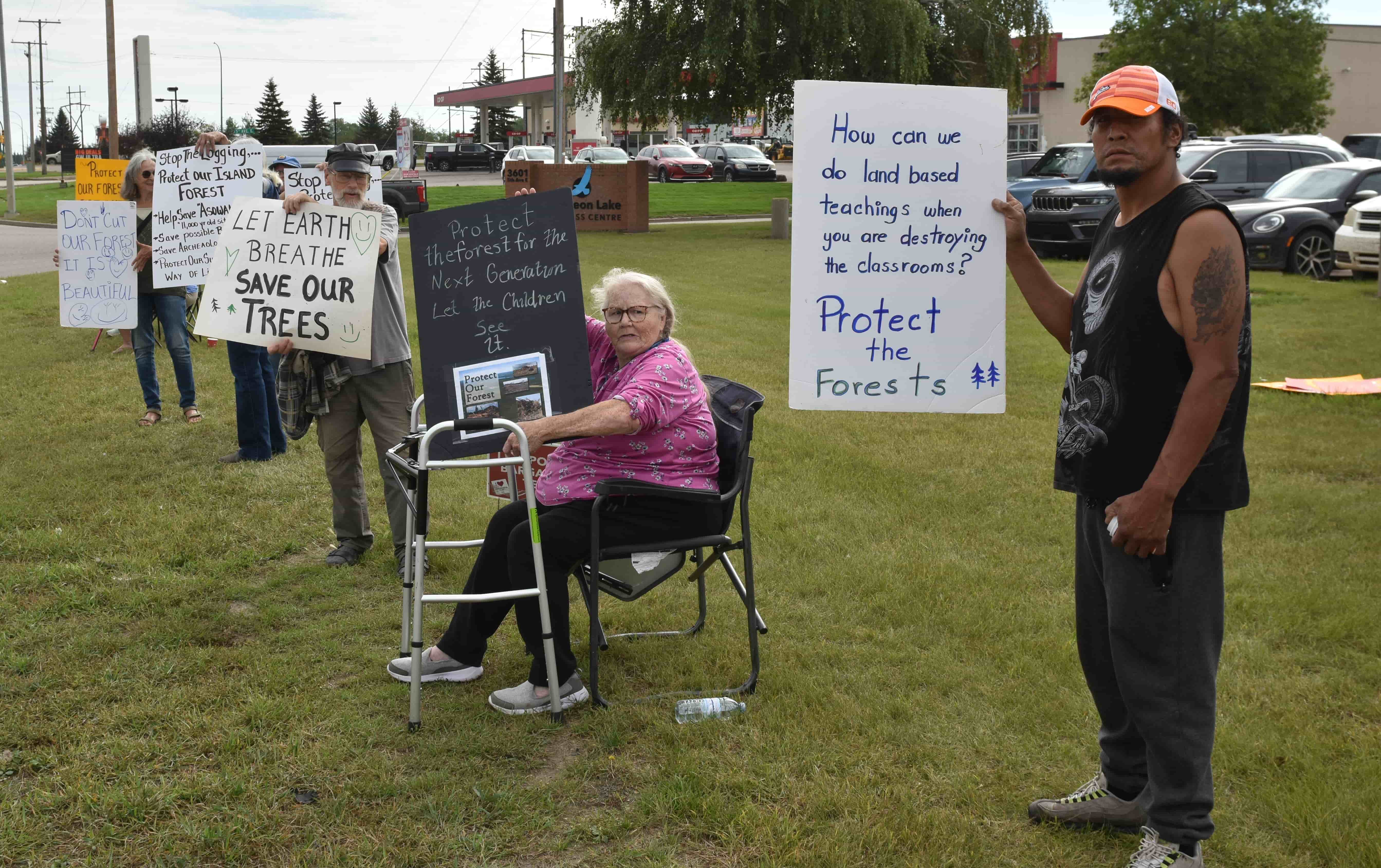
Dozens of people came to show their support.
Dozens of people came to show their support. (Image Credit: Logan Lehmann/paNOW)

The land that’s being threatened includes an area that stretches roughly 18 kms west of Prince Albert following the North Saskatchewan River and ending just south of Shellbrook.

Candice Campbell was the organizer of the protest and said the area holds history that dates back to 11,000 years ago. 

“We’ve had moratoriums with the [government], and part of it was it started to protect our subsistence way of life. We don’t want them logging in there because they’ll scarify the land and totally disrupt it, and nothing can grow back. They’ve tried replanting [since the wildfire] and the trees just don’t stay because there’s no soil. All the trees are gone.” 

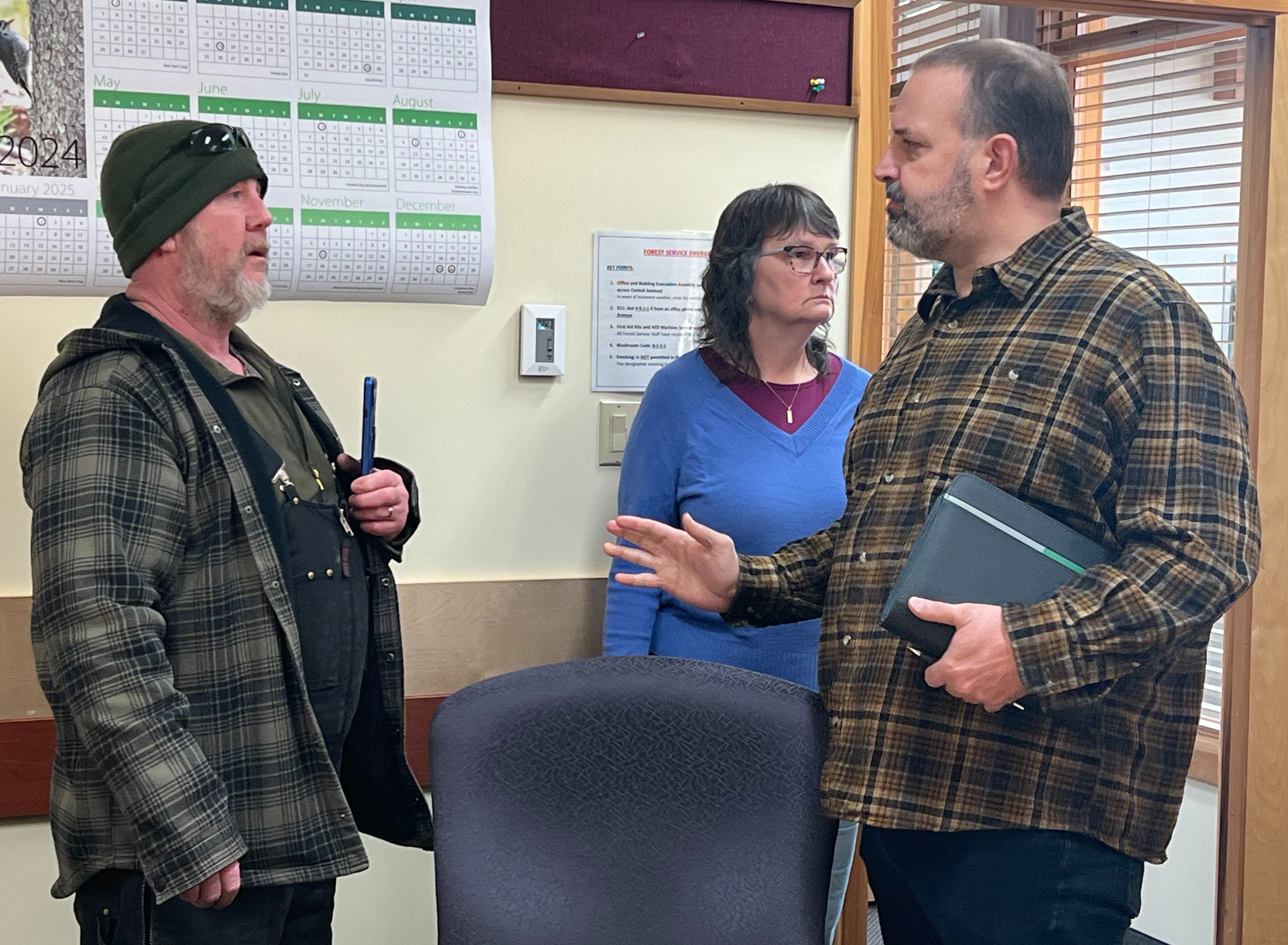
The first talks between the First Nations and provincial government came in January 2024, when Saskatchewan’s Director of Forest Operations and Compliance Assurance Chris Brown sat down with Saskatchewan-based researcher and archaeologist Dave Rondeau, and other people protesting at the time.

Brown spoke on behalf of the SaskParty and clarified that the government had no intention to destroy any sort of cultural site and that the actual area of the forest being cut is less than one per cent.

Dave Rondeau (left) speaks with Chris Brown during their meeting on January 13, 2024.
Dave Rondeau (left) speaks with Chris Brown during their meeting on January 13, 2024. (Image Credit: Nigel Maxwell/paNOW Staff)

Despite repeated ‘no’s’ to the provincial government, Campbell said that they’ve been persistent in trying to sway the local groups into letting them cut different parts of the area. But the group believes that once their foot gets in the door, there won’t be anything stopping the loggers from doing what they want. 

“That’s their gateway – their step in to get in there and then from there, there’s no telling how far it will go… so we keep telling them no, but they keep coming at us. We got a moratorium, I think the first one was for like a year this one was for two years, and now that’s coming to an end, and they gave us till today to have a reply for our last consultation.”  

“I guess in a way, this is our reply. It’s still no and that’s not going to change.”  

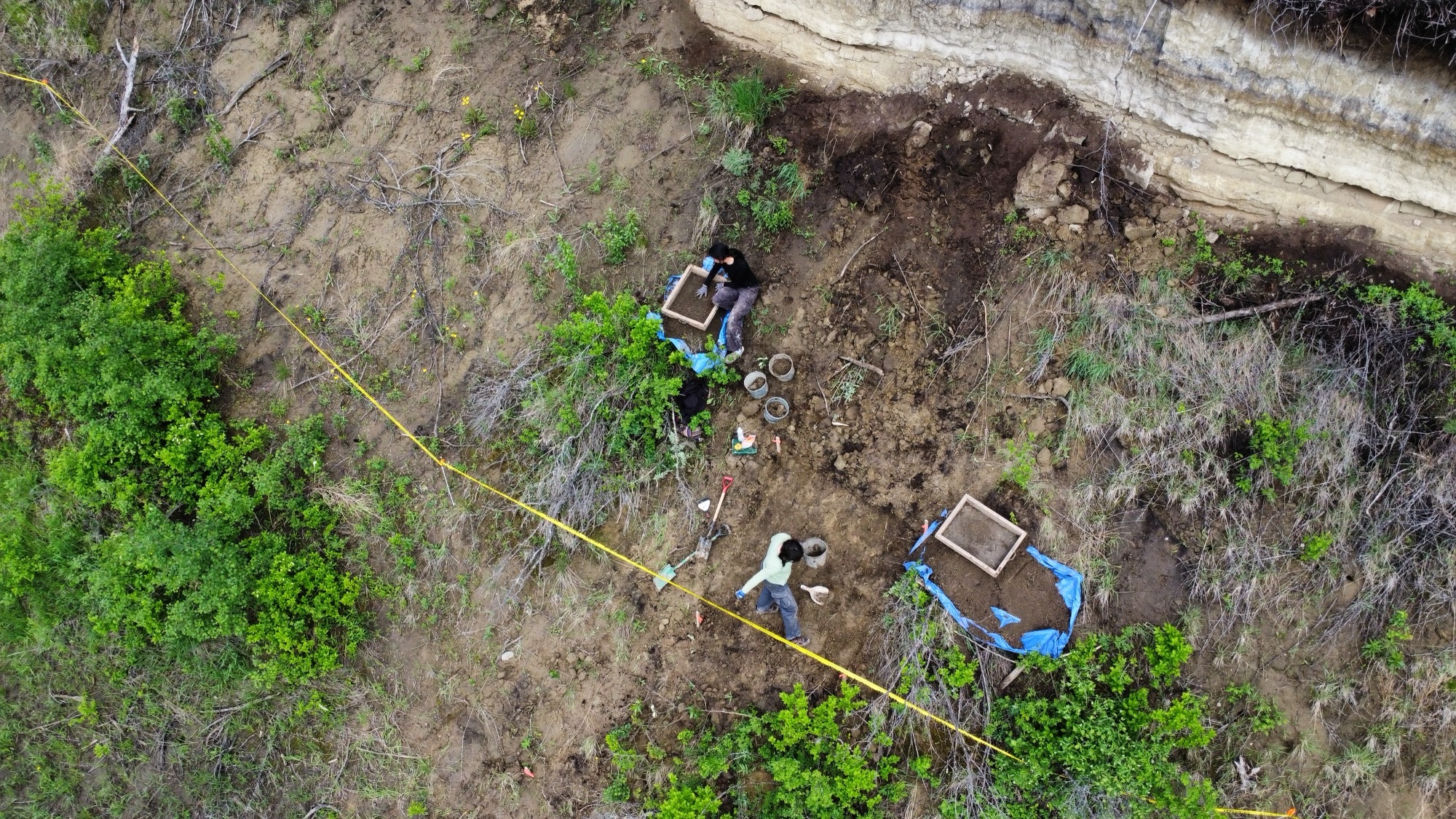
According to Campbell, the first discovery at the site came in 2023, when Rondeau discovered an old crossing ground dubbed ‘âsowanânihk’, which is Cree for ‘A Place to Cross’.  

Researchers slowly sift through dirt and rocks at the Âsowanânihk Ancient Indigenous Site near Crutwell in June 2026.
Researchers slowly sift through dirt and rocks at the Âsowanânihk Ancient Indigenous Site near Crutwell in June 2026. (Image Credit: File photo via Dave Rondeau/submitted to Eagle Feather News)

A couple years later in 2025, the team discovered ancient arrowheads that date back to 4,500 to 7,000 years ago. Then, more recently, in July of this year, they found what appear to be tipi rings scattered across a nearby field.  

“You can tell that place has been used over and over. But if the loggers get in there, they’ll just totally scarify everything. Once it’s gone, you can’t bring it back. There’s no recovering it.” 

Campbell continued that the land was home to the Upper and Lower Hudson House settlement and may also be holding some unmarked burial sites. The area was documented to be the final resting place of the U’Basquia, Beaver and Pegogamow peoples following a smallpox epidemic in the early 1780’s. 

“That’s the last recorded place where they were and they talk about burying them there, so there’s also possible burial sites that we’d like to protect as well.” 

“The archeologists haven’t had time to get in there and study these sites yet, because we’re only just finding them. We need more time,” she added. “There are so many things starting to pop up. It’s turning out to be more like a heritage corridor.” 

During the same January 2024 meeting, Brown said that government is willing to engage with local groups to alter existing plans if there are burial sites found. However, the changes would only pertain to that specific area of the land.

“As far as just no cutting, that isn’t something that is [being] considered simply because it is a license that has been given by the crown to those companies,” Brown said at the time.

Additionally, he noted that the area, at the time, was being looked at for “sustainable management” as the land was subject to wildfires, stating, “they will burn. At some point they’ll burn.”

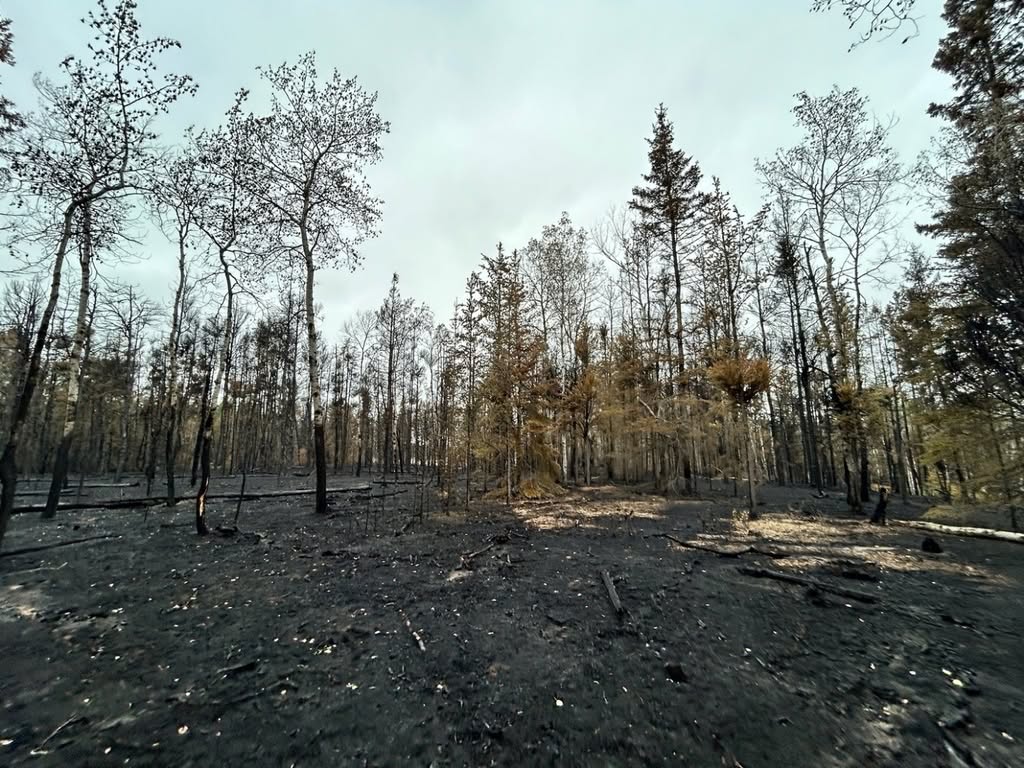
Ironically, two years later in late May 2026, the Lobstick fire was sparked in the Nisbet Forest between Duck Lake and MacDowall and spread in a northwestern direction, eventually jumping the North Saskatchewan River and burning a portion of the area.

The aftermath of the Lobstick fire in the Nisbet Forest.
The aftermath of the Lobstick fire in the Nisbet Forest. (Image Credit: Saskatchewan Public Safety Agency/Facebook)

On top of the heritage and cultural value of the land, Campbell said that it also holds ecological value. 

“That’s where we get our roots, our berries, our medicines. It’s used not only for like hunting, gathering and trapping, it’s recreational. I’ve talked to families, Indigenous and non-Indigenous, that go back there who use the area, and it’s a family gathering place.” 

Having held demonstrations before opposing the logging, Campbell continued that they need more support against the government to ensure that their voices are heard. She noted that they’d like to form an official group for their movement, which would need the support of all other bands in the surrounding area. 

“What we’re asking for right now [is] total support to stop this once and for all. We’d love to see this place be protected, but we need everyone to come together.” 

She continued that with this year marking the 150th anniversary of Treaty 6, the government’s actions are the opposite of reconciliation. 

“It’s been very frustrating. They just won’t quit. They keep coming at us and now they’re pushing harder. I don’t know what we can do other than just keep telling them no.” 

-with files from paNOW’s Nigel Maxwell

— 

loganc.lehmann@pattisonmedia.com