Click here to sign up for our free daily newsletter.
The RCMP holds a bi-annual Youth Leadership Workshop in which youth are invited to develop plans for their communities. (Image Credit: RCMP)
RCMP Youth Leadership Workshop

Indigenous youth gather in Regina to develop community action plans with RCMP

Mar 25, 2026 | 2:41 PM

Indigenous youth from around Canada travelled to Regina last week to participate in the RCMP Youth Leadership Workshop.

The unique program pairs one Indigenous youth with a RCMP officer from their home community. Together, over the course of a week, they attend workshops at the RCMP training academy in Regina to learn how they can make their communities safer.

“We do it because youth voices need to be heard. And they’re a really big component to crime reduction and victimization reduction in their communities,” said Tessa Duc, senior youth outreach officer with the National Youth Services.

From March 10 to 14, 14 youth participated in the week of workshops, traveling from communities in Saskatchewan, Northwest Territories, British Columbia, Newfoundland, New Brunswick, Ontario, and Nunavut.

The objective is to develop a community action plan to address youth crime or victimization that they can take home and implement in their communities. Once they return to their community, the youth will work with their local RCMP detachment to implement the plan.

“The youth, from what they’ve told me, feel energized and capable of implementing these incredible programs,” said Duc.

Jaxx Clancy-Murphy, a grade 10 student from Eel Ground First Nation in New Brunswick, was one of the 14 youth participating in this year’s Youth Leadership Workshop. His community action plan focused on ways to prevent youth in his reserve from easily accessing substances.

“It’s a big issue on our reserve that a lot of the nicotine, tobacco, weed stores will sell to people who are underage because they don’t ID everyone,” said Clancy-Murphy.

“A lot of people who are 16-17 years old are buying tobacco and weed products. It effects the schools on and off reserve.”

Clancy-Murphy said young people accessing these substances can be the gateway to being involved with more serious drugs. He developed a plan alongside his mentor, RCMP Constable Brennan Nadeau, to meet with local council and peacekeepers in effort to enforce stricter ID’ing practices in local stores.

Clancy-Murphy said the experience helped him grow confidence in his voice.

“This definitely made me more confident,” he said. “I’d love to pursue a career with the RCMP in the future and make an impact with my community.”

The growth in the young participants, over just a week, was evident to the mentors, said Nadeau.

“It was awesome to see (Clancy-Murphy) grow over the week,” said Nadeau. “The best part was to see the development – the leadership and social skills.”

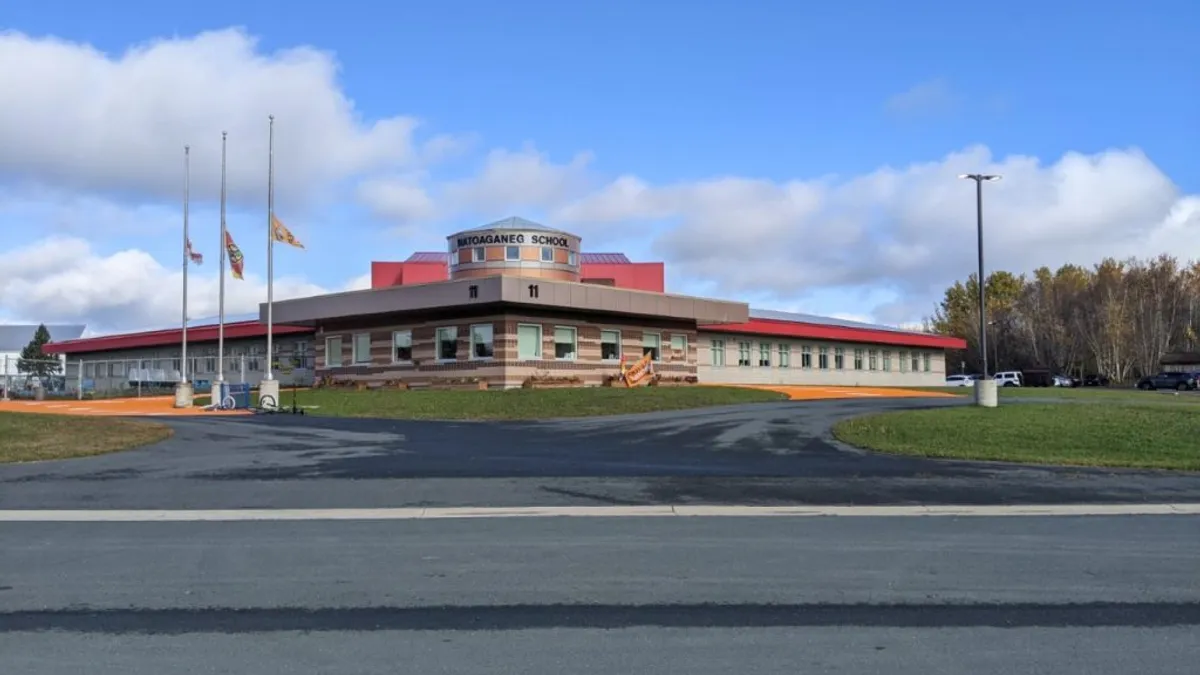
Natoaganeg School, at Eel Ground First Nation, a community with about 1,100 members in northern New Brunswick.
Natoaganeg School, at Eel Ground First Nation, a community with about 1,100 members in northern New Brunswick. (Image Credit: Submitted)

Nadeau said he connected with Clancy-Murphy immediately, and the two now consider themselves friends for life. He said building strong relationships and understanding with Indigenous communities is important for the RCMP.

“It’s critical because if we want to do our work on a reserve, a good relationship with a lot of people goes a long way,” he said. “If the communication is better, we can come up with common solutions together.”

Some of the other youth-led action plans developed during this year’s Youth Leadership Workshop included:

One youth from Saskatchewan, Nysaiah, who plans to contribute significantly to her school’s monthly newsletter on topics affecting youth in her community, such as unhealthy relationships, suicide, and substance abuse.

And Dedze, from Northwest Territories, will address the lack of resources in the community by hosting three community events with guest speakers on healthy relationships, substances abuse, and community safety.

“You watch these youth come in at the beginning of the weeks, terrified to be there because they don’t know what’s going to happen,” said Duc.

“By the end of the week, they’re doing a passionate presentation on a community initiative that they’re excited to go home and implement. The impact on the youth is leadership, connection, and building trust. It’s a magical week.”

While the RCMP doesn’t have any national data on the impacts of the workshops in communities, Indigenous youth continue to be overrepresented in the criminal justice system. Indigenous youth account for around 43 to 46 percent of youth custody admissions despite representing only 8 percent of the Canadian youth population.

National data also shows a significant risk of substance abuse, with Indigenous youth three times more likely to have tried marijuana.

The workshops not only have a significant impact on the youth, but the RCMP officers from their communities whom they are paired with.

“We’ve had RCMP mentors come to us saying they’ve been feeling burnt out, and don’t have enough energy to continue on with their career. But, coming out to these workshops has fully changed their careers around,” said Duc.

The RCMP has had a long, complex history with Indigenous communities, leading to conflict and distrust. Former RCMP Commissioner Brenda Lucki apologized for systemic racism and acknowledged that institutional decisions have caused generational harm.

A 2025 Human Right Watch report highlighted that even when RCMP is found not guilty of criminal wrongdoing in specific cases, their interactions often still highlight a failure to build a safe and trusting relationship with Indigenous communities.

“I hope these workshops show the person behind the badge. I hope that they see the human and person, that a lot of the RCMP are there to help, connect, and support. Not just simply be law enforcement,” said Duc.

“And also to reconcile the damage that has been done in the past with Indigenous communities.”

Duc said that seeing these connections being built between RCMP and Indigenous youth can be profoundly moving.

“By the end of the week, we’re in tears over how proud we are of all the youth who go from being incredibly shy and reserved, and seemingly not confident, to basically flourishing throughout the week,” said Duc. “And saying their lives have been changed.”