Click here to sign up for our free daily newsletter.
Over the course of five decades, Carole Ring became a second mother to dozens of hockey players, including many who would go on to become NHL stars. Leon Draisaitl lived with Ring from 2012 to 2014. (Image Credit: submitted)
40 sons

Meet the P.A. billet mom who helped raise generations of hockey players

Feb 2, 2026 | 10:06 AM

PRINCE ALBERT, SASK. — Carole Ring has 40 sons.

She brought two of them into the world herself. As for the other 38? The hockey world brought them to her.

Over nearly five decades in Prince Albert, Ring quietly became one of the most influential people in junior hockey. Not from behind a bench or a desk, but from her kitchen table. She opened her home to teenage players far from their families, helping shape not just hockey careers, but lives.

She stopped billeting in 2020, closing a chapter that stretched from the very first season of the Prince Albert Raiders to the modern NHL era.

In a sport that often celebrates goals, trophies and draft picks, Ring’s story is a reminder of the unseen foundation beneath it all: billet families.

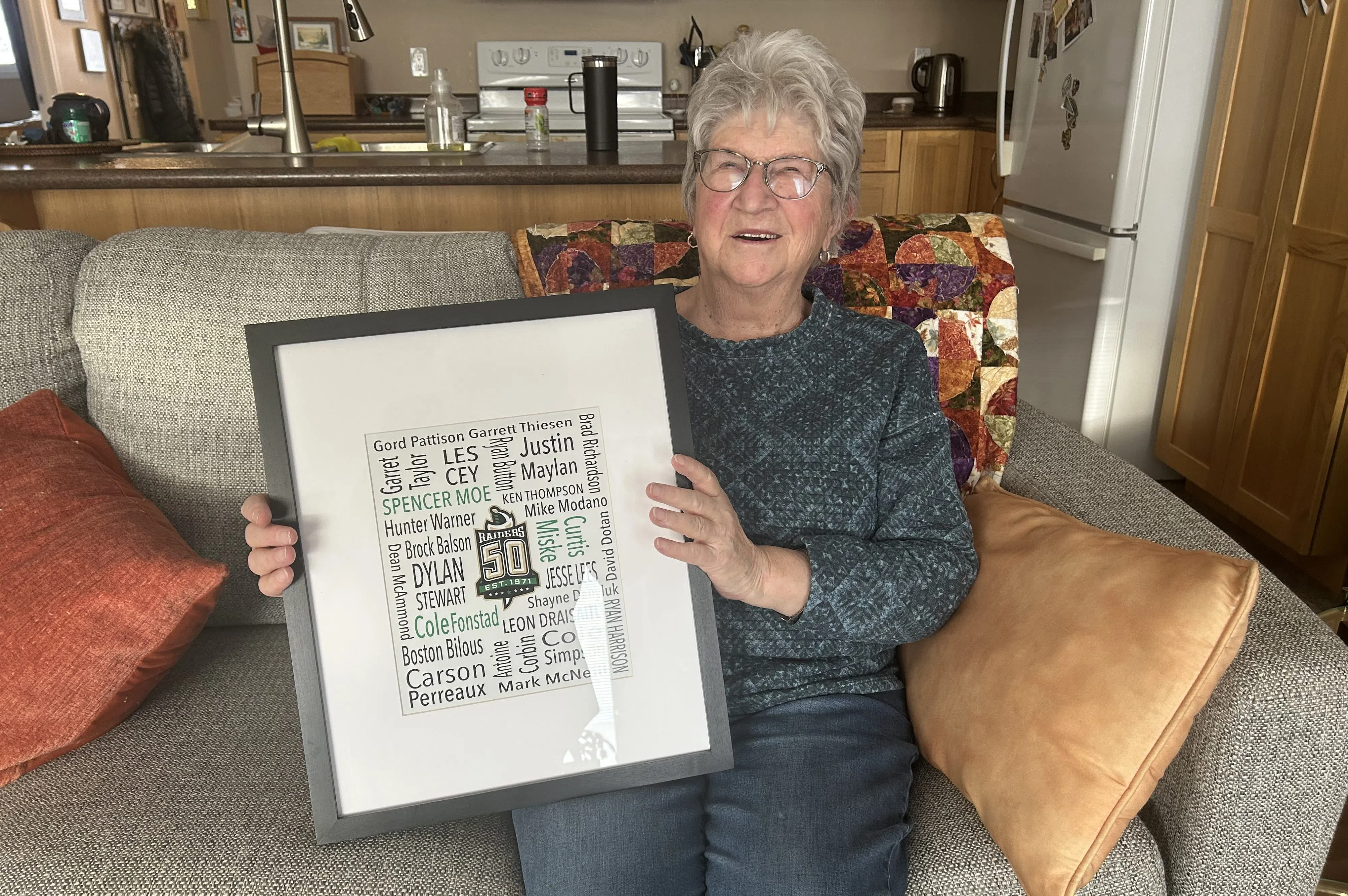
Carole Ring stopped billeting in 2020, but is still connected with the Raiders. The thing she misses most about opening her home is getting to know the players on a personal level.
Carole Ring stopped billeting in 2020, but is still connected with the Raiders. The thing she misses most about opening her home is getting to know the players on a personal level. (Image Credit: Brittany Caffet/650 CKOM)

What a billet really is

In junior hockey, a billet family provides housing for players — many just 15 or 16 years old — who leave home to chase their dreams. They offer a bedroom, meals and supervision. At their best, billets offer something harder to quantify: stability.

“They become your parents,” said Curtis Miske, who lived with Ring for two seasons while playing for the Raiders. “At 16 or 17 years old, you need parenting help. You need guidance. You pretty much become a family.”

From the very beginning, Ring understood that role instinctively.

“They cry on your shoulder about girlfriends or something about the coach,” she said. “They’re bringing these things home and wanting to talk about them as though you’re a parent. And I was happy to be a parent.”

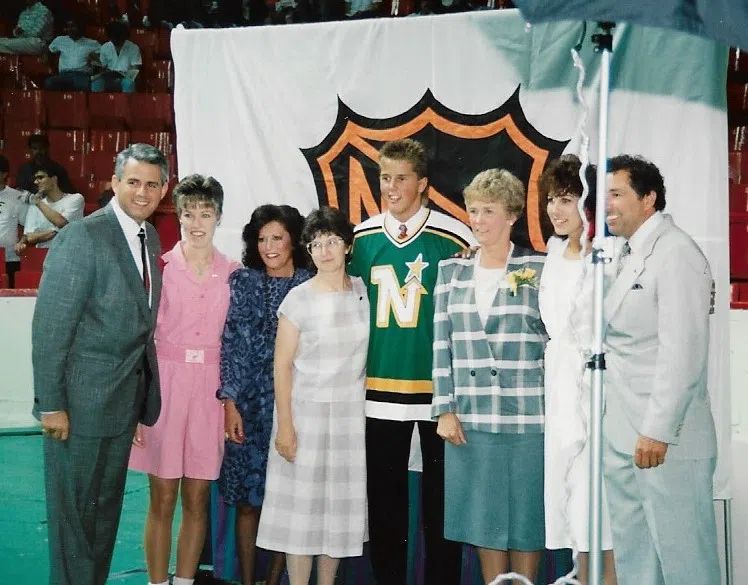
Ring was invited to attend the 1988 NHL draft with Mike Modano and his family.
Ring was invited to attend the 1988 NHL draft with Mike Modano and his family. (Image Credit: submitted)

Ring and her late husband Ralph began billeting the very first year the Prince Albert Raiders existed, in 1971. In those early seasons, players often came through on short-term stays — training camp call-ups who were soon sent home. Over time, though, the stays grew longer. And the goodbyes became harder.

“That was probably tougher,” said her son Martin Ring. “You got used to them being there, and then all of a sudden they’re gone. And you’re nine or ten years old, trying to figure that out.”

What started as a place to stay was becoming something much more — a home players would remember long after they left Prince Albert.

A home built around hockey

The Rings were deeply involved with the Prince Albert Raiders from the very beginning. Ralph served on the board of directors for years. Ring worked as recording secretary, helped run the ticket office and managed the Ches Leach Lounge.

“Our world revolved around our jobs and the Raiders,” she said.

That connection stretched across generations. Their son Martin remains involved with the team decades later, working in colour commentary for Raiders broadcasts, a reflection of how deeply the organization has been woven into the family’s life.

Inside the home, that same commitment showed up in smaller, quieter ways. Players weren’t treated as temporary boarders. They were expected to become part of the household. For teenagers arriving in Prince Albert far from home, that difference mattered.

“You do life together. They’re not just a business associate, right?” said Dean McAmmond, who billeted with the Rings as a 16-year-old before going on to play nearly 1,000 games in the NHL. “You’re sharing breakfast, lunch, dinner, emotions. They’re stepping in as parents, but also cheering you on. They’re providing for you. And it goes further than that. We’re an extension of their family.”

It’s that connection that turned a hockey-loving house into a true home away from home.

Dinner at the table

In the Ring household, the dinner table was non-negotiable.

“To me, meal time was the time to go over the day,” she explained. “Talk about what had happened.”

For many of the players who called the Ring house home, some of their fondest memories took place around that dinner table.

“In my shoes, 16 years old just leaving fresh from home, she just made that atmosphere of feeling connected,” recalled Spencer Moe, who billeted with Ring for four years. “I think we all enjoyed that.”

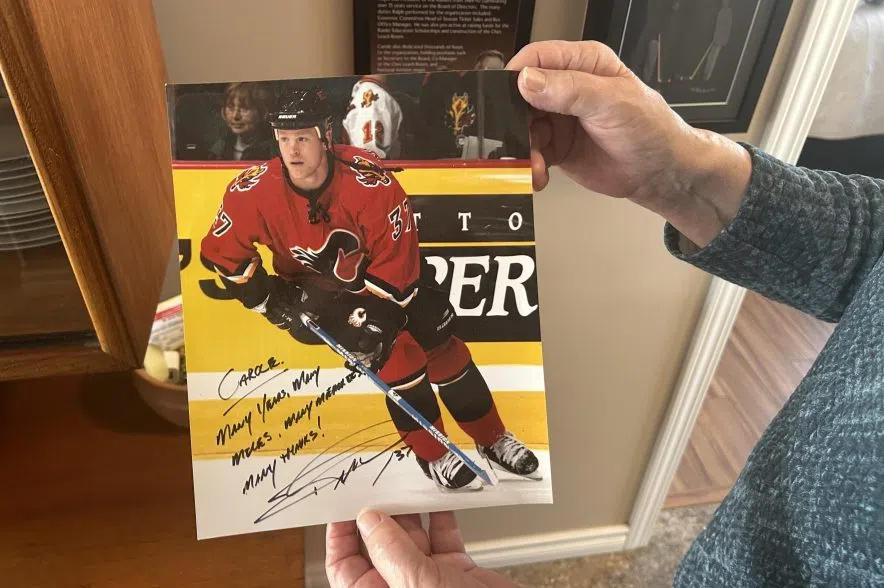
Carole Ring’s home is filled with photos, many of them signed, of her former billets.
Carole Ring’s home is filled with photos, many of them signed, of her former billets. (Image Credit: Brittany Caffet/650 CKOM)

The food was hearty and practical: pasta, enchiladas, shepherd’s pie and casseroles. The kind of meals that could be made in big batches and still be ready when buses rolled in late. There was always something extra in the fridge.

“They’re always hungry after a game,” Ring said. “Usually I’d have something ready when they came home.”

But it wasn’t just the meals that stood out — it was the care behind them. Mike Modano, who spent 21 seasons in the NHL and became one of the league’s greatest American-born scorers, lived with the Ring family as a teenager. He still remembers the baking as clearly as the dinners.

“She was a great cook and baked some amazing desserts,” Modano recalled. “My new favourite Canadian thing was Nanaimo bars. Those kind of turned into my favourite little dessert, so she would make those all the time.”

Miske remembers returning from road trips in the early morning hours to the smell of fresh baking.

“I’ve never had a billet that would pick us up at three in the morning,” he said. “To have fresh baking done as soon as we get back and put our things away. We’d come down and have a quick dessert at three or four in the morning.”

For players living far from home, those shared meals, even in the middle of the night, became a constant, a place to land at the end of long days in a life defined by pressure, travel and uncertainty.

Rules, routines and responsibility

Being part of the household came with expectations and Ring made sure they were clear.

“You had to keep your room clean,” she said. “If I couldn’t find the floor, it didn’t get vacuumed. You do it.”

Players quickly learned that billeting wasn’t a hotel stay. They followed the routines she laid out, all lessons in independence they would carry long after their hockey careers.

“I tried to stick to them pretty good. But when I did step outside the lines, Ralph was quick to fill me in,” McAmmond recalled with a laugh.

Breakfast was up to the players. “I’m not making breakfast for you guys. If it’s bacon and eggs you want, make it,” Ring said. “You have to learn take care of yourself. If you’re 16 years old, you should be able to do a slice of toast and butter it!”

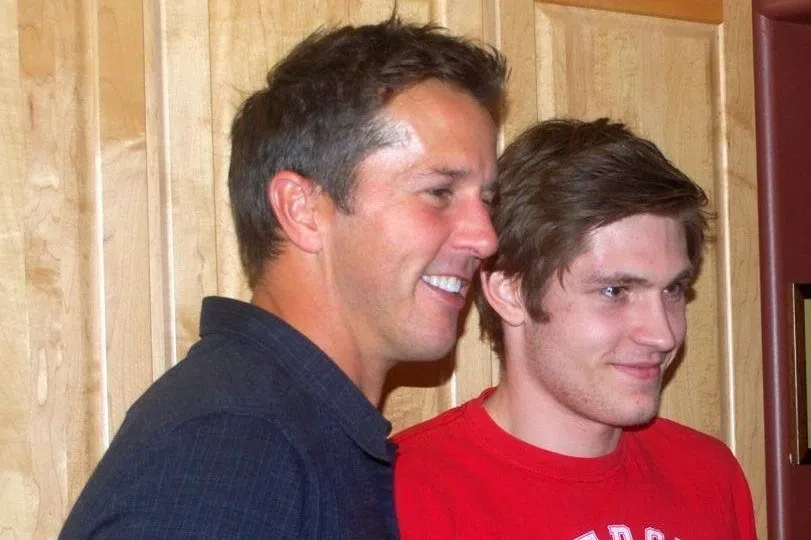
Ring recalls how excited 17-year-old Leon Draisaitl was to meet NHL legend Mike Modano in her home when he returned to Prince Albert for a visit.
Ring recalls how excited 17-year-old Leon Draisaitl was to meet NHL legend Mike Modano in her home when he returned to Prince Albert for a visit. (Image Credit: submitted)

In the early days, she would handle the laundry. Then came a player named Jesse.

“Jesse insisted on doing his own laundry,” Ring recalled with a chuckle. “Apparently, he had a billet mom who ruined some of his clothes, so he wanted to do his own. He’d hardly put anything in the dryer! Had to get all kinds of things set up so he could hang up. Well, that got the other guys going. After that, every doggone one of them did their own laundry, and it was okay.”

When the occasional party or late-night adventure came up, her rules were firm but practical.

“I’ll drive you there, I’ll pick you up. I don’t care what time it is,” she said firmly. “I don’t want you driving with somebody who’s been drinking.”

The structure didn’t make her household rigid — it made it safe.

“At 16 and 17, you’re not able to make all those decisions,” Miske said, recalling Ring’s guidelines. “You’re looking to them for advice, for guidance. That’s what made living there so special.”

The NHL room and life lessons

Over the years, one bedroom in the Ring home became legendary.

A handful of Ring’s billet sons went on to become NHL players — including Dean McAmmond, Mike Modano and Leon Draisaitl, now a superstar with the Edmonton Oilers. All three stayed in the same bedroom during their junior years, a space that would eventually be dubbed “the NHL Room” by players.

“After Leon, myself and Dean, I think there was a high demand for that room from families,” Modano laughed. “Kids thought maybe there’d be some great luck and love that rubbed off on them if they lived in there.”

Ring remembers it simply as another part of her home.

“It’s just a room!” she laughed. “It was large, had big windows, and I decorated it for Dean [McAmmond]. But other than that, it was just a room.”

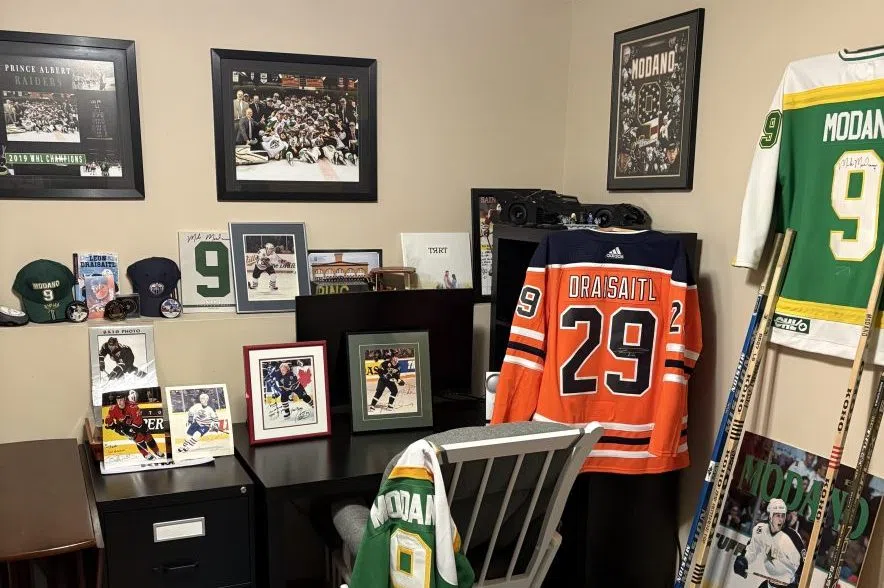
The bedroom where Modano, Draisaitl, McAmmond and dozens of other players slept has now become a man cave, housing an incredible amount of hockey memorabilia gifted to the family over the years.
The bedroom where Modano, Draisaitl, McAmmond and dozens of other players slept has now become a man cave, housing an incredible amount of hockey memorabilia gifted to the family over the years. (Image Credit: submitted)

Among players, though, it took on a life of its own. Newcomers didn’t just hope to billet with Ring. Some asked for a specific bedroom.

“There was another player who said, ‘I want the NHL room,’” she said with a smile.

But the legacy of the Ring household was built on far more than one bedroom. Long before the NHL room earned its nickname, the house was already full of laughter, competition and connection.

Brad Richardson, the Ring family’s very first long-term billet, remembers those early years vividly.

“Ralph and Carol are really, really nice people. Really good people,” Richardson said. “And the kids were younger then, so I was like a big brother to them. But I really enjoyed Ralph. He was so competitive. We used to play bumper pool down in the basement. The smile on his face, and the fun he had beating me was just great. Ralph and Carole are wonderful people, and they treated me like a son when I was there.”

Those small, everyday moments — games in the basement, shared laughs, time spent together — became the glue that held the household together across generations of players.

Years later, that same sense of togetherness showed up in new traditions.

“We would have Bachelorette or Bachelor Mondays,” Curtis Miske recalled with a laugh. “We watched all together as a family. It was pretty special.”

40 sons, and a lifetime of impact

Carole Ring knew exactly what she was signing up for back in ’71, even if she didn’t know how big it would become.

“One dad told me, ‘You had my kid in the worst years of his life,’” she said. “Between 16 and 20, you know, because there’s so much going on with them.”

Those years — awkward, emotional, formative — are where Ring spent decades showing up. And even now, years after she stopped billeting, that’s what she misses most.

Every so often, that connection still finds its way back. A current Raiders player from Belarus who missed home cooking. A pot of borscht on the stove. A conversation sparked across cultures.

Moments like that are reminders that billeting was never about who made the NHL. It was about who passed through her home, and what they carried with them when they left.

“You’re still proud of their achievements, no matter what they do,” Ring said. “One’s a chiropractor in Tisdale now.”

Another became an engineer in Calgary, working at Olympic Park. Others stayed in hockey. Some moved far away. All of them left with a piece of the Ring family.

“It’s not just about hockey,” said Martin Ring. “It’s life, right? It’s getting to know these guys.”

Few articulate that impact more clearly than Modano.

“I don’t know if I could say something without crying,” Modano said, his voice thick with emotion.

“I appreciated what she did. Her love and everything else she gave me at that age — understanding the pressure of playing hockey in a small town and going through what I did — I don’t think I could have gotten through without them. I can’t pay her back enough for what she did. It’s certainly meant a lot to my life. It was hard to leave. I think it was harder leaving there than my actual home at times. Some big things happened in my life that she was there for, and I can’t thank her enough.”

For Brad Richardson, that impact has lasted a lifetime — and even extended into the next generation.

“I’d just like to thank her,” he said. “That was a wonderful thing to do. I just think it’s wonderful that they do that. My 41-year-old daughter has taken on a junior hockey player as a billet this year… and she’s having a really good time with having him at the house.”

For Dean McAmmond, who still keeps in touch regularly, the gratitude has only grown deeper with time.

“Now as a 52-year-old father and husband and soon-to-be grandparent,” he said, “the gratitude that I have for Carole and Ralph who welcomed me and opened that door and cared for me and fed me … my gratitude grows deeper every day because of understanding how much of a sacrifice it was for them. My only repayment is that I can share as much of myself and my life and what it is now, and my career and what it was, to share in every part of my life with them, continually. I’m very grateful.”

Spencer Moe credits the Ring family with helping shape the person he became.

“A big thanks for making me feel a part of family,” he said. “From 16 to 20 years old, you do a lot of growing in that stage. They taught me a lot of things and made me try a lot of new things. I can’t thank them enough, because it’s definitely an experience that has created the individual I am today.”

Curtis Miske’s gratitude is just as direct and just as lasting.

“Thank you for everything,” he said. “Thank you for always taking care of us. Thank you for picking us up when we needed, for opening up your home to me and to the rest of the teammates. Thank you for being such an important pillar of the community. I love her and I’m very appreciative for her and everything that she’s done.”

Ring doesn’t measure her legacy in wins, championships or NHL careers. She measures it in phone calls, in visits, in kids who became men and still come back to say thank you.

Carole Ring has 40 sons.

Two were born to her. The rest found their way home through hockey — and never really left.