Click here to sign up for our free daily newsletter.
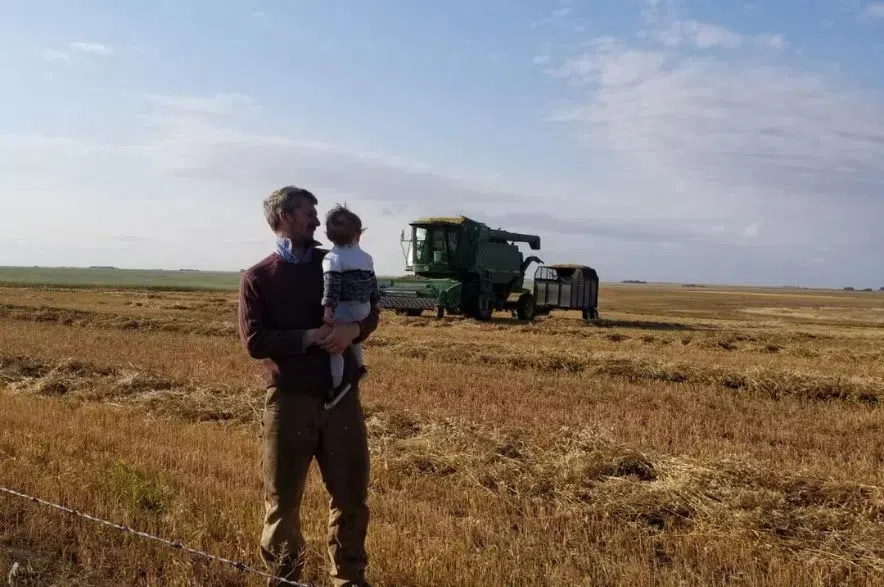
Will Robbins has a farm near Laura, a hamlet west of Saskatoon. He called the cuts to research facilities "incredibly short-sighted and counterproductive." (Will Robbins/Submitted)

‘Incredibly short-sighted’: Sask. farmer slams federal cuts to agriculture research

Jan 29, 2026 | 10:39 AM

A Saskatchewan farmer says the Government of Canada is making a big mistake by cutting funding to agricultural research centres across the country.

In its 2025 budget, which was unveiled in November, the Government of Canada said it was reorienting Agriculture and Agri-Food Canada to save up to 15 per cent of its budget over three years.

The government stated that it was doing so to better align with its priorities, adding that the ministry will focus on core priority areas and streamline its science operations in to make them more cost effective.

The budget noted that the agriculture ministry “will also reduce certain science activities where a more streamlined approach can be taken, or where capacity exists elsewhere, for example in academia and industry.”


The cuts will result in the end of some programs and the closure of centres in Ontario, Quebec and Alberta, as well as satellite centres in Nova Scotia, Saskatchewan and Manitoba. The two locations in Saskatchewan being closed are farms in Scott, southwest of the Battlefords and near Indian Head, east of Regina.

“I think it’s incredibly short-sighted and counterproductive to the agricultural centre, to the agricultural industry in Saskatchewan, to the long-term prospects for Canadian sovereignty,” said Will Robbins, a farmer based west of Saskatoon and board member of the National Farmers Union.

“(Prime Minister Mark) Carney’s talked a big game about nation building, and this is exactly the kind of thing that is countervailing to actually building a resilient agriculture industry and food sovereignty for Canadians.”

Robbins said the cuts represent a big blow for farmers, consumers and the broader Canadian economy.

“It’s a step backwards and it’s a huge loss. I think it’s a disastrous move,” he said.

Robbins said the research centres have made incredibly valuable contributions to improve Canadian food safety, plant breeding and finding more efficient uses of fertilizer. He said two of the Saskatchewan centres have been conducting research since the 1800s.

The National Farmers Union board member added that staple crops like modern lentils and peas were developed through public plant-breeding research.

“Even if you’re an investment banker, which I know Carney is, it’s a bad investment. There’s been lots of research on how productive this kind of primary research in agriculture pays off down the road,” Robbins said.

“It’s just hugely beneficial in terms of more productive varieties, more efficient use of fertilizer, new varieties, new types of plants we hadn’t grown historically, until varieties that were adapted to the Canadian prairies became available through these kinds of plant-breeding research facilities.”

Robbins said many of the trials and programs done at these facilities are very long-running, meaning that it’s not always immediately obvious which projects pay off and which ones don’t.

However, he said discontinuing the research ensures there won’t be any benefits, adding that the private sector isn’t generally able or willing to pick up the slack when it comes to funding research.

“There’s definitely private plant breeding, but it’s never been as productive as publicly funded, because it’s very narrowly focused on short-term profitability,” he said.

“When lentils and peas weren’t a major crop in the Canadian Prairies, there wasn’t any money in it, so there was no private investment in it. It was public investment that led it to becoming this major sector in Canadian agriculture, because those varietal improvements allowed it to be a productive crop here.”