Click here to sign up for our free daily newsletter.
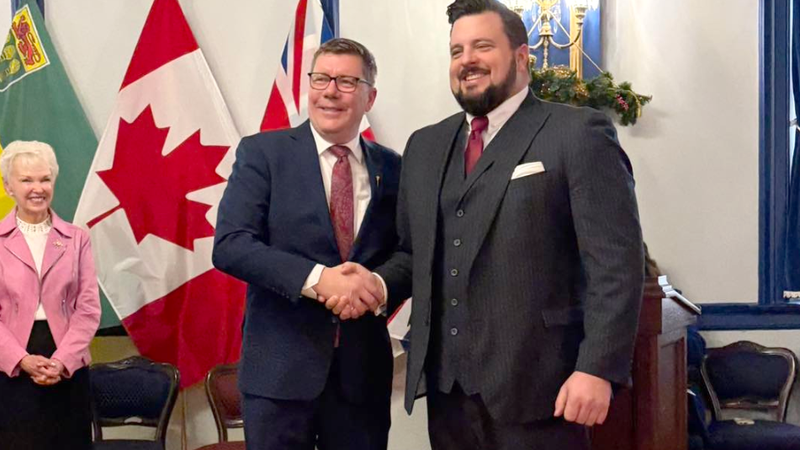
Sask Rivers MLA Eric Schmalz (right) with Premier Scott Moe. (Facebook/Eric Schmalz)
2025 in review

Sask Rivers MLA looks back at busy first year in provincial politics

Dec 26, 2025 | 6:00 AM

Eric Schmalz had a busy year of change in 2025 as he began his first full year in provincial politics with first one, then two ministries as his responsibility.

A small cabinet shuffle several weeks ago saw the Ministry of Immigration and Career Training added to his other role as lead for the Ministry of Government Relations and being responsible for First Nations, Métis and Northern Affairs.

Schmalz said he wasn’t quite sure what to expect in moments leading up to the changes.

‘You know, there’s always a bit of the unknown going into some of those meetings and, you know, happy and proud and humbled to be able to serve in an expanded role in cabinet and really looking forward to serve the people of Saskatchewan in this role,” he said.


While still very new to the immigration file, Schmalz said he knows that it is an important factor in maintaining the work force and the economy.

“Immigration does play an important part in society. In Canada particularly, we see a lot of our communities are diverse and growing with the immigration that’s occurring currently and it’s people add positive contributions to their communities when they come to this country,” he said.

Being the minister of northern affairs and government relations saw some extra challenges this year with the second busiest wildfire season in the province’s history displacing thousands of people and burning homes and, in the case of Denare Beach, almost the entire community.

Despite challenges and tension amongst some people who lost their homes, Schmalz said he believes overall strides were made and relationships continue to be strong.

“First and foremost I want to extend, again, heartfelt condolences and the support of the government for those who lost their homes in this tragic wildfire season,” he said.

Schmalz said the province continues to help those who were impacted most by the fires.

One silver lining he points to is that he knows northern residents still carry a lot of the resourcefulness and pioneering spirit which has allowed communities to come together.

“It’s very inspiring to see and there’s been a lot of positive change and a lot of positive developments coming out of that whole process,” he explained.

And there’s been a lot of positive change and a lot of positive developments coming out of that whole process.

Government relations include those between the province and the federal government and that has also been a year of change and instability, but strides are being made.

“We’ve had a tremendous year of relationship building with respect to our, not only our municipalities and our First Nations, our Metis people and northern communities, but also, you know, with our federal partners, there’s been some significant bridges, relationships built there,” he stated.

Provincial and federal economies have come under strain as effects from American tariffs take hold with lumber mills closing in other provinces and plans to build new ones such as an OSB mill near Prince Albert put on the back burner.

Schmalz said a lobbying trip in August that included seven Saskatchewan mayors (Prince Albert Mayor Bill Powalinsky, city councillor Dawn Kilmer as head of SUMA and North Battleford Mayor Kelli Hawtin attended) had good results.

“We’ve had a tremendous year of relationship building with respect to our, not only our municipalities and our First Nations, our Métis people and northern communities, but also, you know, with our federal partners, there’s been some significant bridges, relationships built there,” he said.

Going forward, Schmalz said that work that begun years ago will make a difference as the province takes part in trade negotiations with other countries, notably in Asia.

“Long before the election of the current U.S. president, we’ve been developing our trade relationships and partnerships in India, building new relationships around the globe, opening trade offices everywhere,” he said.

Rather than wait for federal co-ordination, Saskatchewan decided to communicate directly with other countries.

“Now we as a government are reaching out and taking control of our own destiny by having these trade offices set up around the globe,” he said, pointing out that Moe went to China and began communicating with government officials there in order to boost trade.

Looking closer to home as MLA, Schmalz said local governments and organizations should prepare for more change in 2026. Outside investment dollars are starting to move into Prince Albert and area and that means opportunity and challenge for locals wanting to keep up.

“Ensure you’re creating the most fertile ground you can, to borrow a farming analogy, to attract business to your community and industry in particular,” he said. “Reach out to people, start looking not only for people to walk in the front door but maybe going out and meeting them on their front door.”

Cities, towns and RMs have the capacity to do that and it will pay off in an expanded tax base and local employment.

susan.mcneil@pattisonmedia.com

On BlueSky: @susanmcneil.bsky.social