Click here to sign up for our free daily newsletter.
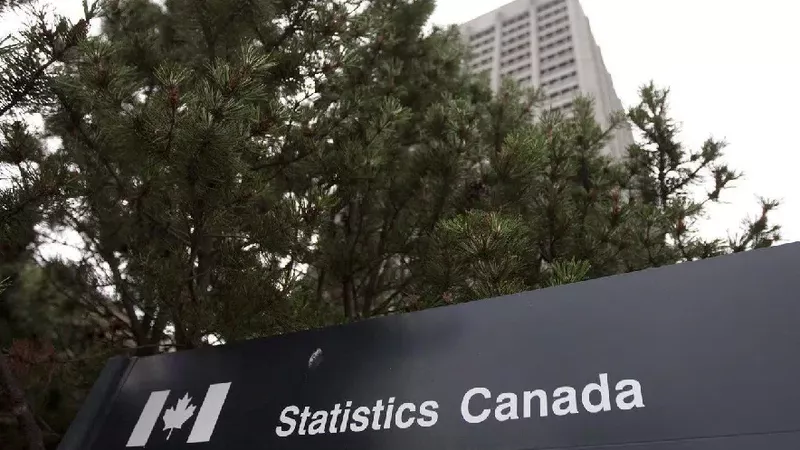
Signage marks the Statistics Canada offices in Ottawa on July 21, 2010. THE CANADIAN PRESS/Sean Kilpatrick
cost of living

Inflation steady at 2.2% in November despite grocery price hike

Dec 15, 2025 | 9:55 AM

Statistics Canada says rising grocery prices were causing fresh pain for consumers in November even as the overall inflation rate held steady.

The agency says the annual pace of inflation was unchanged at 2.2 per cent last month.

Grocery prices rose 4.7 per cent annually in November, up from 3.4 per cent in October, marking the highest level in nearly two years.

Statistics Canada says lower cattle inventories in North America are driving beef prices higher while U.S. tariffs and bad weather are making coffee more expensive.


Gas prices also rose on a monthly basis in November, but cheaper prices for travel tours and accommodation helped keep a lid on inflation last month.

The November inflation figures come after the Bank of Canada held its benchmark interest rate steady at 2.25 per cent last week.

Here’s what happened in the provinces (previous month in brackets):

  • Newfoundland and Labrador: 2.2 per cent (2.0)
  • Prince Edward Island: 1.4 per cent (1.4)
  • Nova Scotia: 2.4 per cent (2.6)
  • New Brunswick: 2.7 per cent (2.1)
  • Quebec: 3.0 per cent (3.2)
  • Ontario: 1.9 per cent (1.8)
  • Manitoba: 3.3 per cent (3.0)
  • Saskatchewan: 2.1 per cent (2.3)
  • Alberta: 1.9 per cent (1.8)
  • British Columbia: 2.0 per cent (2.0)

The agency also released rates for major cities, but cautioned that figures may have fluctuated widely because they are based on small statistical samples (previous month in brackets):

  • St. John’s, N.L.: 2.1 per cent (1.8)
  • Charlottetown-Summerside: 1.6 per cent (1.4)
  • Halifax: 2.2 per cent (2.5)
  • Saint John, N.B.: 2.8 per cent (2.2)
  • Quebec City: 3.3 per cent (3.3)
  • Montreal: 3.1 per cent (3.3)
  • Ottawa: 2.0 per cent (2.0)
  • Toronto: 1.6 per cent (1.5)
  • Thunder Bay, Ont.: 1.6 per cent (1.4)
  • Winnipeg: 3.0 per cent (2.9)
  • Regina: 2.2 per cent (2.3)
  • Saskatoon: 2.1 per cent (2.3)
  • Edmonton: 1.7 per cent (1.4)
  • Calgary: 2.1 per cent (2.1)
  • Vancouver: 1.9 per cent (1.9)
  • Victoria: 2.9 per cent (3.0)
  • Whitehorse: 2.9 per cent (3.1)
  • Yellowknife: 2.1 per cent (1.7)
  • Iqaluit: 1.4 per cent (1.0)

This report by The Canadian Press was first published Dec. 15, 2025.