Click here to sign up for our free daily newsletter.
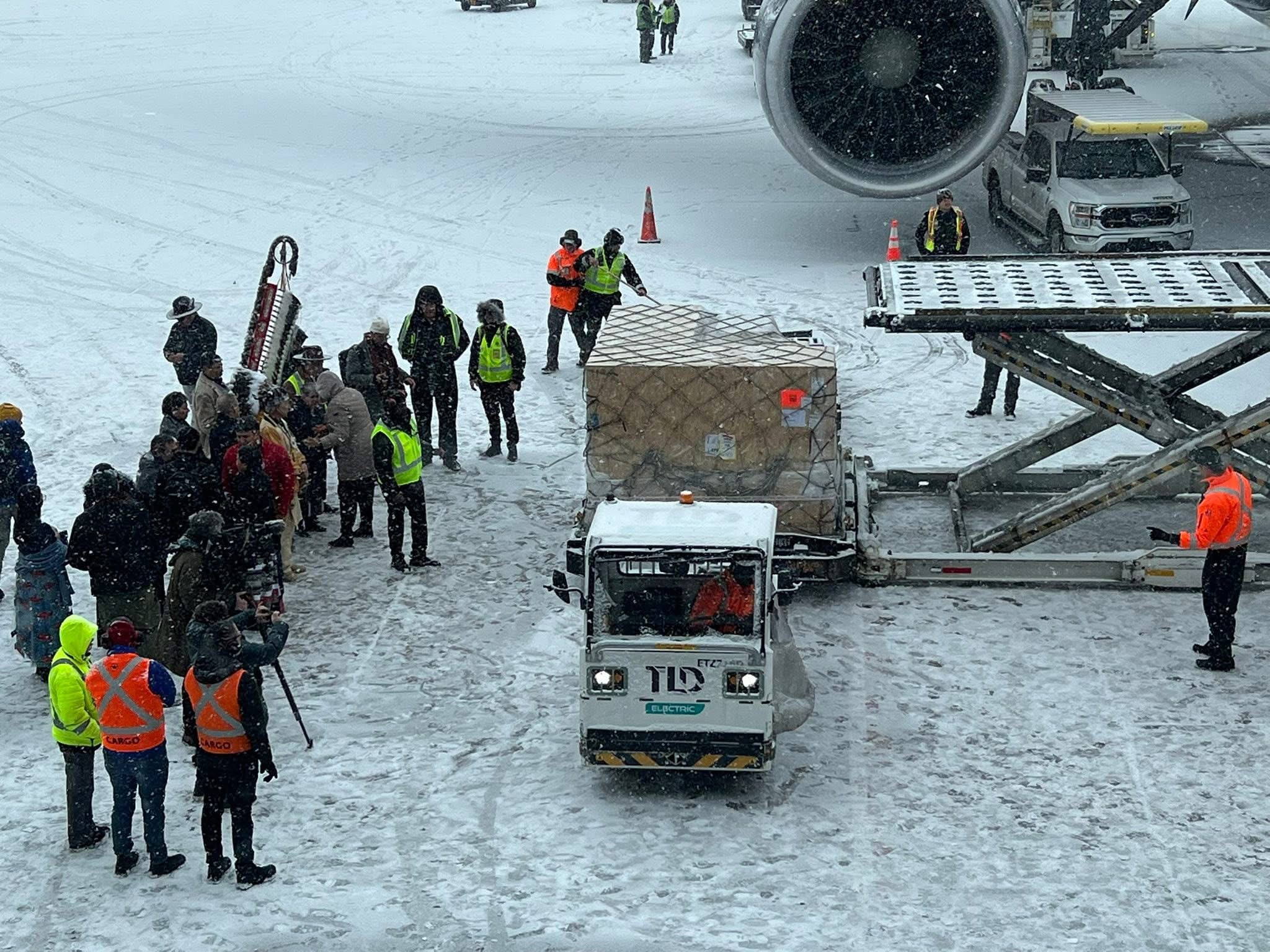
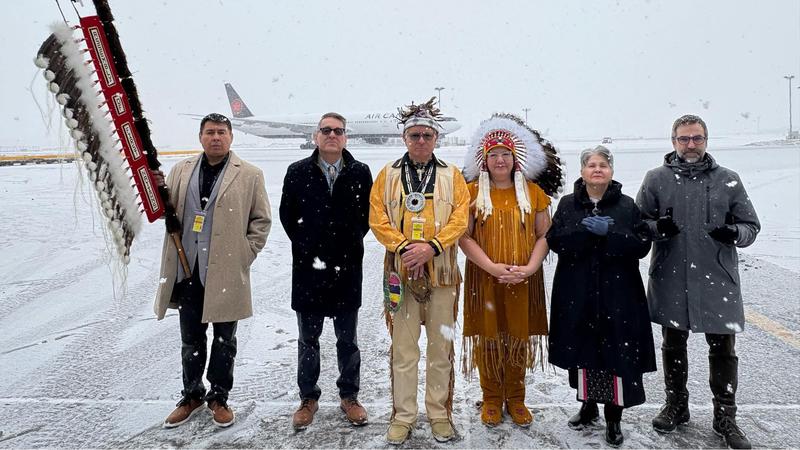
Flying Dust First Nation Chief Tyson Bear, far left, holds the Eagle Staff alongside Assembly of First Nations National Chief Cindy Woodhouse Nepinak, third from right, and other dignitaries during the arrival of repatriated Indigenous cultural belongings at Montreal–Pierre Elliott Trudeau International Airport on Dec. 6. (AFN National Chief Cindy Woodhouse Nepinak/Facebook)
Reconciliation momentum

‘The doors are opening’: Sask. First Nation chief sees hopeful shift in Ottawa

Dec 9, 2025 | 1:10 PM

Having witnessed sacred belongings return to their homelands and taken part in national conversations in Ottawa, a Saskatchewan First Nation chief says he senses the federal government opening its doors a little wider to First Nations voices.

Flying Dust First Nation Chief Tyson Bear was in Montreal on Dec. 6 when 62 long-held Indigenous belongings were formally repatriated from the Vatican Museums, a project Indigenous leaders have been working toward since 2022.

Bear hadn’t expected to take part in the ceremony. But when the original Eagle Staff Carrier didn’t arrive, he was asked to step in.

He described standing at the front – representing First Nations, residential school survivors and his own territory – as both humbling and spiritually heavy.

“It was an honour to be there for a historic moment,” he said. “At the same time I was there, I was deeply in thought and in prayer.”

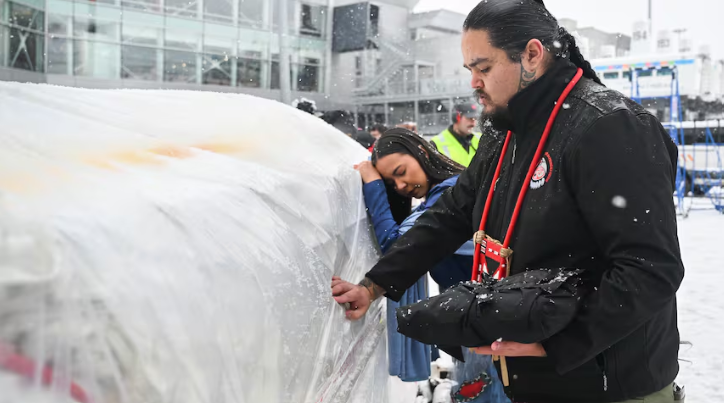
Katisha Paul of the W̱ JOȽEȽP (Tsartlip First Nation) and Lil’wat Nation, left, and Peyal Laceese of the Tsilhqot’in Nation touch a crate containing Indigenous cultural items at Montréal-Pierre Elliott Trudeau International Airport on Saturday after they were returned by the Vatican. Paul and Laceese were on the flight. (Graham Hughes/The Canadian Press)
(AFN National Chief Cindy Woodhouse Nepinak/Facebook)

He said the credit belongs to years of advocacy by the Assembly of First Nations(AFN), Inuit and Métis leaders, along with bishops in Canada and the Vatican. For him, the moment symbolized something larger – what he calls a shift in tone from federal leadership.

“It’s just the beginning… the doors have been opened and this is another step towards reconciliation,” he said. “Anytime somebody’s doing something to make something right, it’s a good day.”

The items were repatriated through a church-to-church transfer from the Vatican to the Canadian Conference of Catholic Bishops in November. Inuit Tapiriit Kanatami President Natan Obed said negotiations began in 2022 and originally focused on the return of a kayak before expanding into a partnership with the AFN and Métis National Council.

AFN Nations National Chief Cindy Woodhouse Nepinak said it was an important and emotional moment for all First Nations, and she hoped it would be important for all Canadians.

“We’ve come a long way, and we have a long way to go,” she said at the Montreal–Pierre Elliott Trudeau International Airport.

Repatriated Indigenous cultural belongings from the Vatican Museums arrive at Montreal–Pierre Elliott Trudeau International Airport on Dec. 6, marking the return of 62 items that had been held overseas for nearly a century. (AFN National Chief Cindy Woodhouse Nepinak/Facebook)

Clean water legislation part of a broader shift

Last week, Bear was in Ottawa for the Assembly of First Nations Special Chiefs Assembly, where federal leaders reaffirmed their commitment to reintroducing clean-water legislation in the spring – a revived version of Bill C-61, which died when Parliament was prorogued.

For Bear, the issue is deeply personal. He was a water technician before entering leadership and has spent more than a decade lobbying for improved water infrastructure for Flying Dust.

The First Nation is now commissioning an $8-million biological reverse-osmosis water treatment plant, which began construction in 2023 and is funded through Indigenous Services Canada (ISC), the province and the nation’s own-source revenue.

The facility is expected to be fully online by 2026 March or April 2026.

“Water was one of the most important things… I used to lobby and advocate that as First Nations people, we should have the right to our own source of drinking water,” he said. “I think that this legislation… it’s about time.”

Prime Minister Mark Carney speaks during a news conference at the Assembly of First Nations Special Chiefs Assembly in Ottawa on Dec. 2, where he pledged to reintroduce federal clean drinking water legislation in the spring. (Photo/The Canadian Press)

Prime Minister Mark Carney told chiefs on Dec. 2 that his government would introduce new drinking water legislation in the spring. He said he plans to convene federal, provincial, territorial and First Nations leaders early in the new year, with water co-ordination as a key agenda item.

Carney said 85 per cent of on-reserve drinking water advisories have been lifted through more than $7 billion in investments since 2016. He said the remaining 38 advisories will be addressed through an additional $2.3 billion set aside in Budget 2025.

Bear said many communities still lack the funding and capacity to run treatment plants or retain trained operators — a gap he hopes legislation will finally address.

A government Bear says is showing up

What stands out most to Bear is the level of engagement he saw at the AFN assembly, where federal ministers, the prime minister and provincial leaders were all present.

“It was very positive… I truly feel that this government is opening some new doors for our people,” he said. “We persevered. We’ve been through so much and we’re still here.”

During the conference, Carney also pledged to “complete the crucial work” of child-welfare reform, saying it will help ensure more First Nations children grow up safe, secure and connected to their families, culture and language.

“I have a good feeling that Carney is a genuine man,” Bear said.

Bear also praised Chief Woodhouse Nepinak and her team for what he called tireless work that often goes unseen.

“They’re doing a good job… I look for a lot of good things coming out of the AFN and Canada right now to make things right.”

Assembly of First Nations National Chief Cindy Woodhouse Nepinak speaks at a news conference in Montreal on Dec. 6, after the cultural items were returned by the Vatican. (Graham Hughes/The Canadian Press)

Looking ahead to future generations

With two years left in his term — and his first grandchild arriving next February — Bear said his optimism is tied not only to politics but to what comes next for his community.

“I have to look for prosperity for the future generations, that’s what we do as leaders,” he said. “Being a good human… that’s one of the ultimate goals.”

Whether on repatriation, water rights or economic development, he believes momentum is shifting.

“The doors are opening for us, and we hope that things get better,” Bear said.

“It’s just the beginning.”

-With files from The Canadian Press-

Kenneth.Cheung@pattisonmedia.com