Click here to sign up for our free daily newsletter.
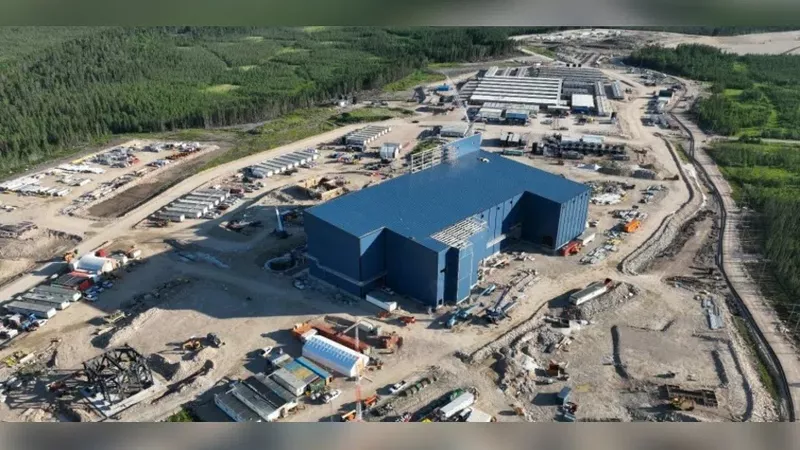
Foran Mining says the federal budget is a positive step forward for industry. (submitted/Foran Mining website)
Industry responds to budget

Budget shows Canada becoming more business-friendly, says Foran Mining

Nov 5, 2025 | 4:56 PM

Leadership from the company that owns and is developing the McIlvenna Bay copper/zinc mine near Creighton say the federal budget tabled yesterday is good for their industry and general investor confidence in Canada.

In addition to the creation of a $2 billion sovereign wealth fund that will target critical mineral development, Prime Minister Mark Carney’s first budget includes mining tax incentives and a shift to digital, green services.

The hardware that allows those things to happen is made with critical minerals, including the ones in McIlvenna Bay.

“You’re starting to see Canada become one of those jurisdictions that people want to invest in,” said Jonathan French, vice president of capital markets and external affairs for Foran Mining, the owner of the McIlvenna Bay mine.

“When you think about building mines, it’s obviously the government support, getting them permitted. But the private capital that’s needed to build these mines, both in the equity markets and private investment and having these type of platforms and procedures and policies in place help make that capital allocation from international capital to Canada, you know, a growing possibility and growing in magnitude.”

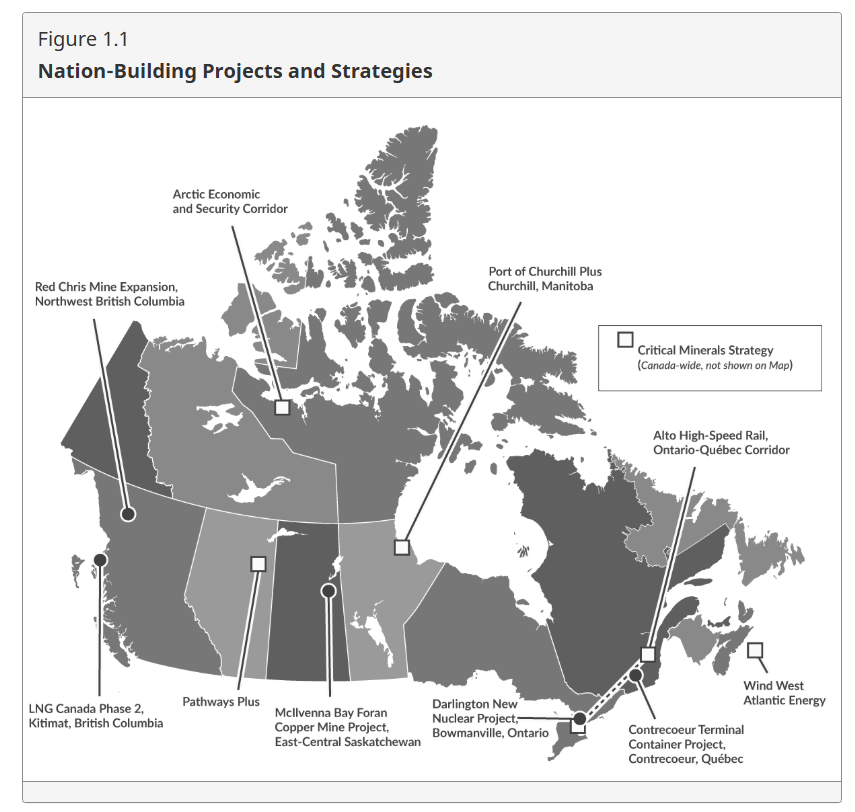
McIlvenna Bay will start full production of its copper, zinc, gold and silver mine next year and is one of four projects initially listed by the new Major Projects Office. It was also mentioned in yesterday’s budget announcement.

“Looking beyond just Foran, is just a real focus and understanding that metals and mining, specifically critical minerals, when you think about copper and zinc, are becoming an important part of our growing economy,” French said.

According to the federal government, to be considered a critical mineral in Canada, there are two main criteria that must be met; the supply chain is threatened and there is a reasonable chance it can be produced internally.

It also must meet one of three other criteria; be essential to the economy, be required for the national transition to a low-carbon and digital economy, or position the country as a sustainable/strategic partner in global supply chains.

Copper is used in generators, wiring, transformers, and EVs. It is also completely recyclable. Zinc is mainly used to galvanize steel to prevent rust, which increases the lifespan of the products made.

The sovereign fund comes with a related tax credit.

“You’re seeing a real focus on, whether it’s this new sovereign fund and for us, more importantly, the critical or the clean tech manufacturing investment tax credit and the opportunities with that,” French said.

“From our perspective, it’s great to see and there’s some opportunities there for Foran Mining specifically, but in general, it’s just great to see the government understand and have this ability to build the upstream to support downstream economies within the country.”

He said it was important for Canada to take a step back after American trade policy shifted following Donald Trump’s re-election and the global uncertainty that has resulted.

According to French, Canada needs to leverage the industry it has and play the cards it has been dealt. Fortunately, it has some aces in the hole.

“Canada has been given such a phenomenal deck of cards with regards to resources, whether it’s oil and gas or critical minerals, gold, you name it,” French said.

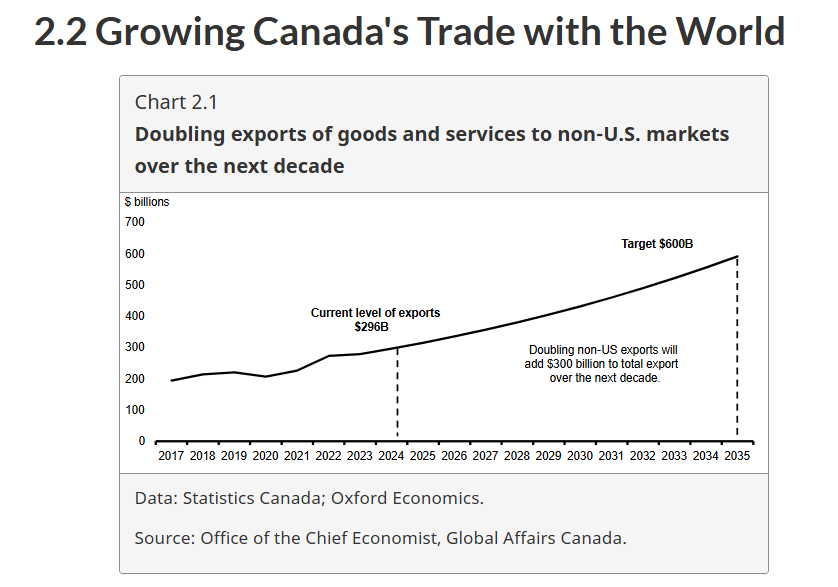
The current government has made some policy shifts in light of the global uncertainty. One of the budgetary goals is to double trade with any market other than the US before 2035.

The budget has a target of doubling trade with non-US markets by 2035. (screenshot/Government of Canada website)

Not far as the crow flies from Creighton is another project that is not as far down the road but still on the table and is on the list of nation-building projects being looked at by the government’s Major Projects Office.

The Port of Churchill would be considered an upstream part of the resource industry, while McIlvenna Bay would be downstream.

The Arctic Gateway Group, which owns the port, and the provinces of Saskatchewan and Manitoba signed an MOU in July to further development of the port.

Both McIlvenna Bay and the Port of Churchill were mentioned in yesterday’s federal budget. (screenshot/Government of Canada website)

The port has been operational for some time and re-opened after a gap under the ownership of an Indigenous-owned corporation. Right now, they mainly ship grain and are limited by ice on Hudson Bay for part of the year. Recently, they expanded their storage capabilities to include critical minerals.

“I think what it does is it gives us flexibility in trying to leverage some of the new infrastructure that Canada is building,” said French of the port.

“Having that port and the investment that the government is putting into that area is really going to open up a lot of economic growth within, call it Central Canada.”

Foran has been getting a lot of interest in their zinc and copper concentrates for processing in Europe, something the port would help with.

susan.mcneil@pattisonmedia.com

On BlueSky: @susanmcneil.bsky.social