Click here to sign up for our free daily newsletter.
Northern Transitional Dog Rescue is stepping in to help evacuee animals. (NTDR/Submitted Photo)
No Animal Plan

Northern Transitional Dog Rescue steps up for evacuee animals; calls for more support amid wildfires

Aug 13, 2025 | 4:49 PM

As wildfires displace families across northern Saskatchewan, a glaring gap in emergency response has once again come to light, but this time, not for people.

In the absence of provincial planning or pet-friendly evacuation options, Northern Transitional Dog Rescue (NTDR) has become one of the organizations stepping in to help.

Based in northwest Saskatchewan, NTDR is an Indigenous-founded, non-profit rescue and sanctuary that believes “every dog is sacred.” The organization is grounded in a no-kill, community first approach, working to address overpopulation and prevent neglect, not by removing animals, but by empowering communities with education, resources, and compassion.

But in the wake of this summer’s fires, NTDR is doing far more than usual. They’re providing emergency boarding, veterinary care, and logistical coordination for animals whose families had no way to bring them to safety.

“There is no system in place for pets during emergencies like this,” said Bailey Edelman, director of operations and board member at NTDR. “We’re housing more than 30 animals from the Beauval and Lac La Plonge evacuations at no cost to the families. We’re covering it all out of pocket, we assume all the costs and fundraise for it.”

Edelman stressed that many families were forced to leave their pets behind, not by choice, but because of transportation limitations, lack of pet-friendly accommodations, and a crisis response that simply doesn’t include animals.

“People had to flee their homes with minutes’ notice. Many were traveling communally, and there were no hotels or shelters that would accept animals,” she said. “It’s not about negligence. It’s about not having any options. They didn’t know if they’d even have a home to come back to.”

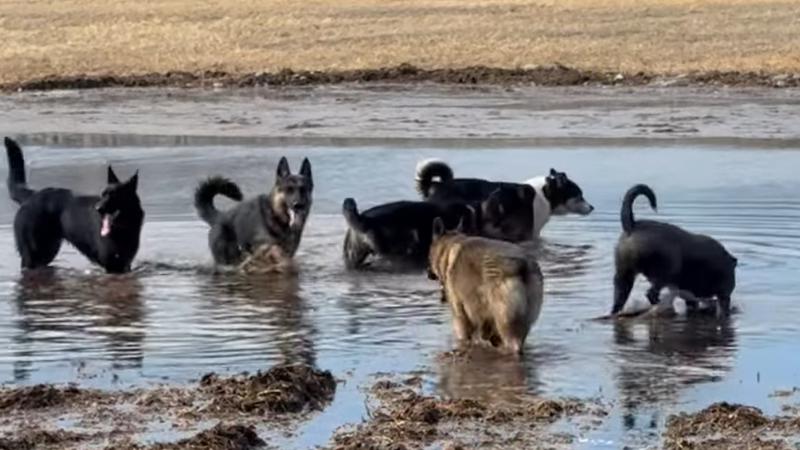
Dogs enjoying some rest at NTDR. (NTDR/Submitted Photo)

NTDR coordinated animal pickups from evacuated homes, often working with families remotely to locate and retrieve pets left behind. They gathered vaccination records, medical history, and contact information to ensure pets could be returned when safe. Many animals are now back with their families, but it came at a cost.

“This kind of work halted our regular operations,” Edelman said. “We couldn’t take on any other emergency intakes or strays. The whole rescue system in the North is stretched beyond capacity.”

The rescue’s founder, Amanda Harder, operates the sanctuary from her own property in Dorintosh. With space for 60–80 dogs depending on needs, NTDR uses a network of foster homes stretching from Meadow Lake to Saskatoon to care for overflow. But even that isn’t enough in the face of recurring evacuations.

“Amanda is one person running this from her home,” Edelman noted. “The burnout is real. There’s only so much we can do with limited hands.”

“The reality is, there’s no provincial strategy to deal with this,” added Rachel Fiddler, NTDR’s director of media relations. “These aren’t just ‘dog problems’, they’re systemic issues. Northern communities face barriers when it comes to animal care, no access to affordable veterinary services, no emergency boarding options, no pet-inclusive disaster planning.”

Fiddler said that even in non-emergency times, NTDR is constantly working to fill gaps in care, partnering with First Nations to offer spay/neuter clinics, vaccinations, and education to reduce dog overpopulation without culls. But wildfires exacerbate all of those gaps.

“It’s time the province recognized that animal care is a public health issue, especially during evacuations,” she said. “These are municipalities. They deserve coordinated support, not just judgment for families who were forced to leave pets behind.”

(NTDR/Submitted Photo)

Both Edelman and Fiddler agree: better planning is not optional, it’s overdue. That includes pet-friendly accommodations during evacuations, government partnerships with rescues, and funding for emergency animal response.

“There needs to be government involvement, strategic planning, and funding, not just from First Nation leadership but from the provincial level,” said Edelman. “The north shouldn’t have to work harder for basic supports.”

Until that happens, NTDR continues to shoulder the burden alone.

“We’re proud to do it,” Edelman said. “But we shouldn’t have to do it alone. Families deserve better. Communities deserve better. And so do the animals that depend on them.”

Austin.mattes@pattisonmedia.com

On X: @AustinMattes