Click here to sign up for our free daily newsletter.
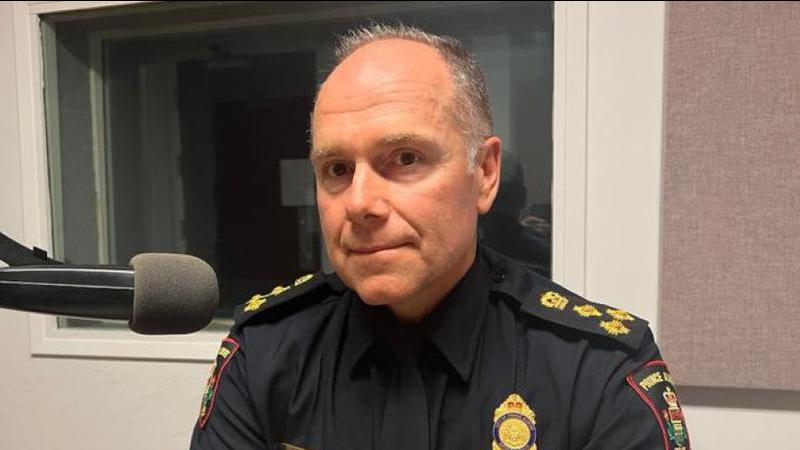
Police Chief Patrick Nogier (File photo/paNOW Staff)
CNES: not the same as homeless shelter

Police Chief speaks on need for complex needs facility

Aug 6, 2025 | 4:57 PM

The discussion of where to put a complex needs facility has been a heated one in Prince Albert.

While some residents of the city understand the need for such a facility to help with homelessness and addiction issues, others are worried that such a facility in their neighbourhood will only attract more crime.

Police Chief Patrick Nogier has been vocal about the need for a Complex Needs Emergency Facility (CNES) in the city, and he believes a large part of the discourse is the thought that it would simply be a homeless shelter.

In reality, a CNES is a place where people can be held and actually get the mental health and addictions services they need to put them on a better path.


“These are very secure facilities. They’re not gathering places, they’re very structured. In essence, it’s an extension of a police cell, cause an individual is apprehended against their will for up to 24 hours. But in that 24 hours, you’re actually trying to provide that individual with some support, something that can change them from having that recurring pattern. This is the investment that needs to be made in Prince Albert.”

To understand the difference, Nogier provided an example of what happens now, and what could happen in the future with a proper CNES facility.

The current approach involves police responding to a call of someone drunk or high in public so the officers takes them to jail where they stay between six and 10 hours and they are released with no services or help finding ways to be rehabilitated.

According to Nogier, it’s an outdated practice.

“We’ll bring that individual into our facility, they go into a jail cell – it’s a concrete cell that’s reinforced with steel, and they sit in that cell for anywhere from six to ten hours – and then you have an individual that works for us that makes an assessment of whether that person can be released. We open up our back door. That individual is released into the community right on 15th, and they’re back out to potentially go in any direction that they want. We have not been able to provide them with anything that can help change the trajectory of what they’ve experienced, and we continue and have been doing that over the past three decades.”

A CNES facility in Saskatchewan is not a foreign concept, either. Nogier said that the police department has been watching similar processes in Saskatoon and Regina since they have introduced CNES facilities of their own.

“We’re not re-inventing the wheel here. We’re going off of two different models that have both been in Saskatoon and Regina, and we’ve been very, very upfront in making sure that we get feedback from those communities to say ‘what did they experience’, because we understand that there is some apprehensiveness to setting up a facility of this type in a neighborhood, but it’s not the same discussion (as a homeless shelter).”

On the other side of that argument, a CNES would bring troubled individuals to a singular location where they can not only get the help they need to break free from their addiction, but it also brings them into a location where the public always knows where they are, rather than in one of many encampments scattered throughout the city.

“If you really want to make a difference, we just can’t continue doing the same things that we’ve been doing and expect different outcomes. If you really want to make a difference, you have to try something that’s a little bit new to a community. So, as I’ve mentioned, I understand the apprehensiveness of having a facility such as this in a community, but I can tell you that it’s not the same. They will not be gathering points and once again, working from what our neighbors have experienced in both Regina and Saskatoon, where a CNES has been set up and functional, they have not seen any type of concerns or community issues that may be commonly associated to other areas of town.”

So far in 2025, Nogier said that the police have made over 450 arrests since the start of 2025 for public intoxication, and over 350 of those arrests were released in less than 10 hours before they were deemed sober and released back on to the street without getting the help they need.

nick.nielsen@pattisonmedia.com