Click here to sign up for our free daily newsletter.
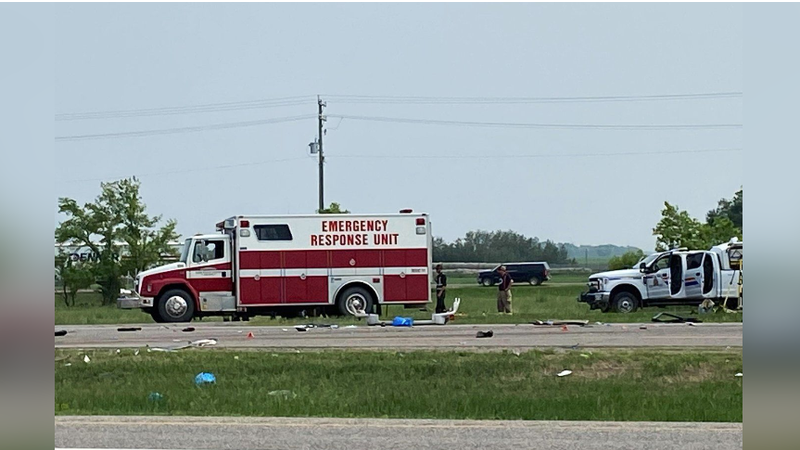
After the tragedy near Carberry, Manitoba, surviving victims and first responders alike will need mental health support. (THE CANADIAN PRESS/Steve Lambert)
First Responders Support

Local firefighter reflects on first responder mental health after Manitoba tragedy

Jun 19, 2023 | 5:00 PM

A tragedy like the recent bus crash in Manitoba will leave many people grieving and in need of support. The people whose job it is to attend such scenes often need support as well.

First responders arrive on the scene of traumatic events on a regular basis. While they do things to mentally prepare themselves ahead of time, they can still be caught off guard or traumatized by calls.

June is PTSD Awareness month across Canada, though first responders have to be aware of the risks of PTSD year-round. With that in mind, they have a variety of options for counselling, ranging from peer-to-peer to outside agencies.

“I think every first responder, if you’ve spent a few years in that world, you’ve seen some things you certainly wish you hadn’t,” said Alex Paul, deputy chief of the Prince Albert Fire Department. “Unfortunately, it is a fact of doing the job, we just have to do our best to keep ourselves mentally healthy after we see these things.”

While tragedies like the one near Carberry grab a lot of attention, smaller incidents and other encounters with death are part of a first responder’s everyday life. The stress that places on them mentally can be cumulative.

“You can see something today, something a week from now, something a month from now and that can have the same effect on a person as one significant event like the Carberry incident,” Paul said. “So mental health is something that is in the forefront of our thoughts on a daily basis.”

The mental health of first responders became a more public conversation after the tragedy of the Humboldt Broncos bus crash in 2018, but according to Paul the conversation changed well before that day.

“I started in the department 28 years ago and there was very much an attitude of suck it up, it’s part of the job,” he said. “I would say that shift probably happened closer to 15 years ago, that people realized you can’t just suck it up and mental health is an important component.”

With the importance of mental health now more widely understood and accepted, first responders who need to reach out for help have a variety of options. Some of them are peer-to-peer, while others involve outside counselling.

“IAFF, which is the International Association of Firefighters, has a peer support program and we have a number of our members trained in that,” Paul added. “If they don’t want to talk to somebody within the building, through the City of Prince Albert we have an EFAP program, an Emergency Family Assistance Program through our health coverage. You can access one-on-one counselling free of charge.”

Paul added for larger incidents like the bus crash in Carberry they can use the Saskatchewan Critical Incident and Stress Management network.

rob.mahon@pattisonmedia.com

On Twitter: @RobMahonPxP