Click here to sign up for our free daily newsletter.
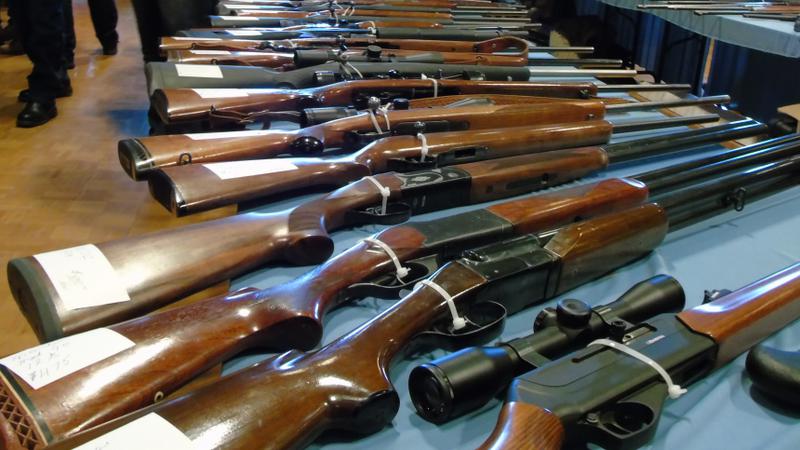
(980 CJME file photo)

Federal government to withdraw amendment to gun bill: Report

Feb 3, 2023 | 9:51 AM

The federal government is withdrawing an amendment to its gun bill that had caused a lot of concern in Saskatchewan.

According to The Canadian Press, the Liberals decided to pull the amendment that would have added some models of hunting rifles and shotguns to the list of guns that would have been prohibited in Canada.

The amendment caused an outcry in many parts of rural Canada, and the Liberals have been under pressure from many of their own MPs to change or withdraw the new definition of weapons being banned.

In response to the federal legislation, the provincial government on Dec. 1 introduced The Saskatchewan Firearms Act, which the government said was designed “to protect the rights of lawful firearms owners.”


“This Act will help address concerns of responsible firearms owners and enhance public safety across Saskatchewan,” Corrections, Policing and Public Safety Minister Christine Tell said in a media release that day.

“We take public safety seriously and support initiatives that reduce the criminal use of firearms while preventing gang violence and stopping illegal guns from entering our province.”

On Nov. 24, the Saskatchewan government joined its counterparts in Alberta and Manitoba to protest the feds’ proposed amendments to Bill C-21.

The amendment introduced a new definition of an “assault-style” gun that includes semi-automatic rifles and shotguns with a capacity of more than five cartridges.

Gun control group PolySeSouvient welcomed the amendment as “another critical step toward a comprehensive and permanent ban on assault-style weapons.”

But it caused an outcry in many parts of rural Canada, as hunters argued it criminalized weapons they often use legally for hunting.

The Liberals were also under pressure from many of their own MPs to change or withdraw the new definition of weapons being banned.

Public Safety Minister Marco Mendicino said in a written statement posted to Twitter that the government has committed to coming up with “a clear, standard definition of what constitutes an assault-style firearm.”

That was what they tried to do with the amendment, but he said “there have been legitimate concerns raised about the need for more consultation and debate on this vital part of the bill.”

He travelled the country in recent weeks to meet with concerned Canadians. He also went bison hunting last month with members of the Yukon Fish and Game Association, although he never used or even held a gun.

“We hear those concerns loud and clear, regret the confusion that this process has caused and are committed to a thoughtful and respectful conversation that is based on facts, not fear,” he said.

“This is an emotional issue, and Canadians are counting on us to get it right. More discussions, including with Indigenous communities, are crucial.”

He said a new solution to keep assault-style weapons off Canada’s streets is underway.

MPs from all three opposition parties expressed relief that the amendment was withdrawn, though the Liberals were still under heavy criticism for trying to push it through in the first place.

Conservative Leader Pierre Poilievre held a press conference outside the House of Commons, where he declared his party’s efforts to be the sole reason the Liberals withdrew the amendment.

Conservative MP Doug Shipley said it was a “relief” the Liberals had a light bulb go off because he has heard a lot about C-21 in his riding over the holidays.

“I’m happy we got here, don’t get me wrong,” he said.

“There will be a lot of relieved hunters and farmers across Canada.”

The Conservatives are pushing for Mendicino to appear at the committee for two hours to answer questions about the amendment. The Liberals are offering him one hour.

Conservative MP Glen Motz said Canadians should understand that this all happened in the first place because the Liberals pushed a political agenda that wasn’t informed by consultations with farmers or Indigenous communities.

“Canadians will not forget that,” he said.

In May 2020, the Liberal government banned 1,500 models and variants of firearms, including the AR-15 and Ruger Mini-14, through an order-in-council on the grounds they have no place in hunting or sport shooting.

But PolySeSouvient said Canada needed a clear definition of an assault-style firearm in the Criminal Code so bans actually worked to keep them off the street.

The group includes students and graduates of Montreal’s Ecole Polytechnique, where a gunman killed 14 women in 1989.

Bill C-21 was introduced last May with multiple changes to the Firearms Act and Criminal Code that would codify the government’s regulated ban on handguns and take away firearms from people considered to be a threat to themselves or others.

— With files from The Canadian Press