Click here to sign up for our free daily newsletter.

Man with 40 convictions a dangerous offender but not uncontrollable

Sep 2, 2014 | 6:25 AM

A Prince Albert judge has ruled a man with a criminal history that includes four sexual assaults, does not belong in jail for life. However, he is now considered a dangerous offender.

Marius Alfred Fontaine was 18 before he developed a long criminal record.

Starting in 1983 the man, who was born in Ile-a-la-Crosse, racked up 40 convictions. They ended in 2011 when he was arrested and charged with sexual assault.

Fontaine, now in his late 40s, has been incarcerated since then.

When he was convicted for that assault, the Crown applied to classify Fontaine as a dangerous offender. This type of hearing is a sentencing, which determines whether he is considered one of “the most dangerous violent and sexual predators in the country” according to the Criminal Code.

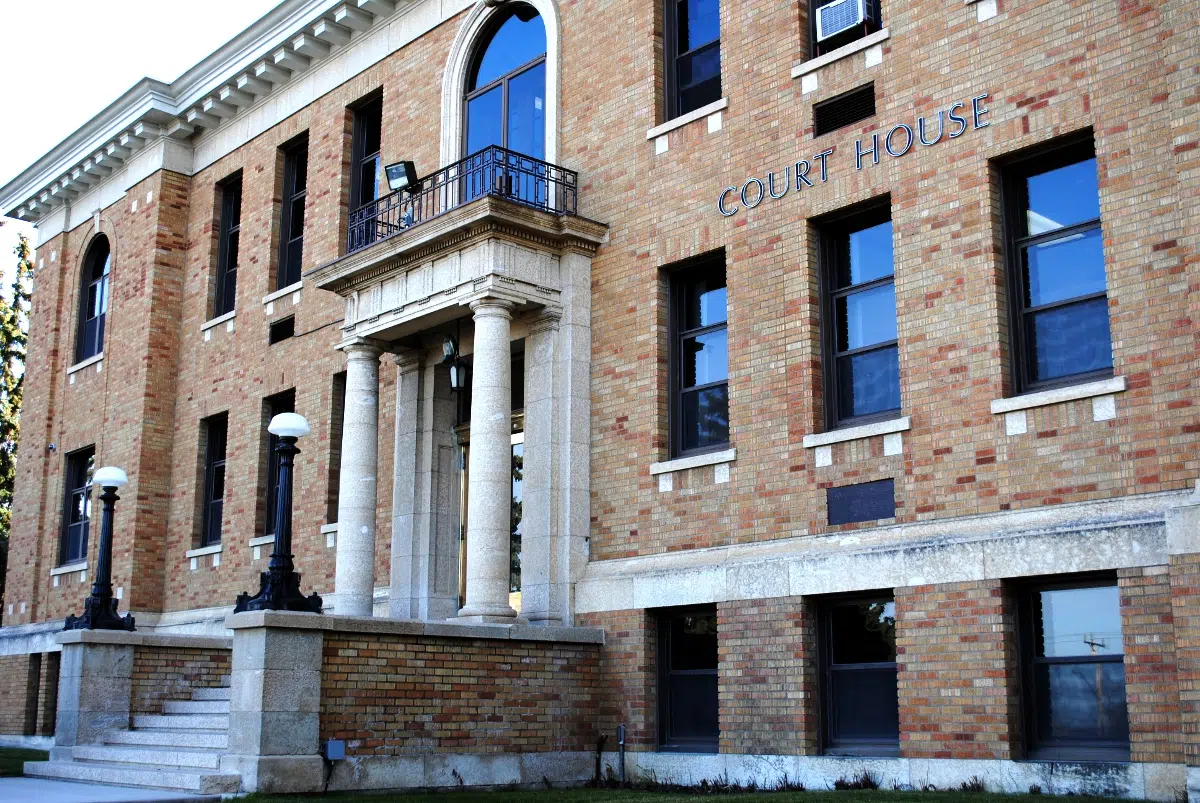
That hearing went ahead in February of this year in Prince Albert’s Court of Queen’s Bench, and Justice Morris M. Baniak released his sentence in late August.

Fontaine’s defence counsel, Brent Little, or the Crown prosecutor, Jeffrey Lubyk, agreed from the outset that Fontaine fits the bill of a dangerous offender.

“There’s no doubt that Mr. Fontaine has been recognized amongst the most serious offenders in society,” Little said.

Despite this consensus, Little explained there are two aspects to look at in a case like this.

The first was whether Fontaine is a dangerous offender, the second is whether he should be let out of jail.

“We essentially, throughout Marius’s hearing, focused on the second part. He certainly has a long history, he certainly has made mistakes in the past. But he has a lot of positives in his life through employment and support,” Little said.

The Crown argued that Fontaine should receive an indeterminate sentence, which would mean “there may be a release date but it’s not determined by a judge. He stays in jail until Corrections Canada decides he should be released. Which essentially is almost always never… you will die in custody,” Little said.

At the end of the trial, Little’s arguments “were sufficient to convince the judge on a balance of probabilities that the risks presented by Mr. Fontaine in the community could be managed.”

The trial revealed a troubled history for Fontaine.

Testimony and details in court documents show Fontaine followed in the footsteps of his alcoholic father.

Fontaine had a limited education and attended residential school as a child.

He turned to alcohol to deal with family hardships and because it was a part of the environment in La Loche, according to those documents. Most of his offences were committed while he was drunk.

Through testimony, Dr. Shabehram Lohrasbe stated Fontaine has antisocial personality disorder. This leads him to impulsivity, recklessness, and deceitfulness, traits which are only aggravated by the consumption of alcohol.

Lohrasbe described Fontaine not as a sexually deviant offender, but an antisocial man “who, as part of his anti-sociality, will take what he can get. And sometimes that’s a material thing. Sometimes that’s expressing his anger towards someone. And sometimes it’s meeting a sexual desire.”

Fontaine did move to Prince Albert from La Loche to get away from his old habits and gain employment.

People from community, one an employer and another a co-worker testified “to talk about how he functioned in the community before his most recent offence for which he was convicted” and his ability to support himself and stay in the same place, Little said.

Although testimony did reflect on Fontaine’s learning difficulties and personality factors that kept him from taking programming or treatment while in prison, the court didn’t focus on that.

Instead, Justice Baniuk looked at two doctors’ statement “that through a combination of programming, skills training and supervision Mr. Fontaine could function in the community.”

While there is no guarantee that Fontaine can be managed within the community, Baniuk concluded Fontaine does not require an indeterminate sentence.

As such, Baniuk sentenced Fontaine to three years and two months more in custody. Following that, he will be subject to an eight year long-term supervision order.

claskowski@panow.com

On Twitter: @chelsealaskowsk