Click here to sign up for our free daily newsletter.

‘oTENTiks’ coming to PA National Park

Jun 2, 2013 | 12:36 PM

A new type of accommodation is scheduled to make its debut at Prince Albert National Park this summer.

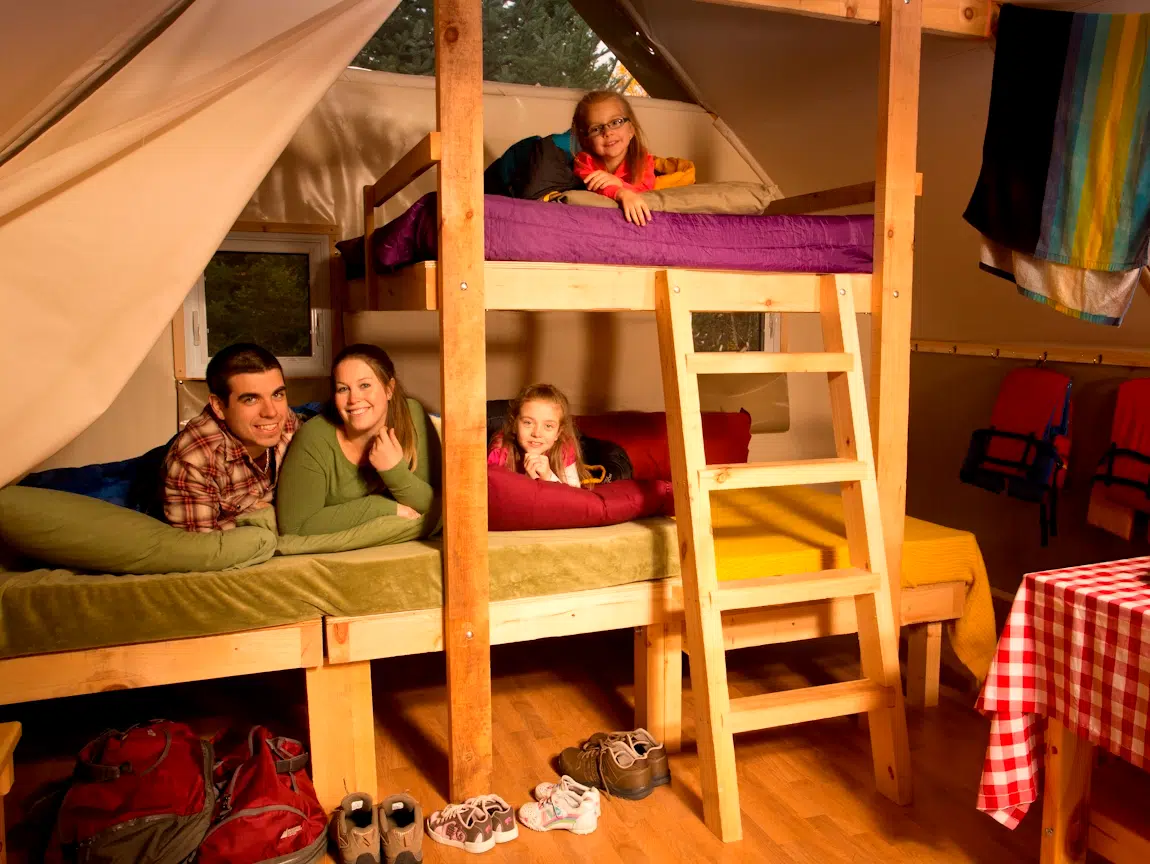
Ten new oTENTik units, which are built on raised, wooden floors with weather-proof walls and roofs, will be located in the Beaver Glen campground.

“They are kind of that middle of the road experience for people that maybe aren’t comfortable camping in a tent or don’t own a trailer and don’t have a cottage,” said Shannon Bond, communications officer at Prince Albert National Park.

The units will feature a table, chairs and three beds and will be able to accommodate up to six visitors, said Bond, “They’re just really fun. They were offered in other Parks Canada sites last year and people enjoyed them.”

“You get to come to the park, you get to have all the experiences like toasting marshmallows over the open fire and then you get to go inside your oTENTik in the evening. If you have young kids it’s really good, if the weather’s inclement they’re awesome,” said Bond.

Construction has begun on the year-round units and they are expected to be ready for visitors by mid July. Bond said they will cost about $100 per night.

June is going to be a busy month for the park as another initiative is scheduled to start next week.

PA National Park goes virtual

The park will be added to Google Maps Street View, a website that allows users to explore areas around the world through a 360 degree, first-person perspective.

Sometime in the next several weeks, Google will be at the park to collect the images needed to construct the virtual panorama. To capture these images, they use a ‘Trekker.’

“The Trekker is essentially a backpack that weighs around 40 pounds and has 15 cameras mounted on top and as the person who’s wearing the backpack walks through these paths it collects 360 degree, panoramic images every few feet,” said Google Maps spokesperson Aaron Brindle.

Those images are then processed and any identifying details like faces and license plates are blurred, creating what will be seen on Google Street View.

Because the park covers such a vast area, Parks Canada staff will make suggestions about what areas the trekker should photograph, said Bond. Some of these included the Beaver Glen and Red Deer campgrounds, one of the popular hiking trails and some of the park’s more remote beaches.

“We’re hoping that they kind of give us the greatest hits, if you will … and we’ve had a great deal of success working with Parks Canada,” said Brindle.

Parks Canada is hopeful that more people may choose to visit the park if they are able to virtually tour it first, “We recognize that a lot of people do their trip planning, for holidays, online and Google Street View technology offers people an opportunity to kind of view the park in a three dimensional level, as if they were really here,” said Bond.

Google will be adding more National Parks and historic sites to its Street View technology over the next year, said Brindle. “Starting this spring and continuing on into the fall of 2014, we’re going to visit 120 parks and historical sites across Canada.”

Some of the sites in Saskatchewan that will be added include Fort Walsh National Historic Site, Batoche National Historic Site, Fort Battleford National Historic Site and Grasslands National Park.

sleslie@panow.com

On Twitter: @_seanleslie