Click here to sign up for our free daily newsletter.

Glencore centre of BBC documentary

Apr 17, 2012 | 12:43 PM

Glencore, the company set to place its North American headquarters in Regina, is the centre of a BBC investigation and the results are not positive.

On the list that BBC Panorama reporter John Sweeney discovered is child labour in the Democratic Republic of Congo, dumping chemicals and possibility paying paramilitaries.

The research started after Sweeney noticed the size of the Swiss-based commodities giant Glencore PLC.

“The Glencore float in the London stock exchange last year, with the biggest float we think in history, it came in something like £37 billion,” said Sweeney, by phone from London.


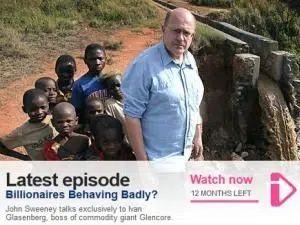
The special Sweeney is behind, called Billionaires Behaving Badly, aired for the first time Monday night on the BBC. In the program, Sweeney reveals issues in Congo and Colombia, where Glencore is accused of reckless greed.

“A few weeks ago they were dumping acids right into the river,” he said about a copper and cobalt mine they visited in Congo.

The water tested had a pH of 1.9, with 1.0 being pure acid and 7.0 is neutral. Glencore admits they knew about it, but didn't fix it right away.

“They say it's because the government didn't want them to close down the refinery while they did so,” Sweeney said.

The company says they've fixed the environment problems now, but that wasn't the only discovery in Congo by Sweeney and his crew – they found child labourers.

“It's got mine shafts 150 feet deep and the artisanal freelance miners walk down them. Some of them are children, it's illegal, it's against international law for any person under the age of 18 to work in a mine and we saw quite a few under 18 year olds and out researchers came across one child who was 10,” Sweeney said.

According to the company, they stopped working in that mine four years ago and that any mining done there wasn't authorized by them, but Sweeney's team tracked the copper that comes from that mine and found that it ends up in Glencore's smelter.

The problems found by Sweeney weren't limited to Africa, in Colombia, they investigated a 2002 massacre over a piece of land, called El Prado, next door to a Glencore mining concession. In 2008 the people who occupied the land were believed by local police to associates of the killers.

“When the court looked into this they concluded that the reason for the massacre was so that these paramilitary murderers could take over the land, so they could sell on it to Glencore's subsidiary there … In 2008 Glencore admits paying $1.8 million dollars to the people on this land, who the locals believed to be associates of the paramilitaries,” Sweeney said.

“Glencore insists they haven't done anything wrong and they go on to say they were asked to do this by the government. They don't want land, they say, they have no interest in it. Nevertheless they paid over $1.8 million for it.”

The BBC investigation talked with Ivan Glasenberg, the CEO of Glencore, about their discoveries of bad practices.

“To be fair, Mr. Glasenberg, is robust in his defense. He believes, for example in the acid waterfall that they finally cleared up a mess that was made a long time ago. They believe they haven't done anything wrong in relation to these allegations of being involved with child labour or done anything wrong in Colombia. Nevertheless these stories are out there and there are evidence in each one,” Sweeney said.

While these stories may not have a Canadian connection, it's important for those who make regulatory decisions to know all the details about who they're letting into the business community, said Sweeney.

Last month, Glencore announced they signed a deal seeking to acquire Regina-based grain handler Viterra in for $6.1 billion.

Premier Brad Wall has previously said the government would ensure there's a net benefit to Saskatchewan with the deal but, said that it looked like the takeover had a good chance of federal approval.

The deal also needs approval from two thirds of Viterra share-holders who will be asked to vote on it next month.

Glencore reponded to what they are calling “unfounded allegations,” from the BBC program here.

news@panow.com